
REVIEW · SRI LANKA
Mangrove Adventure
A mangrove trip feels like a time out, not a checklist. Here you get a private boat through the Bentota river estuary, plus time to ask questions about the weird plants that survive salty water. I like that it is designed to be calm and low stress, so you can actually watch, not just rush.
The main thing to consider is that the experience runs on a tight schedule, so you might want to ask early how much of your hour is spent in the mangroves versus cruising. Also, clear communication can make a big difference, since the boat guide’s English skills are not guaranteed.
In This Review
- Mangrove Adventure at a Glance
- Bentota Mangroves, the Bentota River Estuary in One Hour
- The Private Boat Advantage on Quiet Estuary Water
- Stop 1: Bentota River, What You Actually Do
- What You See: Roots, Branches, Fish, and Coastal Wildlife
- Learning the Mangrove “Why”: Plants That Protect Coasts
- Zen by Design: Why This Boat Ride Feels Relaxing
- Price and Value: Is $25 Worth It?
- Getting There From Gagabada Road, Aluthgama
- Photo Tips for Ancient Roots and Estuary Light
- When This Tour Can Feel Too Short (And How to Handle It)
- Who Should Book This Mangrove Adventure in Bentota?
- Should You Book Mangrove Adventure?
- FAQ
- Where does Mangrove Adventure start?
- How long is the boat trip?
- Is it a private tour?
- What time does the tour operate?
- How much does it cost?
- What will we do on the tour?
- Do I need good weather for this experience?
Mangrove Adventure at a Glance
- Private group boat on Bentota’s estuary waters, so it feels personal.
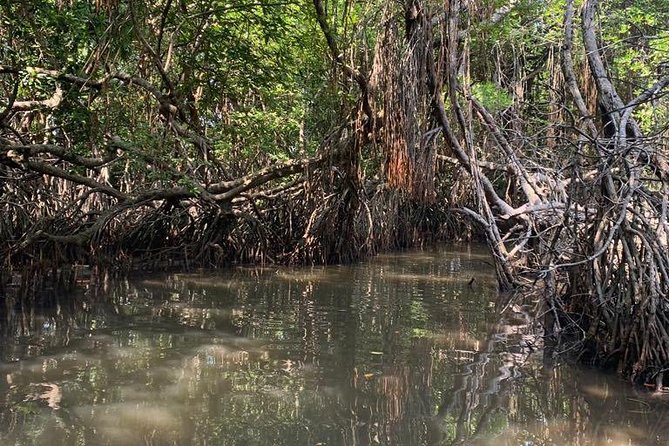
- A true “from the water” view of mangrove roots and branches.
- Time to ask questions about coastal ecosystems and unusual plant adaptations.
- Wildlife spotting focus, including fish and other coastal creatures.
- Short, stress-free duration at about 1 hour, ideal for a half-day in Bentota.
Still narrowing it down? These Kalutara trips held up well.
- Ella Private Day Tour – Departing from Any Location in Sri Lanka
★ 5.0 · 42 reviews - Sri Lanka Ella Private Day Tour Nine Arch & Elephant transit home
★ 5.0 · 22 reviews - Galle Day Tour
★ 5.0 · 15 reviews - 12 Days Private Escape Tour- Best of Sri Lanka
★ 5.0 · 15 reviews
Bentota Mangroves, the Bentota River Estuary in One Hour
If you like your nature time peaceful, this is a strong match. Mangroves are one of those places where you do not need to be hiking for it to feel special. The water is the viewpoint, and the pace is slow enough that you can really notice details, like root shapes, branching angles, and how the shoreline changes from open water to tangled vegetation.
This tour is centered on the Bentota river estuary area near Kalutara and runs for about 1 hour. That shorter duration matters because it keeps the whole outing practical while you are basing yourself in Bentota or nearby Aluthgama. You can fit it between beach time, a temple visit, or a longer day trip without burning your whole day.
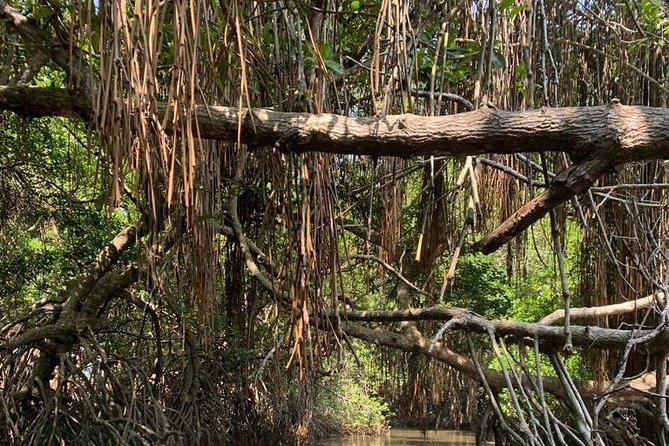
The boat portion is the core experience. You are not just riding from A to B. You are moving through a mangrove maze, which is the whole point: to see how these plants hold the coastline together and create shelter for coastal life. If you have ever wondered how something so messy and rooty can also be functional and protective, this is the setting that makes it click.
The Private Boat Advantage on Quiet Estuary Water
One of the best features here is the private tour/activity, meaning the boat is just for your group. That changes the vibe right away. In a group boat with strangers, people chatter, point, and sometimes interrupt the guide. With a private boat, you get more control over pace and attention. You can linger on a particular root line, ask one more question, or simply enjoy the quiet without feeling like you are in the way.
You also get a guided angle, not a random drift. The description emphasizes exploration around the Bentota river estuary by boat, with learning built into the ride. For most people, that means your time does double duty: you get the scenery and you get the context for why mangroves matter.
Still, there is a real-world consideration. Private does not automatically mean “long.” Since the tour is roughly an hour, expect a compact experience. If you really want extended mangrove time, ask about how the itinerary is timed once you book, so there are no surprises about when you are on and off the most mangrove-heavy stretch.
Stop 1: Bentota River, What You Actually Do
The itinerary is simple: the trip focuses on Bentota River as your main stop. That matters because it keeps your head clear. You are not juggling multiple departure points or bouncing between different docks. You meet at Gagabada Road, Aluthgama, then the activity ends back at the meeting point, so the “getting in and out” part stays straightforward.
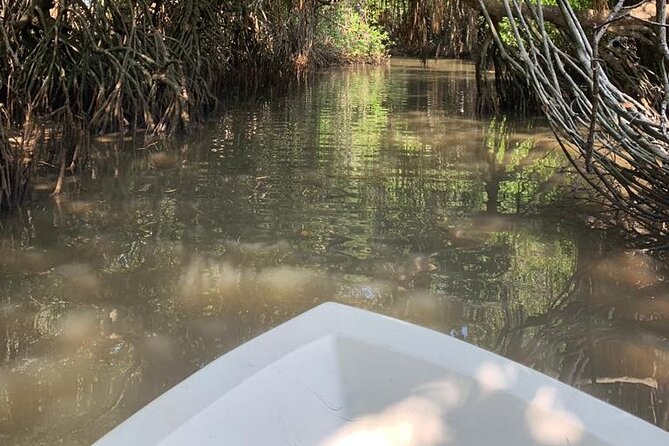
On the water, you are gliding through mangrove areas around the estuary. The goal is exploration and blending with the environment, not speed. In practice, that usually translates to slower movement, frequent pauses, and the chance to spot what lives along the edges of the water.
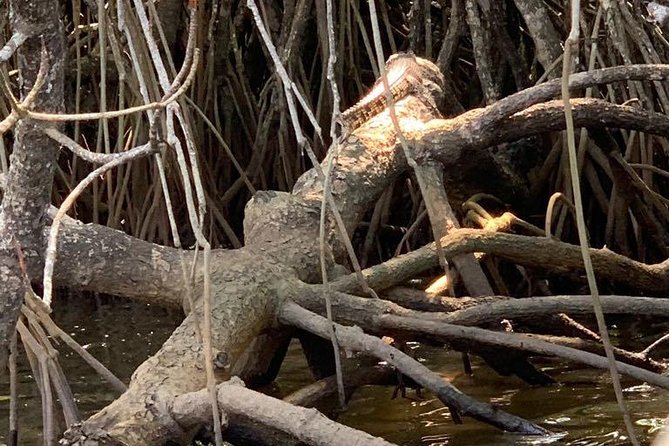
What you can look for is spelled out in the tour description: fish species and other coastal wildlife. Mangroves are nurseries for many coastal creatures, so the best sightings often come from watching calm water pockets near roots and submerged branches rather than chasing activity far from the shoreline. If you love photos, this is also a good zone for close-up root and branch shots, since mangrove trees create dramatic shapes that do not need distant landmarks to be interesting.
A small but important note: the experience is described as requiring good weather. That is not just legal wording. Estuary boating is all about stability and visibility. If conditions are rough, the trip may be rescheduled or canceled, so keep your day flexible when you can.

What You See: Roots, Branches, Fish, and Coastal Wildlife
From a mangrove boat, your eyes learn a new map. Instead of thinking of the shoreline as a hard edge, you see it as a living transition zone. Roots and branches create structure in the water, and that structure becomes a habitat.
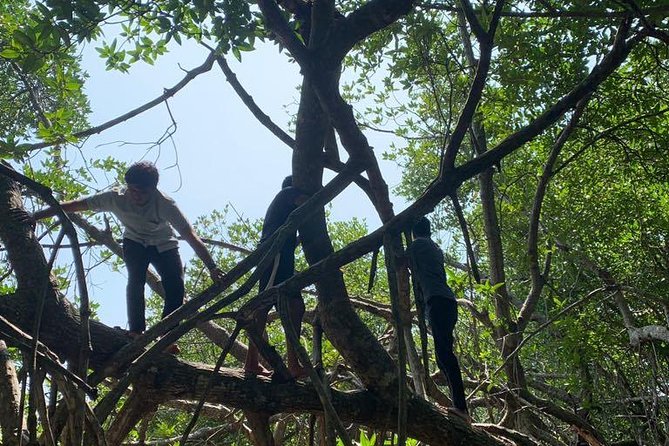
You will be in exactly the kind of setting where mangroves can look almost ancient. The tour description calls out inspirational pictures of “ancient roots and branches,” and that matches what mangroves often look like from close range. The roots can be knobby, arched, or layered in ways that feel both tangled and purposeful.
Wildlife spotting is part of the promise here, including fish and other coastal species. You may not see every creature on every trip, and that is true of most wildlife experiences. What you can do to improve your odds is simple: stay patient and scan slowly. Many estuary animals are not “performers.” They are more like details you notice after a few minutes of watching.
If you are traveling with kids or someone who does not want a strenuous activity, this viewing approach works well. You do not need special fitness. You just need time and attention. The boat’s short duration keeps it manageable, while the mangrove setting makes it feel more than just a ride.
Learning the Mangrove “Why”: Plants That Protect Coasts
The learning component is a big part of what you’re paying for, and it is not just a lecture. The tour focuses on unusual mangrove plants and their role in coastal ecosystems. That is where mangroves go from “cool scenery” to “useful science.”
Here is what you should expect the guide to explain in plain terms: mangroves survive in salty or brackish conditions, they trap sediments, and they provide shelter for fish and other marine life. Even if your guide focuses on a few key species, those ideas connect the entire system. You see roots, then you understand why those roots matter.
The description also says you can ask as many questions as you like, since the boat is just for your group. That is genuinely useful on a short tour. You only have about an hour, so questions can turn the experience from passive sightseeing into a personal mini lesson.
One practical consideration, based on how experiences can vary: if your guide’s English is limited, your questions may need to be more direct. A good strategy is to prepare a few simple topics in advance, like what makes mangroves unique, how they protect shorelines, or which parts of the plants help them handle salt water. If you can communicate those clearly, you’ll get more out of the trip even if explanations are brief.
Zen by Design: Why This Boat Ride Feels Relaxing
The tour is positioned as serene and zen, and that is not a throwaway phrase. Mangrove areas are visually busy, but the boat experience is meant to be calm. You are gliding over tranquil waters and exploring at an unhurried pace.
That matters if you are the kind of traveler who needs a break from heat, crowds, and driving. In Bentota, you can fill your days with beaches, restaurants, and day trips. A calm estuary boat gives you a different texture. It also helps you reset your senses, so even if you only have one or two days in the area, you still get a memorable nature moment without a big logistics headache.
If you want an easy win, bring your attention back to what you can see right now: the root shapes, the water movement, the way light filters through branches. That is the heart of the experience. The “zen” part is the mechanism that helps you actually notice these details.
Price and Value: Is $25 Worth It?
At $25.00 per person for about an hour, the value comes down to two things: what you personally want, and how smoothly the tour runs.
On paper, $25 for a private-style boat experience in a mangrove estuary sounds reasonable. You are paying for access to a specific natural area by boat, plus guided explanation about the ecosystem. The tour also includes mobile ticket convenience and notes group discounts, which can bring the price down if you are traveling with others.
Where value can wobble is timing and quality of interpretation. With a short tour, every minute counts. If you spend most of your hour in open water cruising and much less time in dense mangroves, the trip can feel rushed rather than exploratory. And if the guide cannot communicate in a helpful way, you may miss some of the learning component you expected.
My advice for getting your money’s worth is simple: before you go, confirm the expected timing of the mangrove section. Once you are on the boat, ask one clear question early. If the guide can answer in a way that makes the ecosystem meaningful, the whole trip feels worth it. If answers are vague, adjust your focus to the visuals and wildlife spotting, which is still a core part of what you came for.
Getting There From Gagabada Road, Aluthgama
The meeting point is listed as Gagabada Road, Aluthgama, Sri Lanka. The activity ends back at the meeting point, which is handy because you do not need to arrange transport from a separate dock.
You will likely use a tuk-tuk, taxi, or local ride to reach that road depending on where you are staying. The key practical point is to show up a bit early. Estuary areas are easier when you are not rushing. Also, the experience is listed as operating daily, 7:00 AM to 4:00 PM, which gives you some flexibility.
Because exact starting details can matter a lot for a short trip, I’d treat this like any timed tour: confirm the pickup or meeting instructions the day of, and give yourself cushion for traffic and finding the correct spot. If you are unsure, send a quick message to the provider so you are not left guessing.
Photo Tips for Ancient Roots and Estuary Light
This is a photo-friendly setting, especially if you enjoy textures and close-up details. The tour description explicitly mentions inspirational pictures of ancient roots and branches, and that is exactly what you should aim for.
A few practical tips that help in mangrove lighting:
- Keep your camera angled slightly upward for root and branch lines. Mangroves love height, even when you are sitting low in a boat.
- Watch for sharp contrasts. Estuary light can swing between bright reflections and shaded water near roots, so your photos may need quick exposure adjustments.
- Be ready for water spray. Even calm rides can kick up a little mist, so use a lens cloth and avoid changing lenses on the boat.
If your device battery is low, charge before you go. One hour disappears faster than you think, and you will want to spend time shooting rather than managing power.
When This Tour Can Feel Too Short (And How to Handle It)
At about one hour, you should think of this as a focused taste rather than a long exploration. That can be perfect, or it can feel under-delivering, depending on expectations.
Here is the balance. If you want a calm nature experience, a guided look at mangrove ecology, and a chance to spot fish and coastal wildlife, one hour is enough to leave you satisfied. If you want a deep, slow, prolonged walk-through of the mangroves, this boat trip is not the format.
Also, weather affects comfort and even whether the trip runs. The tour requires good weather, so if your day is unstable, expect possible rescheduling. Keep an open slot on your calendar if you can.
Finally, the learning value depends on communication. If your guide’s language is a barrier, you can still get a lot by focusing on visuals and asking simple questions. Ask early, adjust quickly, and you’ll still come away with something useful.
Who Should Book This Mangrove Adventure in Bentota?
This tour fits best if you:
- Want a low-stress nature outing near Kalutara and Bentota.
- Like boats but do not want an all-day trip.
- Care about understanding how coastal ecosystems work, even in a short format.
- Enjoy wildlife spotting that is quiet and observational rather than chaotic.
It may be less ideal if you:
- Want a long, intensive mangrove exploration with lots of walking.
- Need extensive, detailed explanations in a specific language, since communication can vary.
- Are traveling during questionable weather and cannot adjust plans.
If you are a solo traveler, couples, or a small group, the private boat format is especially appealing because it creates space for questions and a calmer experience. Families often enjoy it too, since it is brief and does not require hiking.
Should You Book Mangrove Adventure?
Book it if you want a practical, scenic hour on calm estuary water, with a guided look at mangrove plants and how they support coastal life. The private group boat format and the focus on fish and wildlife spotting make it a good fit for travelers who value time and atmosphere.
Hold off or ask more questions first if you are expecting a long, heavily instructional tour. Confirm how much of the ride is spent in mangroves versus open water, and go with the mindset that it is a short, calming introduction rather than a deep, multi-hour immersion.
If you can pick a day with good weather and you like the idea of learning while you glide, this one is worth your attention at $25 per person.
FAQ
Where does Mangrove Adventure start?
The activity starts at Gagabada Road, Aluthgama, Sri Lanka, and it ends back at the same meeting point.
How long is the boat trip?
It runs for about 1 hour (approx.).
Is it a private tour?
Yes, it is listed as private, and only your group participates.
What time does the tour operate?
It is available Monday through Sunday from 7:00 AM to 4:00 PM.
How much does it cost?
The price is $25.00 per person.
What will we do on the tour?
You explore the mangrove forest around the Bentota river estuary by boat, learn about mangrove plants and coastal ecosystems, and you can ask questions while you ride. You also have a chance to spot fish species and other coastal wildlife.
Do I need good weather for this experience?
Yes. The experience requires good weather, and if it is canceled due to poor weather you will be offered a different date or a full refund.
More Tour Reviews in Kalutara
Still browsing Kalutara? Start here
- 1 Day tour to Yala National Park or Udawalawe National Park★ 4.5 · 3 reviews
- Madu River Sunrise Mangrove Kayaking★ 5.0 · 5 reviews
- Udawalawa National Park Day Tour★ 4.5 · 5 reviews
- Yala National Park (Day Tour)★ 5.0 · 5 reviews
- Colombo City Tour from Kalutara★ 4.5 · 6 reviews