
REVIEW · NEGOMBO TOURS
Negombo Heritage Walking Tour
Negombo is one of Sri Lanka’s easiest cities to read on foot. This heritage walk ties together multicultural temples, market life, and the old colonial waterfront in about 3 hours. I especially like the start at the Sri Mutthu Mari Amman Temple on Sea Street and the way the route follows the coast to the fish and dry fish processing areas. One thing to plan for, it can get hot, and the tour depends on timing and guide handoffs, so bring sun protection and have realistic expectations about pace.
You also get a locally guided story chain that actually connects places, not just a checklist of sights. The route is built around everyday Negombo, from the vegetable and fruit stalls to photo stops at the Kothlawala bridge. The best use of your time is going in the morning and staying patient if you hit a little delay along the way.
In This Review
- Key Things You’ll Notice on This Negombo Walk
- Starting at Sri Mutthumari Amman Temple on Sea Street
- Markets and King George Drive, Where Seafood Work Meets Street Life
- Lellama Fish Market and the Kothlawala Bridge Photo Stop
- Dutch Fort, St. Stephen’s Church, and the Colonial Corner of Negombo
- Negombo Lagoon and the Rest House Area for Slower Views
- St. Mary’s Church Stop, Snacks, and What to Do With Your Energy
- Price and Time, Is $14 Worth It?
- Who This Tour Fits Best (and Who Might Want Another Option)
- Morning Planning Tips So You Stay Comfortable
- Should You Book the Negombo Heritage Walking Tour?
- FAQ
- How long is the Negombo Heritage Walking Tour?
- Where does the tour start?
- What does the tour include?
- What language is the guide?
- What should I bring?
- What are the main stops on the route?
- Is there free cancellation?
Key Things You’ll Notice on This Negombo Walk
- Temple-to-coast flow: The tour starts at the Sri Mutthumari Amman Temple and soon shifts into street-level market life.
- King George Drive along the Indian Sea: You get views and context as you walk beside the angler activity areas.
- Lellama fish market focus: The route is designed around how Negombo handles seafood, including the dry fish processing zone.
- Dutch Fort area plus St. Stephen’s Church: Colonial-era landmarks appear where the city once worked and defended itself.
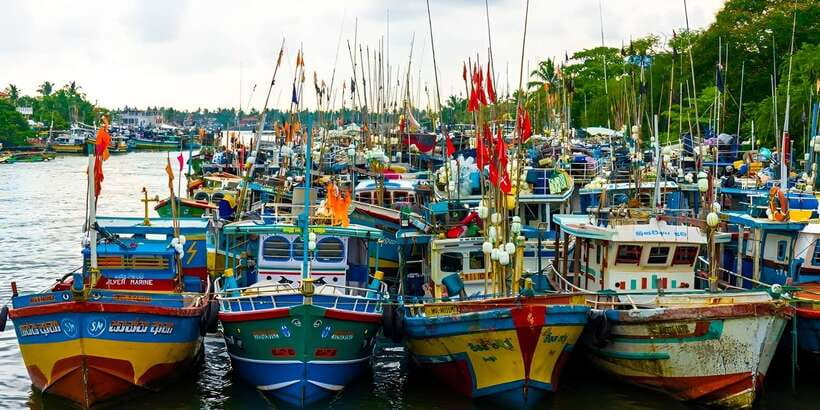
- Kothlawala bridge photo moment: A quick stop gives you a clean shot of fishing boats.
- St. Mary’s Cathedral stop with snack breaks: You finish near church life and can refuel with spicy treats.
Negombo, for before or after the flight
- Negombo city tour by Tuk Tuk Hotel Pickup & Guide
★ 5.0 · 221 reviews - Wilpattu National Park Jeep Safari from Negombo / Waikkal (All Inclusive)
★ 5.0 · 112 reviews - Motorcycle Rental in Negombo
★ 5.0 · 103 reviews - Half-Day Negombo City Tour with Ayurvedic Massage & Local Lunch
★ 5.0 · 87 reviews
Starting at Sri Mutthumari Amman Temple on Sea Street
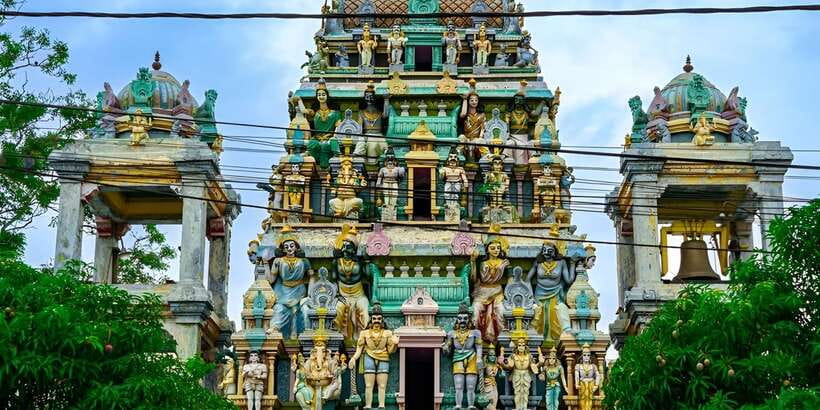
This tour begins where many locals would also begin their day, at the Sri Mutthumari Amman Temple on Sea Street. It is a strong first anchor because it sets the tone right away: Negombo is multicultural, and you feel that in the mix of religious life and everyday coastal activity.
I like that the first leg is short and guided. You get oriented quickly, and your guide can frame what you are about to see, especially how the city has long been shaped by trade, migration, and seafaring work. If you want photos, this is a calmer starting point than the later market and fish areas.
Practical tip, dress for warm weather and be ready to walk soon after meeting. Also, bring sunglasses and sunscreen, because shade can be limited once you move toward the shoreline streets.
Markets and King George Drive, Where Seafood Work Meets Street Life
After the temple, the route runs through a local vegetable and fruits market, the kind of place where vendors arrange daily essentials right at the stall. It is not just about food scenery. Your guide can point out how produce moves through daily rhythms, and how Negombo’s coastal identity shows up in what people buy and trade.
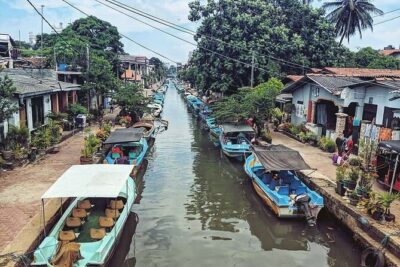
Then you shift to King George Drive, named after King George’s visit to the city. This section is valuable because it keeps you walking parallel to the Indian Sea, so you get both the urban street experience and the waterfront context at the same time. You also pass the angler activity area and the dry fish processing center.
Be aware of the one sensory reality on this walk: dry fish has a strong smell. The route basically uses that moment as a landmark. If you are sensitive to odors, you might want to plan for it mentally, and keep water handy so you stay comfortable while the guide explains what you are seeing.
Lellama Fish Market and the Kothlawala Bridge Photo Stop
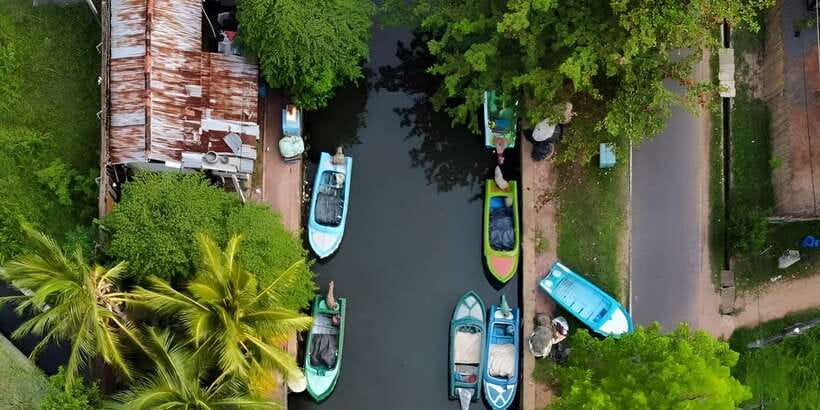
When the dry fish smell tells you you are close, the walk brings you into the fish market area, Lellama. This is the most practical stop if you want to understand how Negombo works as a working coastal city, not just a place with monuments.
A good guide makes this section worth it. You should expect explanations of how fish is processed and handled, plus context for why the market sits where it does. Watch how people move, and how goods are displayed, because that behavior tells you more than a sign ever will.
Soon after, you pass a prison area before reaching the Dutch Fort zone. It is a quick way to see how different layers of power and control sat close to the sea. Then comes the Kothlawala bridge, a small but satisfying photo moment.
I like Kothlawala because it turns your camera toward working boats rather than distant skyline views. It is one of those stops where you can slow down for a minute, check your photos, and let the route click into place.
More on foot in Negombo
Dutch Fort, St. Stephen’s Church, and the Colonial Corner of Negombo
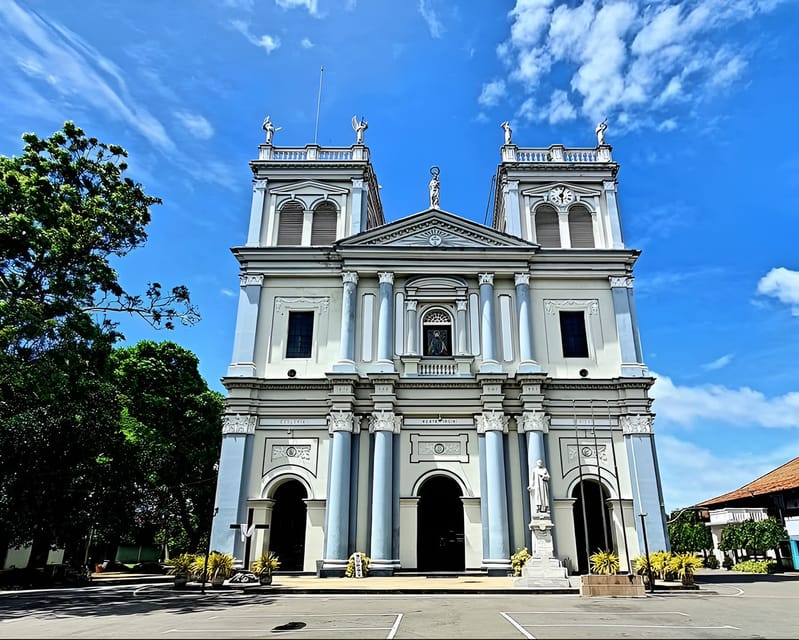
Next up is the Dutch Fort area, one of Negombo’s most important historical anchors. The walk gives you time to look, listen, and understand how the coastal economy and colonial structures connected. You do not just see walls and buildings, you learn why this area matters.
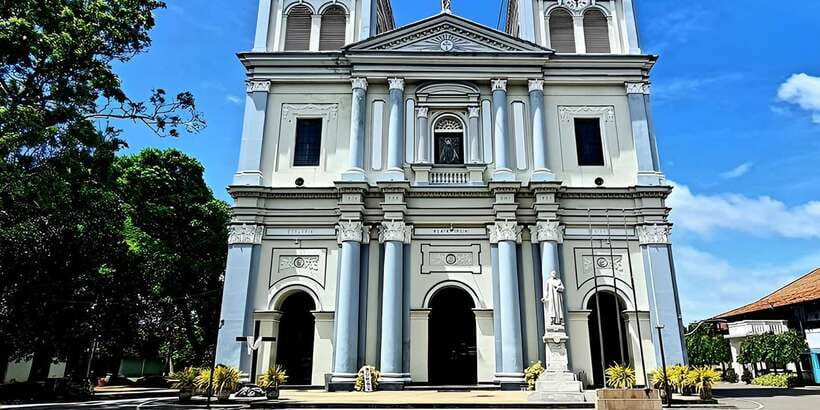
You are also guided past or near St. Stephen’s Church, included as part of the same historical pocket. This combination is useful. Forts can feel abstract if you only see stone, but church architecture and the way it sits in the city gives you a more complete picture of how European influence took root alongside local life.
If you like history but get bored by long explanations, this is a good balance. You have a guided pace and short sightseeing windows, so the information stays linked to what your eyes can verify right in front of you.
One note for comfort, this section is still in the real city. That means uneven ground and mixed foot traffic are possible, especially if you go during busier times of day.
Negombo Lagoon and the Rest House Area for Slower Views
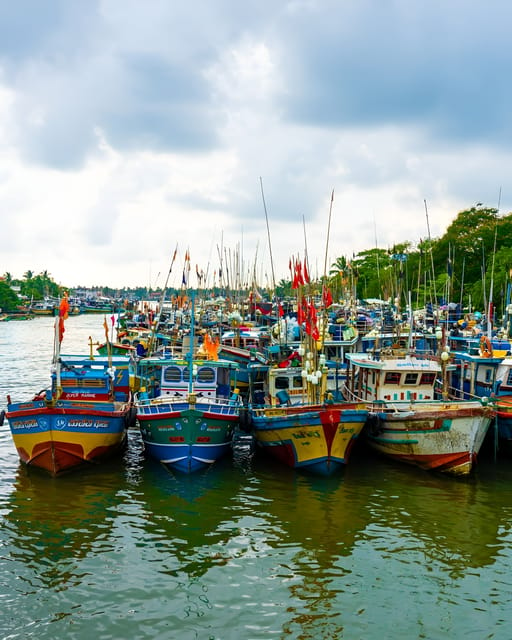
The route includes a stop at Negombo Lagoon. This part matters because it breaks the walk’s rhythm. After market smells and fish work, you get a more open, breezy feel, and the city’s relationship with water becomes easier to visualize.
This is also where you might appreciate the tour’s overall structure. It is not only about busy places. It alternates between work zones and calmer sight lines, which helps you enjoy the walk instead of rushing it.
You are also slated to see the famous Negombo Rest House. Even if you do not spend much time lingering, it is worth noticing because it adds another layer to the story of how the waterfront drew outsiders and visitors. For people who like architecture and the feel of place, this stop can be surprisingly memorable.
St. Mary’s Church Stop, Snacks, and What to Do With Your Energy
The tour ends near St. Mary’s Church (also described as St. Mary’s Cathedral in Negombo). Finishing at a church location gives you a good transition from the coastal work areas to a calmer, reflective space.
Then you get a chance to refuel. The tour includes refreshments and a snack tasting menu, and you can usually grab quick Sri Lankan spicy snacks or sweets as part of the food break. This is one of those practical inclusions that makes the whole 3 hour format feel complete, instead of ending with you hungry and overheated.
That said, keep a small amount of flexibility. One past experience noted snacks were not delivered as expected during that specific run. If food is important to you, I suggest you confirm what snacks are included when you message about your start time. It is a simple step and helps you feel confident going in.
If you have dietary constraints, plan to treat this as tasting size rather than a full meal. Then you will not be disappointed if you later want a proper dinner.
Price and Time, Is $14 Worth It?
At around $14 per person for a 3 hour walking tour, this is solid value for Negombo if your goal is understanding the city’s daily identity. You are paying for a guide, a planned route, and the snack break, not for transportation. That price usually works best when you do want local context, especially for first-timers who would otherwise miss the story behind each stop.
The biggest reason it is worth it is how compact the route is. You see multiple parts of Negombo in one morning style outing: a key Hindu temple, market stalls, the coastal dry fish zone, the fish market area, the Dutch Fort and St. Stephen’s Church, plus lagoon views and a church finish.
The main drawback of tours like this is that you still have to handle the city’s real conditions: heat, walking pace, and the fact that you are moving through working neighborhoods. The good news, your guide should be able to adjust your pace for questions, and you get time at each stop rather than only passing by.
Who This Tour Fits Best (and Who Might Want Another Option)
This is a great fit if you like hands-on cultural viewing. You want to connect history to everyday life, and you enjoy seeing how markets and coastal work shape a place.
It also works well for people who prefer walking tours over bus rides. You get close to what is happening, especially around the fish market and dry fish processing area, and the route naturally gives you photo moments like Kothlawala bridge.
It might feel less ideal if you hate strong smells or you are very heat-sensitive. The dry fish section is a defining feature, and it can be intense. If you know you struggle in hot sun, try to go early and bring water, even if the tour provides refreshments.
If you are traveling with children, consider how comfortable they are with markets and crowded stalls. The walk is only 3 hours, but it is dense with sensory moments.
Morning Planning Tips So You Stay Comfortable
The tour is best planned as an early outing. One practical tip from real-world experience is that by midday, it can be really hot, and the walking can feel tough for anyone who struggles with heat.
So aim for a morning start if the option exists. Keep your sunglasses on, reapply sunscreen during longer open-sun stretches, and wear breathable shoes because you are walking through streets and mixed surfaces.
Also, be ready for your guide to be a real part of the day. The meeting point is in front of the Hindu temple, and once you book, you should contact the operator to arrange a convenient start time. That small step helps you avoid unnecessary waiting.
Should You Book the Negombo Heritage Walking Tour?
Book it if you want a short, guided walk that explains how Negombo works, not just what it looks like. The mix of temple start, market life, the coastal fish and dry fish processing area, and major historical landmarks like the Dutch Fort and St. Stephen’s Church makes the time feel efficient.
Skip it or consider a different style tour if you are very odor-sensitive or you hate walking in heat. In that case, you might still enjoy parts of the route, but the dry fish section could be a deal breaker.
If you do book, do two things: go early for comfort, and confirm the snack tasting details when you arrange your start time. You’ll get more out of the walk, and the whole 3 hour experience will feel smoother from the first steps on Sea Street to the end near St. Mary’s.
FAQ
How long is the Negombo Heritage Walking Tour?
The tour lasts 3 hours.
Where does the tour start?
You meet your guide in front of the Hindu Temple, at the Sri Mutthu Mari Amman Temple.
What does the tour include?
It includes an English-speaking guide and refreshments with a snack tasting menu.
What language is the guide?
The live tour guide offers English and Hindi.
What should I bring?
Bring sunglasses and sunscreen.
What are the main stops on the route?
The tour includes the Sri Mutthumari Amman Temple, a local vegetable and fruits market, King George Drive area with the dry fish processing and fish market (Lellama), the Dutch Fort area (including nearby St. Stephen’s Church), Negombo Lagoon, and St. Mary’s Church.
Is there free cancellation?
Yes, free cancellation is available up to 24 hours in advance for a full refund.
More Tours in Negombo
More Tour Reviews in Negombo
Around Negombo
Still browsing Negombo? Start here
- Colombo Airport (BIA) to Galle Private Airport Transfer★ 5.0 · 3 reviews
- Airport Pick-up from Colombo Airport to Kandy★ 5.0 · 3 reviews
- Airport transfer to Arugambay★ 5.0 · 3 reviews
- 8 Days Tour Sri Lanka (Hotels, Breakfast, Dinner & Luxury Car)★ 5.0 · 3 reviews
- 9 Days Guided Tour Through Sri Lanka★ 5.0 · 4 reviews
Negombo Tours, compared.
 ★ 5.0Negombo city tour by Tuk Tuk Hotel Pickup & GuideFrom $17221 reviews
 ★ 4.5Southern Sri Lanka Sightseeing Day Trip From Colombo & NegomboFrom $85128 reviews
 ★ 5.0Wilpattu National Park Jeep Safari from Negombo / Waikkal (All Inclusive)From $152112 reviews
 ★ 5.0Motorcycle Rental in NegomboFrom $17103 reviews
 ★ 4.8Colombo/Negombo: Sigiriya, Kandy, Ella 3-Day Trip with TrainFrom $25093 reviews
 ★ 5.0Half-Day Negombo City Tour with Ayurvedic Massage & Local LunchFrom $5287 reviews
 ★ 4.8Colombo/Negombo: Sigiriya, Dambulla, and Minneriya SafariFrom $7072 reviews
 ★ 4.5Dambulla & Sigiriya Day Tour from Colombo / Negombo with LunchFrom $6957 reviews
Browse the lists this tour appears in