
REVIEW · POLONNARUWA TOURS
Polonnaruwa Ancient City Private Day Tour (Hidden Gems)
Ruins, temples, and one sharp guide. This Polonnaruwa Ancient City private day tour turns a UNESCO World Heritage Site into a planned route you can pace yourself, with a dedicated guide and a mobile ticket for quick entry.
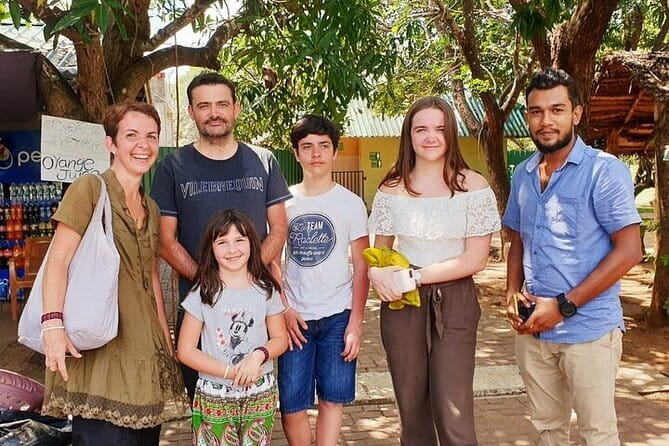
I really like having a private guide who explains what you’re seeing in plain language, and I like the mix of big-name sights with smaller religious stops, from Shiva Devalaya No. 2 to Pabalu Vehera and the long rock-cut focus of Gal Vihara.
One possible drawback: it’s a packed 6 to 7 hour day, so midday sun and a lot of stepping around ancient sites can wear you out toward the end.
In This Review
- Key highlights at a glance
- Polonnaruwa, paced for real people, not a bus schedule
- Price and what’s actually included in your $30
- Where the day starts: Archaeological Museum first, so ruins make sense later
- Palace of King Parakramabahu: royal scale without the hype
- Vatadage: circular relic-house details you’ll miss without explanations
- Shiva Devalaya No. 2 and the Hindu-Buddhist mix of Polonnaruwa
- Pabalu Vehera and Rankoth Vehera: stupas that deserve more than a quick glance
- Alahana Pirivena: monastic and educational power, in quiet stones
- Gal Vihara: the rock-cut statues that make the whole day click
- Thivanka Image House: detailed art in a short visit
- Priyamali Gedara Road rice and curry stop: a needed reset
- Statue of Parakramabahu I and Deepa Uyana: power and calm
- Parakrama Samudraya sunset: the last stop that feels worth the climb
- Guides make or break your Polonnaruwa day, and here they matter
- Tips to keep the day comfortable (and your photos sharp)
- Should you book this Polonnaruwa Ancient City private tour?
- FAQ
- How long is the Polonnaruwa Ancient City private day tour?
- What is the price per person?
- Is the tour private?
- Where does the tour start?
- Does the tour end back at the meeting point?
- Is a mobile ticket provided?
- What is included in the tour price?
- What costs are not included?
- Are there admission fees during the itinerary?
- Do I need to book far in advance?
- What is the cancellation policy?
Key highlights at a glance
- Private guiding with story-by-story context, not just pointing at ruins
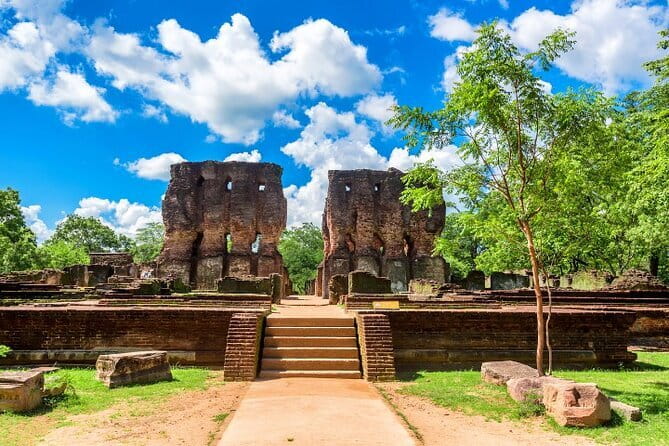
- Major Polonnaruwa hits plus quieter monuments in the Sacred Quadrangle area
- Gal Vihara and Thivanka Image House make a strong afternoon centerpiece
- Temples include Hindu and Buddhist sites, with one review calling out a Hindu blessing moment
- Sunset payoff at Parakrama Samudraya with classic “ancient city meets water” vibes
- Names you may hear: guides like Tharindu (also mentioned as Tharry or Thari in reviews) are praised for clarity and Q and A time
Still narrowing it down? These Batticaloa trips held up well.
- Maduru Oya National Park Private Safari with Naturalist
★ 4.5 · 4 reviews
Polonnaruwa, paced for real people, not a bus schedule
Polonnaruwa is the kind of place where the stones only tell the story if someone helps you read the symbols. That’s where this private format matters. You’re not just ticking off landmarks, you’re getting guidance that helps you connect the dots across royal buildings, relic houses, stupas, and rock-cut Buddha art.
The best part is that the day is structured enough to keep you from wandering in circles, but flexible enough that your guide can steer the route based on what you care about. One review noted that the tour even ran long because the guide was enthusiastic, which is a good sign when you’re paying for interpretation, not just transport.
Still, be honest with yourself: this is a lot of stops. If you’re the type who likes slow museum time and long shaded breaks, you may feel the pace by hour five.
Price and what’s actually included in your $30
The headline price is $30 per person, and you’ll also get bottled water. That covers the experience itself, meaning a guided visit and the service of getting you from one site stop to the next.
What’s not included is where your budget can surprise you. The site entry/admission fee is listed as USD 30 per person. On top of that, private transportation and an air-conditioned vehicle are listed as not included, even though several reviews mention an air-conditioned car being used. So plan two ways:
- If you care most about comfort, ask ahead whether an air-conditioned vehicle is arranged for your booking day.
- If you just want the guide and route planning, assume you’ll handle entry fees and any vehicle details separately.
Once you add that entry fee, you’re effectively budgeting closer to about $60 per person for the main sightseeing components, before any extras like tips. For Polonnaruwa, that can still be good value if you want someone to explain details you’d otherwise miss.
Where the day starts: Archaeological Museum first, so ruins make sense later
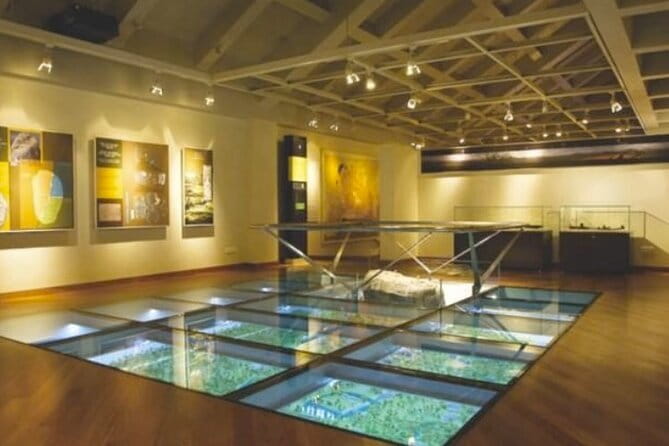
The tour begins at the Archaeological Museum near the main entrance to the Polonnaruwa Heritage Site. The museum stop is about 30 minutes, and the admission ticket is not included.
I like doing the museum first because it gives your brain a framework for what you’ll see outside. You’re not walking into a full city of remains and hoping it clicks. Instead, you get quick context on artifacts and the city’s past, which makes the later stonework feel less random.
Practical tip: use this stop to ask your guide what you should pay attention to at the big monuments. A good guide will instantly tailor how you look at the Palace foundations, the Vatadage structure, and the rock-cut statues.
Palace of King Parakramabahu: royal scale without the hype
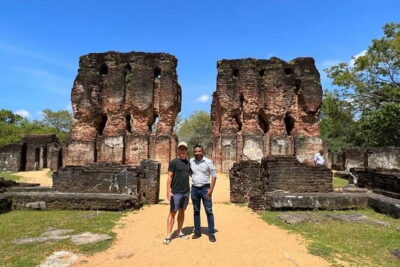
Next up is the Palace of King Parakramabahu, about 30 minutes, and admission there is free.
The description you’ll hear for this site is that it was once a magnificent seven-story structure and served as the royal residence of King Parakramabahu I. Even if you’re only seeing remnants, the scale and layout help you understand why Polonnaruwa mattered as a medieval capital.
This is also a useful stop for photography and orientation. If you’ve got questions about the power center of the city, your guide is likely to connect this palace to the surrounding Sacred Quadrangle area, so you can start seeing patterns rather than isolated monuments.
Vatadage: circular relic-house details you’ll miss without explanations

Then comes the Polonnaruwa Vatadage. It’s roughly 45 minutes, and admission is not included.
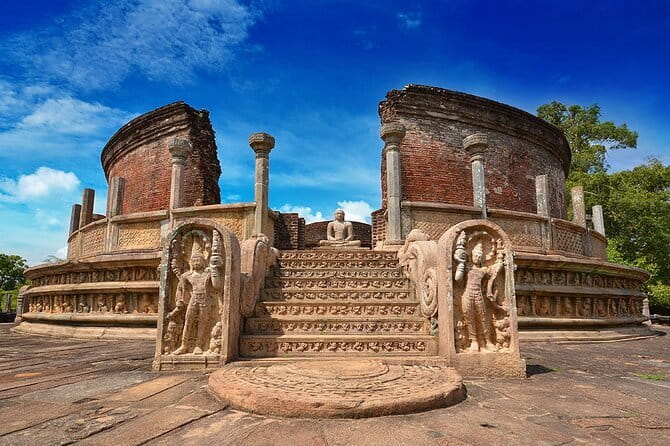
This is a highlight for architecture lovers, because the Vatadage is a circular relic house built to protect a sacred stupa. The walls and carvings are the point here. On your own, you might notice “ornamentation.” With a guide, you can start understanding the why, meaning the function of protecting a relic and the religious logic behind the design.
If you’re short on energy, this stop is one where leaning on your guide for interpretation really helps. You don’t need to sprint through every carved surface, you need to know what to look for.
Shiva Devalaya No. 2 and the Hindu-Buddhist mix of Polonnaruwa
After the Vatadage, you’ll head to a Hindu temple stop: Shiva Devalaya No. 2. Expect about 15 minutes.
Polonnaruwa is often discussed as a Buddhist center, but this kind of preserved shrine is a reminder that the region had multicultural religious influence. Dedicated to Lord Shiva, this ancient shrine connects to South Indian Dravidia influences, which your guide can help translate into what you’re seeing in the structure and ornamentation.
A practical bonus: in one review, the standout moment was a Hindu blessing at a temple stop. If a ceremony is happening during your visit, act respectfully, stay aware, and let your guide handle the timing so you don’t feel like you’re intruding.
Pabalu Vehera and Rankoth Vehera: stupas that deserve more than a quick glance
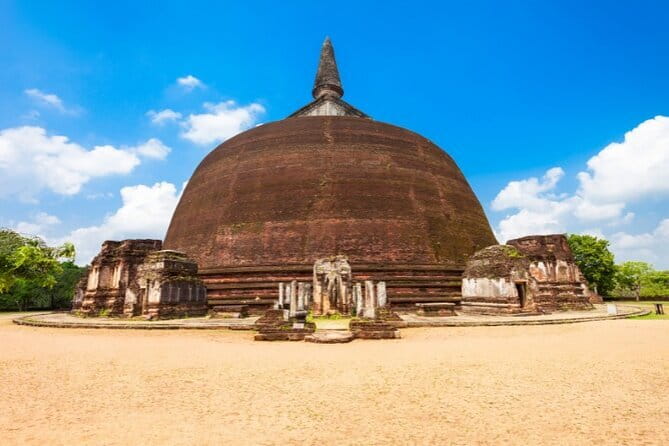
Two shorter stupa stops follow:
- Pabalu Vehera, about 15 minutes
- Rankoth Vehera, about 15 minutes
Both have admission not included. Even though these are brief, they matter because stupas are not “one style fits all.” They show how different kings and periods expressed devotion through design.
Rankoth Vehera is noted as the largest stupa in Polonnaruwa, constructed during the reign of King Nissanka Malla in the 12th century. When you’re standing near something this large, it’s easier to grasp why religious structures anchored a whole city. It’s also a great place to ask your guide how this relates to water and power planning in the region.
If you’re getting tired, here’s a useful mindset: let your guide point out one key feature you should focus on at each stupa. That beats trying to memorize everything.
Alahana Pirivena: monastic and educational power, in quiet stones

Next is Alahana Pirivena, about 30 minutes, admission not included.
This is a monastic complex built by King Parakramabahu I in the 12th century, with a purpose that goes beyond worship. This stop is valuable because it adds the “learning and religious life” dimension to Polonnaruwa, so the day stops feeling like only palaces and statues.
If you’re the type who likes structure and social history, you’ll likely enjoy Alahana Pirivena. It’s also a better paced segment than some of the tightly packed 15-minute hops, so take a breath and let the guide’s stories land.
Gal Vihara: the rock-cut statues that make the whole day click
Now you hit Gal Vihara, about 30 minutes, admission not included.
Gal Vihara is one of Polonnaruwa’s most iconic sites, known for its rock-cut Buddha statues dating to the 12th century. This is where many visitors suddenly understand why UNESCO and conservation matter. The carvings are not just decoration. They’re the centerpiece of a monastic complex, and they’re meant to be seen as a whole.
Here’s where your guide can make the biggest difference. If you want to get more from the rock-cut work, ask for the meaning of the composition and how the figures relate to each other in the set.
Energy check: in the afternoon heat, 30 minutes can feel short. But it’s usually enough time if your guide helps you prioritize what to focus on first.
Thivanka Image House: detailed art in a short visit
Then comes Thivanka Image House, about 15 minutes, admission not included.
This is another important Buddhist structure, built during the reign of King Parakramabahu I in the 12th century. The key idea is that the art and scale are impressive even in a shorter stop. This is the kind of place where you’ll appreciate a guide who can point out the details you might otherwise miss.
If your goal is “see the best things with context,” this is a strong pairing with Gal Vihara. Gal Vihara gives you the major visual impact. Thivanka Image House adds the fine detail layer.
Priyamali Gedara Road rice and curry stop: a needed reset
At around the middle or later part of the day, you’ll get time for a traditional rice and curry stop at Priyamali Gedara Road. The schedule lists 1 hour 30 minutes, and it is marked admission ticket free.
Important for expectations: lunch is listed as not included in the booking details. Still, the itinerary clearly includes a rice and curry stop, so you’ll have a solid break to eat, cool down, and reset your legs.
One review specifically praised the full day flow and the amount of time spent at each meaningful place. That’s the value of this timing. You don’t just rush through ruins, you regain stamina so you can enjoy the last portion, including gardens and the sunset view.
Statue of Parakramabahu I and Deepa Uyana: power and calm
After food, you’ll stop at the Statue of Parakramabahu I, about 30 minutes. Admission is not included.
This is a 12-foot tall statue depicting King Parakramabahu I in regal attire. It’s a straightforward but effective way to re-anchor the day around a single ruler who left a huge mark on Polonnaruwa. When you’ve been looking at temples and relic houses for hours, this kind of visual reference helps you mentally file the sites.
Then comes Deepa Uyana, also known as King Nissankamalla’s Pleasure Garden. About 30 minutes, admission not included.
This is your calmer segment. A pleasure garden is a retreat concept, so it’s different from the religious monuments earlier in the day. If you’re feeling sun fatigue, this is where you can slow down, take a breath, and let the stories shift from conquest and worship to designed leisure.
Parakrama Samudraya sunset: the last stop that feels worth the climb
The day ends with a viewpoint stop at Parakrama Samudraya. It’s about 30 minutes, and admission is free.
Watching the sunset over Parakrama Samudraya is described as an unforgettable experience, with the reservoir also known as the Sea of Parakrama. This matters because it ties the religious and royal story to the big regional engineering theme of reservoirs and water management.
Even if you don’t catch the exact perfect light, you’ll still get an ending that feels connected. The city becomes more than monuments. It becomes a system.
Guides make or break your Polonnaruwa day, and here they matter
The strongest praise across the reviews is about the guides, and that’s exactly what you should care about in a place like Polonnaruwa. Several reviews highlight a guide named Tharindu, also mentioned as Tharry or Thari, for:
- strong history storytelling in clear terms
- patience, clarity, and enthusiasm
- answering questions rather than just moving you along
- keeping you feeling safe and supported
There is one note to keep in mind: one reviewer mentioned the guide’s accent wasn’t always easy to catch. This isn’t a dealbreaker, but if you’re sensitive to accents, I’d arrive with a few specific questions you can repeat slowly, and don’t be shy about asking to clarify.
If you want a truly tailored experience, you’ll also appreciate that this is a private tour. That means your questions steer the pace, not a group timer.
Tips to keep the day comfortable (and your photos sharp)
I can’t control the Sri Lankan sun, but you can prepare for it. Since the itinerary spreads across outdoor ruins and temples, bring sun protection and comfortable footwear. Plan to stay hydrated, and use the bottled water provided early, not just at the end.
Also, with so many short stops, don’t try to memorize everything. Instead, pick one theme to focus on:
- architecture and sacred spaces
- royal power and major monuments
- religious art, especially at Gal Vihara and Thivanka Image House
Let your guide know your theme at the museum stop, and you’ll get more from each site.
Finally, if you’re expecting to connect areas by foot between every adjacent stop, ask your guide what is walkable and what isn’t. Some routes can be less straightforward than they look on a map.
Should you book this Polonnaruwa Ancient City private tour?
Book it if you want Polonnaruwa with a guide who can explain what you’re seeing, not just a checklist of ruins. The private format, the mix of major sights and smaller sacred stops, and the strong ending at Parakrama Samudraya all add up to a day that feels structured but still flexible.
Skip it or rethink it if you hate packed schedules or if you expect lunch and transport to be fully included. Lunch is listed as not included, and transportation details are mixed, even if some guides arrange air-conditioned cars based on reviews.
If your goal is a guided, comfortable day where you can ask questions and leave with a real understanding of Polonnaruwa’s monuments, this one is an easy yes.
FAQ
How long is the Polonnaruwa Ancient City private day tour?
It runs about 6 to 7 hours.
What is the price per person?
The price is $30.00 per person.
Is the tour private?
Yes. This is a private tour, so only your group will participate.
Where does the tour start?
It starts at WXRX+PHC Archaeological Museum, Polonnaruwa, Sri Lanka.
Does the tour end back at the meeting point?
Yes. The activity ends back at the meeting point.
Is a mobile ticket provided?
Yes, the tour includes a mobile ticket.
What is included in the tour price?
Bottled water is included.
What costs are not included?
Site entry or admission fees are not included, and private transportation and an air-conditioned vehicle are also listed as not included. Breakfast, lunch, snacks, and gratuities (tips) are not included.
Are there admission fees during the itinerary?
Yes. Several stops list admission tickets as not included, including the Archaeological Museum, the Vatadage, and multiple temple and relic sites.
Do I need to book far in advance?
The experience is booked about 49 days in advance on average, so booking ahead is a good idea.
What is the cancellation policy?
You can cancel for a full refund if you cancel up to 24 hours in advance of the experience start time. If you cancel less than 24 hours before, the amount paid is not refunded.
More Tour Reviews in Batticaloa
Still browsing Batticaloa? Start here
- Maduru Oya National Park Private Safari with Naturalist★ 4.5 · 4 reviews
Polonnaruwa Tours, compared.
 ★ 5.0Day tour to Sigiriya,Dambulla & Polannaruwa (3 word heritage places) from KandyFrom $6599 reviews
 ★ 4.9Polonnaruwa Day Tour With Minneriya NP Elephant SafariFrom $6532 reviews
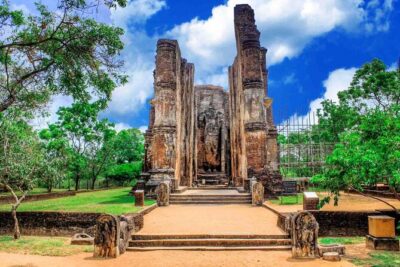 ★ 5.0Private Polonnaruwa Sightseeing Day Tour from SigiriyaFrom $7131 reviews
 ★ 4.5Sigiriya, Polonnaruwa & Dambulla “Trilogy” Day Tour from ColomboFrom $9226 reviews
 ★ 4.5Day Tour from Colombo to Sigiriya, Dambulla & PolonnaruwaFrom $9221 reviews
 ★ 4.8Polonnaruwa Sight Seeing Tour and Minneriya Elephant SafariFrom $5918 reviews
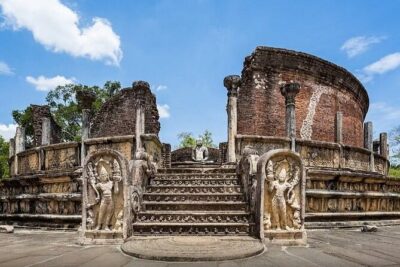 ★ 5.0Private Polonnaruwa Ruins & Minneriya Safari Tour from SigiriyaFrom $5518 reviews
 ★ 5.0Visiting the Historical Polonnaruwa Ruins and Minneriya SafariFrom $7516 reviews
Browse the lists this tour appears in