
REVIEW · COLOMBO TOURS
Colombo Walking Tour with Ajeet De Soyza
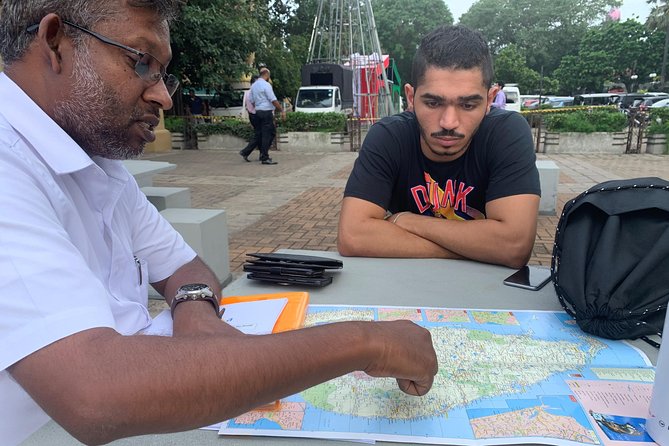
Colombo hits different when you walk it. This small-group tour led by Ajeet De Soyza mixes colonial-era landmarks, modern city life, and a few real history stories you can still see in the street. What I like most is that you are not trapped behind a bus window, and you get time to ask questions as you move.
Two things that really stand out to me: the small group size (up to 8) keeps the conversation going, and the route is packed with “see it up close” stops in the Fort area and Pettah. You also get snacks and bottled water, which matters in Colombo heat.
One consideration: if you prefer a faster pace with less narration, this tour can feel like a lot of story per stop. The fix is simple, wear comfortable shoes, bring your question list, and pace yourself.
In This Review
- Key highlights you will feel on the walk
- Why Colombo makes sense as a walking tour
- Getting started at Galle Face Hotel, then moving into real neighborhoods
- Fort area landmarks: colonial architecture you can actually read with your eyes
- King Sri Wickrama Rajasinghe Prison Cell, a fast but powerful stop
- Dutch Hospital Shopping Precinct: old walls, new purpose
- Colombo Fort Clock Tower: the city’s timekeeping centerpiece
- Central Bank Currency Museum: a building story with a money theme
- Cargills Department Store and Grand Oriental Hotel: commerce with colonial fingerprints
- Jami Ul-Alfar Mosque, the Red Mosque: a sacred landmark in the middle of the city
- Pettah and Old Town Hall: where history meets the everyday street
- Old Town Hall: a lesser-known monument worth your time
- Pettah Bazaar: energy, shopping, and city rhythms
- Colombo Fort Railway Station: British-era infrastructure with modern relevance
- Gangaramaya Buddhist Temple: the donation ticket and the architecture story
- The finish at Galle Face Hotel and Galle Face Green
- Value and pacing: how to judge if this is right for you
- Who should book this tour
- Should you book the Colombo Walking Tour with Ajeet De Soyza?
- FAQ
- How long is the Colombo walking tour?
- How much does the tour cost?
- How big is the group?
- What is included in the price?
- Are temple and monument fees included?
- What is the meeting point and where does it end?
- Is a mobile ticket used?
- What if the weather is bad?
- What is the cancellation policy?
Key highlights you will feel on the walk
- Up to 8 people, so the day feels personal, not crowded
- Ajeet De Soyza’s commentary connects colonial buildings, religious sites, and daily life
- Snacks and bottled water included, helpful for a half-day walk
- Most major sights have free entry, so your main extra cost is temple donation
- End in a classic Colombo spot, Galle Face Green by the sea
More of Colombo, once the first list runs out
- Colombo: Private Tuk-Tuk City Tour with All Entry Fees
★ 4.9 · 2,154 reviews - Colombo Tuk Tuk City Tour -Sightseeing Entry Fees & Food Included
★ 5.0 · 678 reviews - Colombo Private Tuk-Tuk City Tour with All Entry Fees Included
★ 5.0 · 524 reviews - Colombo: Private Tuk-Tuk City Tour with Guide & All Tickets
★ 4.9 · 471 reviews
Why Colombo makes sense as a walking tour
Colombo is a city of layers. You can spot Dutch, British, and local influences in the same sightline, and walking is the best way to notice those details without rushing past them.
This tour is designed for that. You start near the seafront at Galle Face Hotel, then you work your way through the city’s historic core, where buildings are dense and the streets tell the story. You also get private transportation at parts of the day, which helps keep the “walking tour” part enjoyable instead of exhausting.
The value angle is good too. For a fixed price like $30, you are covering a long list of major landmarks, with government fees included and most site stops described as free.
Getting started at Galle Face Hotel, then moving into real neighborhoods
Your meeting point is simple: Galle Face Hotel, 2 Galle Rd, Colombo 00300, and you finish at the same hotel area in front of Galle Face Green. That matters because it gives you a clean beginning and a clean ending, especially if you want to plan dinner afterward.
Galle Face is also a smart “start by the sea” choice. It is a lived-in public space, not just a viewpoint, and it helps you understand Colombo’s rhythm before you head into streets where the city’s historic power centers took shape.
From there, the day shifts into the heart of Colombo Fort and adjacent areas. Expect a mix of short stops, photo moments, and guided context, rather than one long lecture. The best part is that you can ask follow-up questions while the details are still fresh.
Fort area landmarks: colonial architecture you can actually read with your eyes
A big part of the tour’s appeal is how it uses landmark architecture as a guidebook. Instead of just naming buildings, you get pointed background on why they are there and what they mean in Colombo’s changing story.
More on foot in Colombo
King Sri Wickrama Rajasinghe Prison Cell, a fast but powerful stop
The day opens with a short visit to the King Sri Wickrama Rajasinghe Prison Cell. This connects to the last king of Sri Lanka, Sri Wickrama Rajasingha, captured in 1815 and brought to Colombo without going through Kandy. Even though the stop is brief, it is a sharp reminder that Colombo history is not only about buildings, it is about people and power shifts.
Practical tip: since this is a quick stop, treat it like a “warm up to the stories” moment. If you have questions about dates, colonial periods, or the movement of power across regions, ask early while your guide is building the timeline.
Dutch Hospital Shopping Precinct: old walls, new purpose
Next you reach the Dutch Hospital Shopping Precinct. The key idea here is reuse. This heritage building from the Dutch colonial era is now a shopping and dining area, so you can see history staying visible while the city keeps using it.
The drawback: places like this can feel touristy on your way through. Still, it is worth slowing down for the architecture, because that is the point of the stop.
Colombo Fort Clock Tower: the city’s timekeeping centerpiece
Then you pass by the Colombo Fort Clock Tower, described as a unique structure in the city. This is your “central business district” taste, where colonial-style architecture becomes the backdrop for the modern street scene.
I like clock towers because they are practical markers. They help you orient, and they signal that Colombo’s colonial-era planning was not shy about putting identity in public spaces.
Central Bank Currency Museum: a building story with a money theme
One of the more interesting stops is the Central Bank Currency Museum. The building’s construction began in 1911, and at opening it was the tallest building in Colombo. It is designed in a Greco-Roman style, including Corinthian columns, so even if you do not go deep into the currency exhibits, the building itself is a lesson in ambition and presence.
Worth noting: the stop is short, so treat it as a “why this building matters” moment rather than a full museum visit. If you enjoy architecture, you will likely enjoy this stop a lot.
Cargills Department Store and Grand Oriental Hotel: commerce with colonial fingerprints
You also get two classic Colombo commercial landmarks.
- Cargills Department Store is tied to old department store buildings and is described as among the oldest in Sri Lanka, originally linked to a Dutch building on the site.
- The Grand Oriental Hotel officially opened on 5 November 1875 and is described as the first of the modern type of imposing hotels erected in the East, with 154 luxury and semi-luxury rooms.
Why these matter: they show how colonial Colombo was built to run on business, hospitality, and trade. If you like understanding a city through what it built for commerce, these stops deliver.
Jami Ul-Alfar Mosque, the Red Mosque: a sacred landmark in the middle of the city
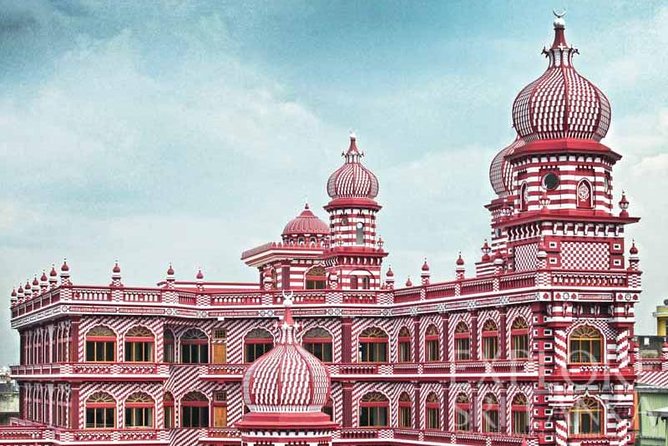
The tour includes Jami Ul-Alfar Mosque, popularly known as the Red Mosque. The description calls it a unique masterpiece, and it is a good reminder that Colombo Fort is not just administrative and commercial, it is also religious and cultural.
A practical consideration: religious sites can have specific rules and routines, so expect a quiet, respectful tone even if the area around it is active.
Pettah and Old Town Hall: where history meets the everyday street
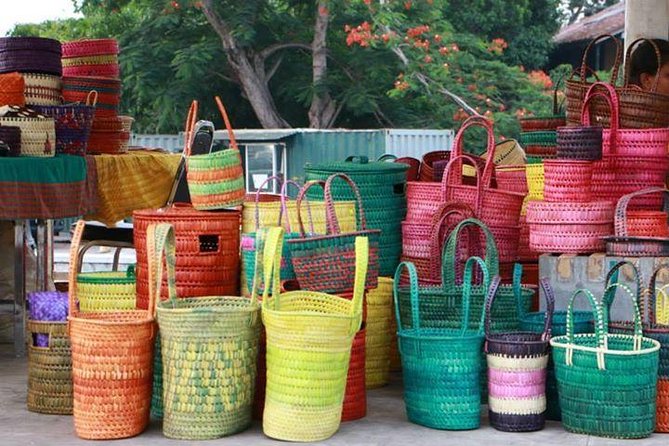
After the Fort cluster, the route shifts toward Pettah Bazaar and nearby historic sites. This is where the walk starts to feel more like street life than heritage sightseeing.
Old Town Hall: a lesser-known monument worth your time
You stop at the Old Town Hall, described as a little-known historic monument in Pettah. It is described as a large gothic church-like mansion in the old business quarter, and the tour frames it as a treasure trove you can easily miss if you are just passing through.
This kind of stop is why I like small-group walking tours. It is not only about the famous postcard places. It is about finding the “why hasn’t everybody noticed this?” landmarks.
Pettah Bazaar: energy, shopping, and city rhythms
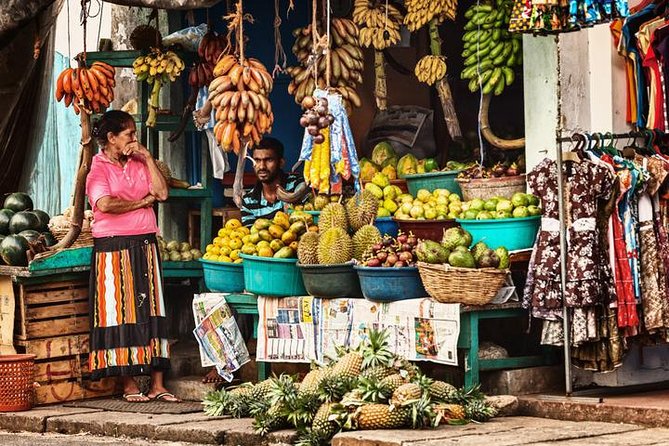
Then you explore the busy markets of Pettah Bazaar firsthand. This is a good counterweight to the colonial-era stops. You get to see everyday Colombo, not just the city’s inherited architecture.
The practical angle: go with a flexible mindset. Market streets can be active, and the best experience comes from walking slowly, looking around, and letting your guide explain what you are seeing.
Colombo Fort Railway Station: British-era infrastructure with modern relevance
Another anchor stop is the Colombo Fort Railway Station, built by the British and described as a major hub. Railway stations are more than transport buildings, they are social structures. People pass through them daily, and that continuity is a big part of why they feel real.
This stop also helps the tour’s theme click. The Fort area is not just “old buildings,” it is the city’s operational backbone from an earlier era, still shaping movement today.
Gangaramaya Buddhist Temple: the donation ticket and the architecture story
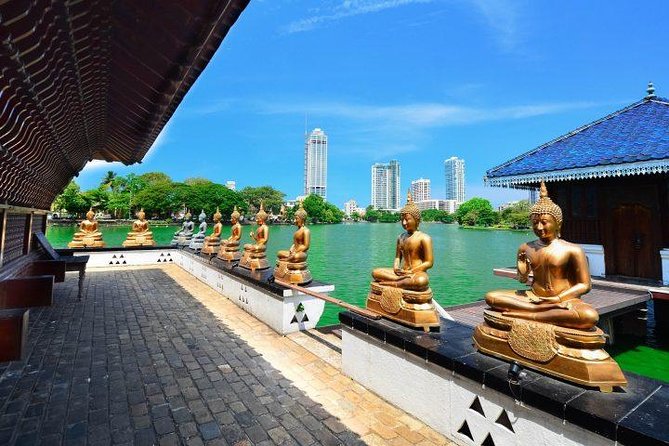
The tour includes Gangaramaya (Vihara) Buddhist Temple, described as the main temple in Colombo with unique architecture influenced by many cultures.
Important detail: admission is not included. The tour notes a donation ticket is required, and it is listed as $2.00 per person. You will get a ticket from the temple.
Why this stop is worth planning for: it is one of the few places on the route where the experience is explicitly cultural and spiritual, not just architectural. It also gives context for Colombo’s modern identity, because the city’s history is not only in colonial buildings, it is also in living religious practice.
The finish at Galle Face Hotel and Galle Face Green
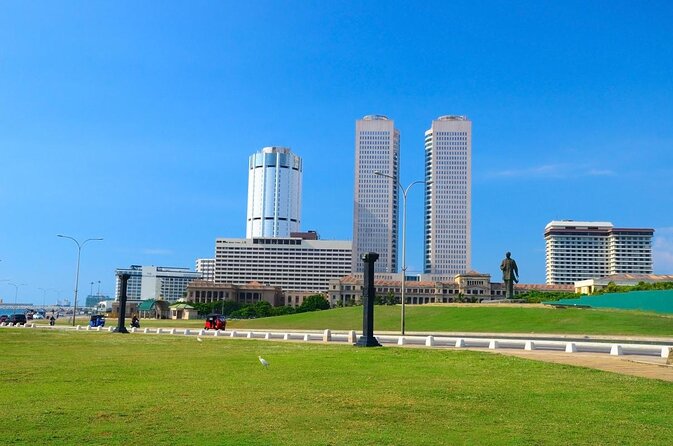
To close the tour, you return to the seafront at Galle Face Hotel and finish by Galle Face Green. The timing is described as dependent on the day, so you may see activities on the Green along with iconic nearby buildings like the Old Parliament and the famous hotel itself.
Why I like this ending: it gives you space to reset. After walking through dense history, you get a wide open public area with sea air and a different kind of city energy. It also sets you up well for an easy next move, like a meal near the seafront.
Value and pacing: how to judge if this is right for you
At $30 for about 3 to 4 hours, the biggest value is not just the price tag. It is the mix of included extras and the way stops are distributed.
Here is what you are paying for beyond “time on a street”:
- Snacks and bottled water included
- Government fees included
- Most stops are described as free admission
- Private transportation helps manage getting between areas
- The tour has a maximum of 8 travelers, so you get more than a one-way lecture
Pacing can be a deal-breaker or a deal-maker. One review sentiment in the mix mentions the tour feeling slow with too much detailed information. That is a real possibility if you prefer light commentary.
If you like context and enjoy asking questions, the guide style is likely a match. The high praise you see repeatedly centers on Ajeet De Soyza’s engagement, patience, and ability to connect history to what you are looking at right now.
My practical advice: if you want a lively pace, tell Ajeet at the start that you love stories but prefer shorter explanations. A good guide will adjust. Also, carry water, eat a snack if needed, and keep your shoes comfortable. One note from the feedback highlights that it can get tiresome on a hot day, so plan for that.
Who should book this tour
This tour is a strong choice if you:
- Want a first-time orientation to Colombo, especially the Fort area and Pettah
- Like history explained through buildings and street-level scenes
- Enjoy asking questions while you walk
- Prefer a small group day rather than a big bus tour
It may be less ideal if you:
- Prefer very short stops and lots of movement, with minimal narration
- Get tired quickly in warm weather and prefer less walking overall
Still, the included bottled water and snacks help, and the private transportation parts can reduce the “all on foot” burden.
Should you book the Colombo Walking Tour with Ajeet De Soyza?
If your goal is to understand Colombo beyond a quick checklist, I think this is a smart booking. The route hits the city’s big story zones, Fort and Pettah, with a guide who can explain the why behind what you see.
I would book it if you like a guided walk where the stops matter and you can ask questions. The main “watch-outs” are heat and story density, so bring water, wear comfortable shoes, and keep an eye on the donation requirement at Gangaramaya.
If you want a simple half-day that leaves you with a mental map of Colombo, plus a feel for how colonial architecture and local culture sit side by side, this one fits the bill.
FAQ
How long is the Colombo walking tour?
The tour runs about 3 to 4 hours.
How much does the tour cost?
The price is listed as $30.
How big is the group?
The tour has a maximum of 8 travelers, so it stays small.
What is included in the price?
You get bottled water, snacks, government fees, and private transportation.
Are temple and monument fees included?
Most listed stops are free, but Gangaramaya Buddhist Temple is not included. The donation ticket is $2.00 per person.
What is the meeting point and where does it end?
You start and end at Galle Face Hotel, 2 Galle Rd, Colombo 00300, finishing in front of Galle Face Green.
Is a mobile ticket used?
Yes, the tour includes a mobile ticket.
What if the weather is bad?
The experience requires good weather. If it is canceled due to poor weather, you will be offered a different date or a full refund.
What is the cancellation policy?
You can cancel for a full refund up to 24 hours in advance. If you cancel less than 24 hours before the start time, the amount paid is not refunded.
More Tours in Colombo
More Tour Reviews in Colombo
Colombo, Keep Exploring
Still browsing Colombo? Start here
- Safari Day Tour to Sigiriya Lion Rock and Golden Cave Temple★ 5.0 · 3 reviews
- Shore Excursion Colombo Port to Mount Lavinia Beach & Colombo city For 4 – 6 Pax★ 4.5 · 3 reviews
- Airport Taxi Transfers from Colombo Airport to Mirissa★ 5.0 · 3 reviews
- Private Car Hire with Driver-Guide for 03 Days Round Tour★ 5.0 · 3 reviews
- 7 Days Sri Lanka Safari Tour★ 5.0 · 3 reviews
Colombo Tours, compared.
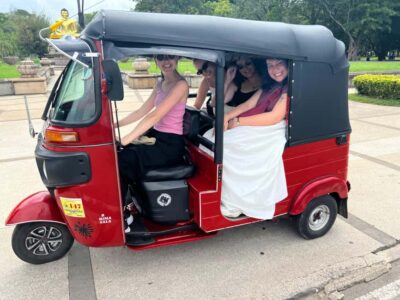 ★ 4.9Colombo: Private Tuk-Tuk City Tour with All Entry FeesFrom $232,154 reviews
 ★ 4.7From Colombo: Sigiriya and Dambulla Day Trip with SafariFrom $53842 reviews
 ★ 5.0Colombo Tuk Tuk City Tour -Sightseeing Entry Fees & Food IncludedFrom $34678 reviews
 ★ 5.0Colombo Private Tuk-Tuk City Tour with All Entry Fees IncludedFrom $32524 reviews
 ★ 4.9Colombo: Private Tuk-Tuk City Tour with Guide & All TicketsFrom $22471 reviews
 ★ 4.9Colombo Local Food Tour by Tuk Tuk – All InclusiveFrom $36261 reviews
 ★ 5.0Tuk Trip is Very Cheap in Colombo (All-inclusive ) city tourFrom $24260 reviews
 ★ 5.0Colombo Bay Tuk Tuk City TourFrom $35244 reviews
Browse the lists this tour appears in