
REVIEW · SIGIRIYA ROCK FORTRESS TOURS
From Dambulla/ Sigiriya: Ancient City of Polonnaruwa by Bike
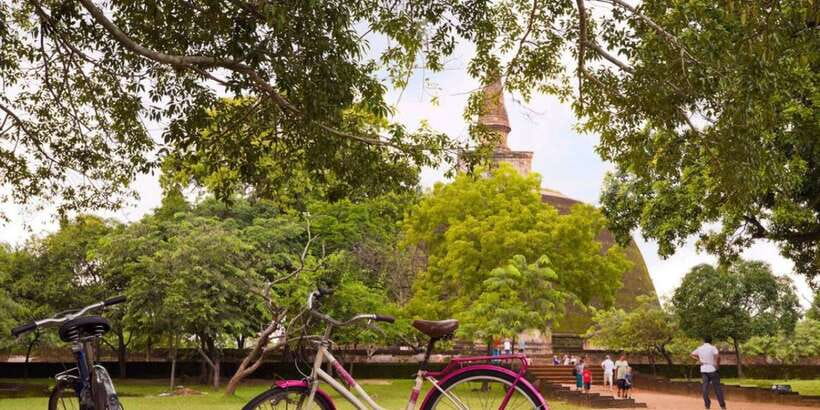
Polonnaruwa by bike feels like a time machine. I love how the Royal Palace grounds are made human by a slow, guided ride, so you can actually notice the scale and the details. I also love the shock of Gal Viharaya, those rock-cut Buddha statues that hit you in the face after quieter stretches.
Before you book, keep one thing in mind: the Ancient City entrance fee is not included (it’s about US$30 per person), and your comfort depends on the bicycle condition you get on the day.
In This Review
- Key highlights worth knowing
- From hotel pickup to Polonnaruwa ruins by bike
- The Polonnaruwa bike route, and why it works
- Royal Palace, where power shows in stone
- Nissankamulla Palace, details you can actually spot
- Gal Viharaya, the rock-cut moment that sticks
- Thuparama stupa, spirituality without the rush
- Lankathilaka stupa, plus Vatadage and Rankoth Vehera
- Parakramabahu Statue, ending on a big name
- Bike time: what to check before you ride
- Price and value, including the entrance fee reality
- What to bring, and how to prepare for a hot half day
- Who this Polonnaruwa bike tour is best for
- Should you book this Polonnaruwa bike tour?
- FAQ
- What time does the tour start?
- How long is the whole experience?
- Is the Polonnaruwa entrance fee included?
- Where does the pickup happen?
- What’s included in the tour price?
- Do you get a guide and is it in English?
- What do I need to bring?
Key highlights worth knowing
- Hotel pickup and drop-off from Dambulla, Sigiriya, Habarana, or Kandalama in an air-conditioned vehicle
- Cycling through the World Heritage core with a guide and stops built around key monuments
- Major sites on one route like Royal Palace, Nissankamulla Palace, Gal Viharaya, and Thuparama
- Photo stops and a short break to catch your breath before the next cluster of ruins
- Private group format, so the pace can work for you
From hotel pickup to Polonnaruwa ruins by bike
This tour is built around a simple rhythm: first you get moved comfortably from your hotel, then you switch to a bike and start moving through the ruins like you actually belong there. The pickup times are set so you arrive with daylight and enough energy to enjoy the walking bits at the monuments.
You start around 08:00 with pickup from hotels in Dambulla, Sigiriya, Habarana, or Kandalama. The drive is in a private, air-conditioned vehicle, with the price covering fuel surcharge, driver charges, and even parking. You then hit the site area by about 10:00, and your main exploring stretch runs roughly 3.5 hours. The whole experience ends around 13:00, when you head back to your hotel.
That timing matters more than it sounds. Polonnaruwa can feel very warm during the day, and being done by early afternoon gives you the option to keep the rest of your day for lunch, a second temple, or just resting without feeling like you missed the best light.
The Polonnaruwa bike route, and why it works
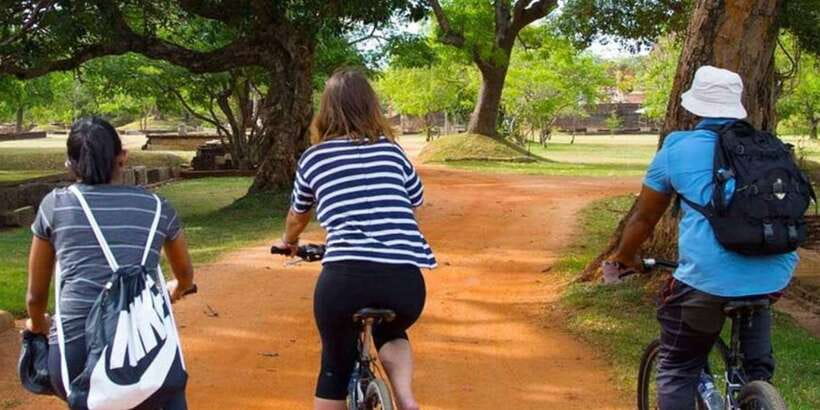
I like bike tours that do not try to turn an archaeological site into an endurance challenge. The route here is paced for sightseeing. You spend time riding between monuments, then you get off the bike for close-up views, photos, and a guided walk where it counts.
In practice, this means:
- You get more monuments in less time than you would with only walking.
- You get better angles for photos, especially at palace and stupa sites where there is open space around the ruins.
- You can move at your own comfort level during the cycling segments, instead of constantly stopping and starting like a group foot tour.
One practical thing to remember. Even when a route is not “hard,” bikes are still bikes. If you are sensitive to minor discomfort or uneven surfaces, you will want to pay attention to how your bicycle fits and how it responds.
Royal Palace, where power shows in stone
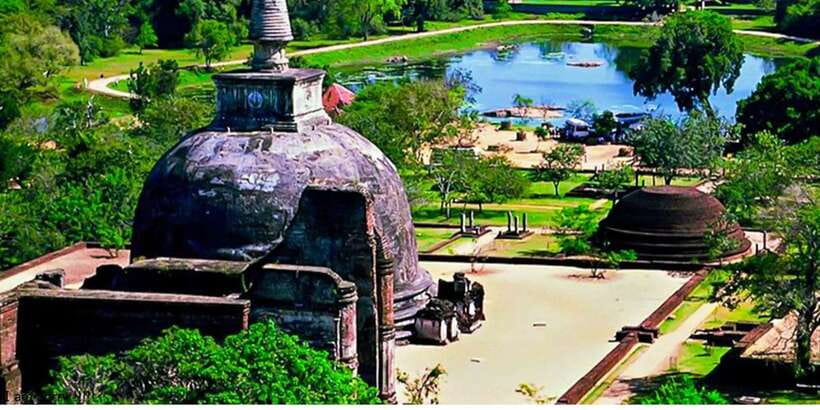
The tour’s first big “wow” cluster centers on the heart of royal life. You’ll visit the Royal Palace, and this is one of those places where the buildings do not just look impressive, they explain how rulers wanted people to feel.
When you see palaces at a distance, it can turn into a generic “wow, old.” Up close, the Royal Palace area becomes more about layout: where people would gather, where ceremonial movement mattered, and how the architecture created status. With a guide, you get the story behind the forms, not just the labels.
I like this stop because it sets context. After Royal Palace, everything else you see feels connected. Temples and dagobas are not random ruins anymore, they are part of the same planned world.
Nissankamulla Palace, details you can actually spot
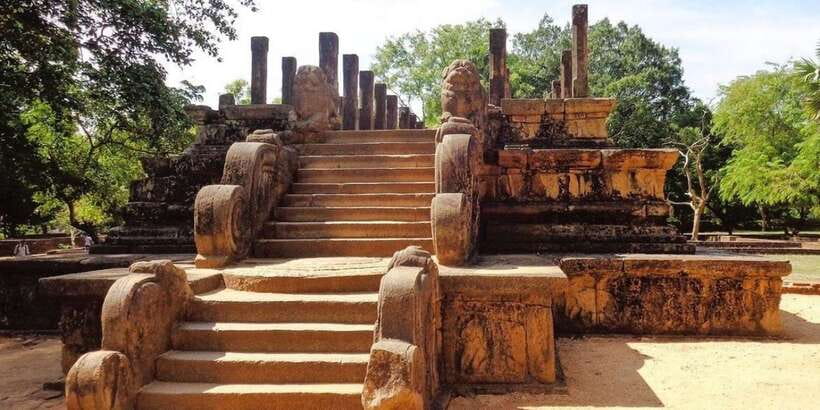
Next comes Nissankamulla Palace, and this is the kind of site where a bike tour earns its keep. You are not stuck on a single long walk with a crowd. Instead, you can reposition, stop for photos, and then look closely at the craftsmanship the guide points out.
Nissankamulla is known for its decorative and structural character, and that matters because Polonnaruwa ruins are not only about survival. They are about design. A good guide helps you notice things that you might miss if you show up alone, like how decorative elements relate to the building’s purpose.
If you enjoy architecture and want more than a quick photo, this stop is one of the best uses of your time.
Gal Viharaya, the rock-cut moment that sticks
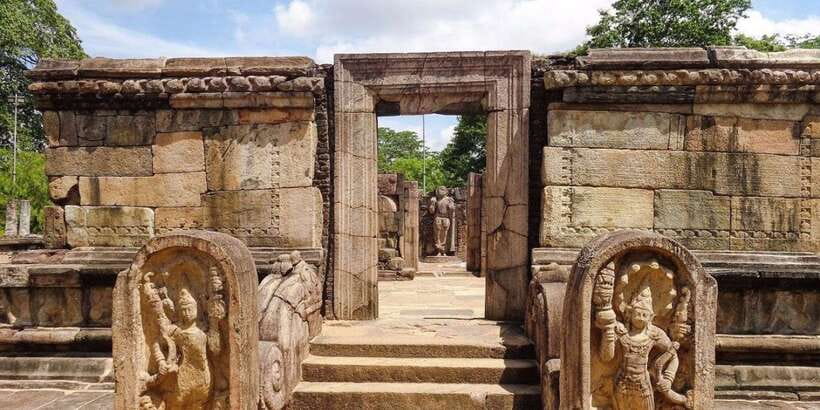
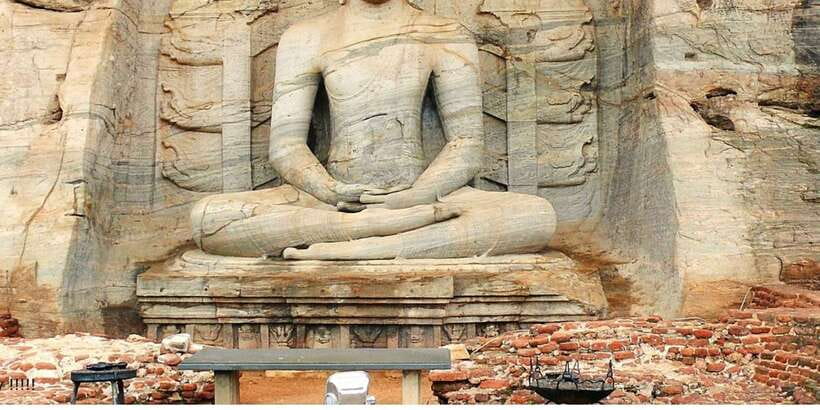
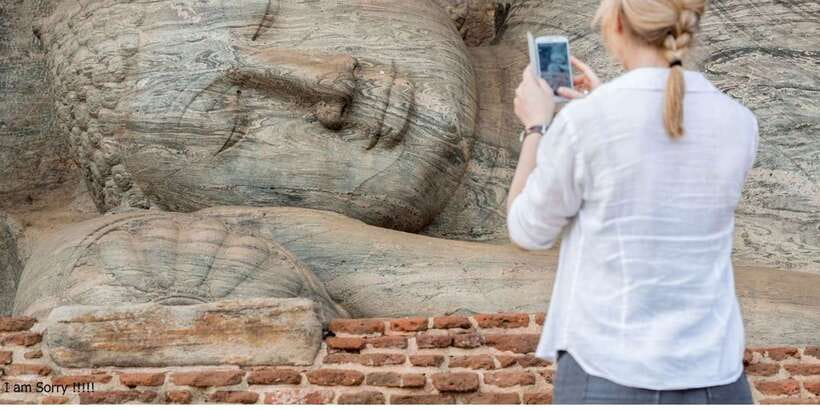
If Royal Palace is about power, Gal Viharaya is about presence. The rock-cut temple here houses four Buddha statues, and even if you have seen pictures, seeing them in person is different. Light and shadow play across the rock surfaces. The faces and proportions feel more immediate. And because it is a major monument, the place has a kind of gravity.
This is also a stop that works well on a bike tour. You arrive with momentum, then you slow down. You take in the scale. You step into the quiet space around the temple and you notice the carved rock as more than a backdrop.
This is the kind of moment that makes the whole half day feel worthwhile, even if the earlier stops are more “learning” than spectacle.
Thuparama stupa, spirituality without the rush
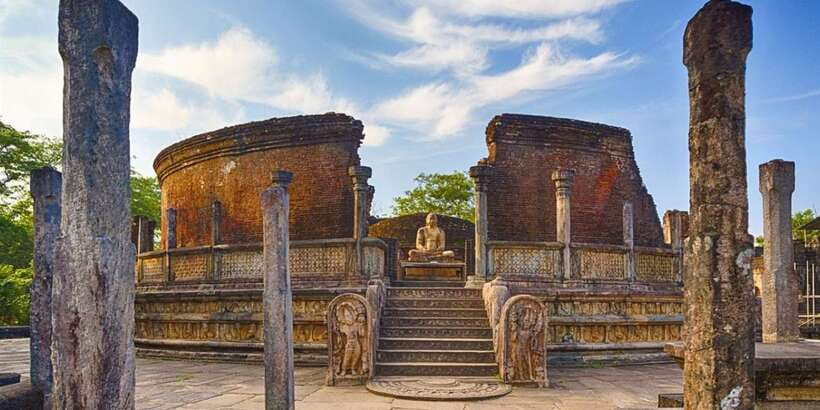
After the main temple area, you’ll visit Thuparama stupa, a spiritual stop that balances the palace and carving-heavy sections. Stupas can feel abstract if you do not understand what you are looking at. With a guide, you get the significance, and the experience becomes less about guessing and more about recognizing why people built these structures where they did.
The tone changes here. You are not looking at “royal living” details now. You are in a more contemplative zone, where even a short guided explanation helps you read the site instead of just passing through it.
Lankathilaka stupa, plus Vatadage and Rankoth Vehera
The tour also includes Lankathilaka stupa, along with the Vatadage and Rankoth Vehera areas. These stops are valuable because they broaden what you think “ancient city” means.
At Royal Palace and Nissankamulla, you are focused on royal architecture and decorative work. With the stupas and related structures, you start to see a different kind of design logic. These monuments also show how craft and devotion show up in stone, not as separate worlds, but as linked expressions.
Lankathilaka stands out for its stupa design. Vatadage and Rankoth Vehera add the sense that Polonnaruwa was not built in isolation. It was part of a bigger cultural and religious landscape, with specific choices repeated and adapted across generations.
Parakramabahu Statue, ending on a big name
Your final major encounter is the Parakramabahu Statue. This is a good closing stop because it brings the monuments back to a person and a period. When you see statues like this after moving through palaces and temples, it helps you connect the dots between political power, religious building, and the reason the city mattered enough to be remembered.
It is also a satisfying way to end: you finish with a clear focal point, then you head back around 13:00.
Bike time: what to check before you ride
This tour is selling the idea of cycling through archaeological space. That can be fantastic. It can also be uncomfortable if the bikes are not properly maintained.
One review flagged problems like gears not working well and brakes that did not stop smoothly, plus a tyre burst that sent them back to walking for part of the return until a vehicle could help. I cannot guarantee you will face that. But I can tell you what to do so you are not stuck.
Before you start riding, do quick checks:
- Try every gear once, and confirm it changes without grinding.
- Test the brakes at low speed before you commit to busier sections.
- Check the tyres visually for obvious wear and make sure the tyres look firmly inflated.
- If the bike feels loose or wobbly, say something early. Get it fixed now, not after you are already rolling.
If you get a well-maintained bike, a ride here feels natural. If not, you lose the whole point of the tour.
Price and value, including the entrance fee reality
The package price is US$95 per person and it’s structured to feel convenient. You get private pickup and drop-off in an air-conditioned vehicle, a cycling guide, mountain bike access, parking fees, and complimentary refreshments with water.
It is also transparent that the government taxes are included in the price.
The big thing to budget for is that entrance fees to the Ancient City of Polonnaruwa are extra at about US$30 per person. That means your day is likely closer to a full-day museum ticket plus a guided cycling service.
Here is how I think about the value:
- If you want a guide to connect the dots, and you like moving between monuments without wasting time, this can be a very efficient use of your day.
- If you are comfortable visiting Polonnaruwa independently and you would rather pay only for your entry, you may feel the price is steep.
Given the sites covered and the time available, I consider it good value if the bikes are in solid condition and you actually enjoy the ride. If you dislike cycling or get stuck with equipment problems, the same price can feel unfair.
What to bring, and how to prepare for a hot half day
This is a practical half day. You are out early enough to beat some heat, but you are still riding and walking in open areas.
Bring:
- A charged smartphone (you will use it for photos and directions)
- Passport or ID card for checks
And pack your common sense:
- Expect sun, even if the morning starts cooler.
- Wear shoes you trust for short walks at uneven ruin edges.
- If you get one drop of good luck with your bike, you still want comfort from clothing and footwear.
Also, the tour description includes complimentary refreshments and water. If you are the type who likes to be extra safe, plan to have your own bottle too. That way you are covered even if service timing gets weird on the day.
Who this Polonnaruwa bike tour is best for
This fits best if you like history, but you also like the practical fun of moving through a site instead of only walking.
It’s especially good for:
- People who want to see multiple major monuments in about half a day
- First-timers to Polonnaruwa who want the “what am I looking at” explanations
- Anyone who gets impatient with slow, purely foot-based group tours
- Travelers who prefer a private group pace rather than a large crowd march
It may be less ideal if:
- You are not comfortable on a bicycle, even a short route
- You are worried about bike maintenance and don’t feel confident asking for changes
- You mainly want quiet, unguided exploring and would rather set your own rhythm
Should you book this Polonnaruwa bike tour?
I would book it if you want an efficient route through the core monuments and you value having a guide explain what you are seeing at Royal Palace, Nissankamulla, Gal Viharaya, and the main stupas. The early start and the early finish make it a smart use of time, and the private format keeps it flexible.
I would hesitate if you are budgeting tightly and you feel the entrance fee plus tour price is a stretch, or if cycling is a big deal for you. If you do book, arrive ready to check the bike and speak up fast if anything feels unsafe. Do that, and you are much more likely to get the best version of this experience, smooth riding, solid guiding, and Polonnaruwa that feels alive instead of just old.
FAQ
What time does the tour start?
The pickup starts at 08:00, and you begin exploring Polonnaruwa around 10:00.
How long is the whole experience?
It runs for about 5 hours total.
Is the Polonnaruwa entrance fee included?
No. Entrance fees to the Ancient City of Polonnaruwa are not included (approx. US$30 per person).
Where does the pickup happen?
Pickup is available from hotels in Dambulla, Sigiriya, Habarana, and Kandalama.
What’s included in the tour price?
It includes hotel transportation and return by air-conditioned private vehicle, mountain bike charges, a cycling guide (English), parking fees, fuel and driver charges, complimentary refreshments and water, and government taxes.
Do you get a guide and is it in English?
Yes. The tour has a live guide and the language is English.
What do I need to bring?
Bring a charged smartphone and a passport or ID card.
Sigiriya Rock Fortress Tours, compared.
 ★ 4.7From Colombo: Sigiriya and Dambulla Day Trip with SafariFrom $53842 reviews
 ★ 4.9From Kandy: Sigiriya Rock & Dambulla Cave Temple AdventureFrom $29785 reviews
 ★ 5.0Organic cooking class sigiriya (kumara & family)From $28650 reviews
 ★ 4.9From Sigiriya: Minneriya National Park Private Jeep SafariFrom $38415 reviews
 ★ 4.8From Sigiriya: Minneriya National Park Elephant SafariFrom $33365 reviews
 ★ 5.0Day tour to Sigiriya & Dambulla from KandyFrom $25252 reviews
 ★ 5.0Kandy to Sigiriya Day Tour and Dambulla cave temple with private vehicleFrom $42232 reviews
 ★ 5.0Private Day Trip to Sigiriya & Dambulla from Kandy – Aaliya ToursFrom $52190 reviews
Browse the lists this tour appears in