
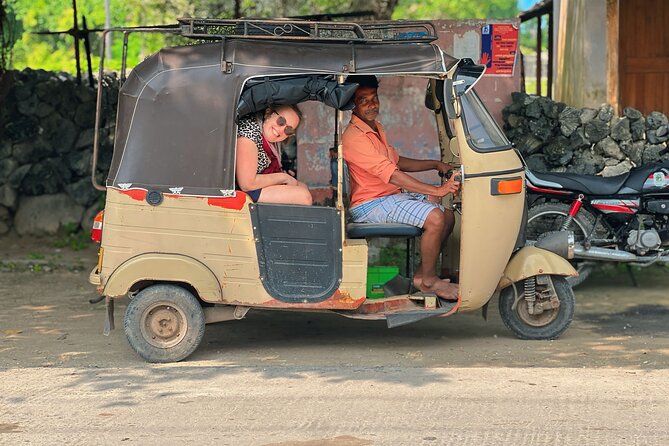
REVIEW · FULL-DAY
Full Day Tour Delft and Nainativu Island Adventure from Jaffna
This full-day tour from Jaffna gives you wild horses on Delft and temple visits on Nainativu in the same long day. I love that it mixes nature with real local faith and history, not just a quick photo stop. I also love the pace on Delft, where you get time to walk among ancient trees and coral-stone colonial leftovers. The main drawback to plan for is that the sea crossing can be affected by weather, and that can change what you are able to do on Delft.
The day runs about 10 hours and starts at 6:00am from Cargills Bank ATM in Jaffna, with pickup offered and a mobile ticket for the day. If your guide is the kind you want, like Arun (praised for being thoughtful and able to build a strong plan even when conditions shift), this tour feels like it stays on track. You will be on the move, so wear comfy shoes and bring a cover-up for sun and wind.
In This Review
- Key highlights to focus on before you go
- From Jaffna to the jetty: why the early drive matters
- Delft Island (Neduntheevu): wild horses and slow, old trees
- Delft’s Dutch colonial leftovers: Queen’s Tower to the fort
- Delft Beach: the swim and the seafood lunch reset
- Nainativu Island (Nagadeepa): sacred sites that feel close and personal
- Guide, pickup, and the rhythm of a private 10-hour day
- $130 value check: what you are paying for (and why it can feel fair)
- Who this tour suits best
- Should you book this Delft and Nainativu Island Adventure?
- FAQ
- Where does the tour start and end?
- What time does the tour begin?
- How long is the tour?
- Is pickup included?
- Is this a private tour?
- Do I need a physical ticket?
- What are the main island stops?
- Is there a meal included?
- Is the tour dependent on weather?
- What is the cancellation window for a full refund?
Key highlights to focus on before you go
- Kurikadduwan Jetty (KKD), the practical jumping-off point for the northern islands
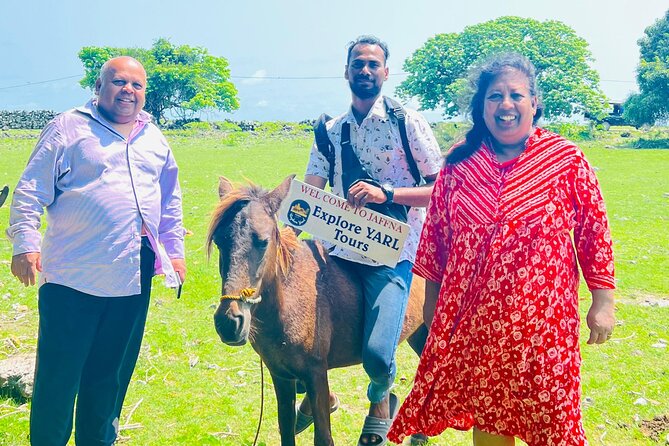
- Delft wild horses, descendants linked to horses brought centuries ago
- Perukamaram (baobab tree), a massive tree locals treat as a landmark
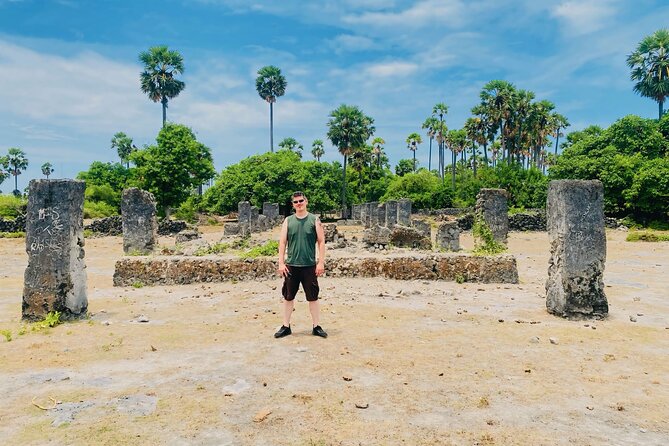
- Dutch coral-and-limestone remains like Queen’s Tower and the Old Dutch Hospital
- Nainativu’s Nagapooshani Amman Kovil and Nagadeepa Rajamaha Viharaya, two faiths in one small island
- Delft Beach swim plus fresh seafood lunch, a rare break in a packed day
Still narrowing it down? These Jaffna trips held up well.
- Delft and Nainativu Island Tour with Local Guide ( Jaffna )
★ 5.0 · 11 reviews
From Jaffna to the jetty: why the early drive matters
You start in Jaffna at 6:00am, which sounds painful until you realize why tours like this do it. The earlier you leave, the easier it is to handle the ferry schedule and the little real-world delays that always happen on island days. You also get cooler morning light for the drive.
Before you reach the water, you cross the Pannai Causeway, which connects the mainland to surrounding islands. This stretch is more than just “transfer time.” You see calm lagoon views, fishing boats, and birdlife from the road, which helps you shift into island mode before you ever step on a boat. It is one of those moments where the scenery quietly tells you this is a coastal region with daily rhythms, not a tourist-only set.
Right along the route you pass the Kannakai Puram Welcome Curve, a simple bend in the road, but it acts like a “we’re going somewhere interesting now” marker. Then you head toward Kurikadduwan Jetty, known as KKD. This is the real gateway to Delft (Neduntheevu) and Nainativu, and it is useful to know because it explains the logic of the whole day. You are not bouncing between far-flung areas, you are working from one coastal hub.
Delft Island (Neduntheevu): wild horses and slow, old trees
Once you are on Delft Island, the first thing you notice is how open it feels. Delft is remote, about 35 km off the coast of Jaffna in the Palk Strait, and that distance shows in the calm. You are not fighting crowds. You are walking in an environment where locals and wildlife share the same space.
The star is the Delft Wild Horse Sanctuary, where you can spot the island’s famous ponies. These wild horses are described as descendants of horses brought by the Portuguese in the 16th century. That mix of Portuguese connection and local island life is exactly the kind of layered detail that makes this day more than a checklist.
From there, the island becomes a living museum of trees and natural oddities.
You get time at Perukamaram (the baobab tree), a massive baobab believed to be over 400 years old. Even if you do not know much about trees, you will understand why this is a stopping point. It is big enough to be a landmark and old enough to feel slightly otherworldly when you stand beside it.
Next is the Growing Stone, a coral rock locals believe slowly increases in size over time. Whether you treat that as a folk belief or just an interesting island story, it is a great example of how Delft’s attractions are tied to local explanations. It turns a short walk into a conversation with the place itself.
Then come the Large Banyan Tree, called Aalamavanam, in the northeastern part of the island. Banyans can feel like whole ecosystems, with the way roots and branches spread. Here, the stop works because it gives you a break from “spotting one attraction” and shifts your attention to scale.
Delft’s Dutch colonial leftovers: Queen’s Tower to the fort
After the trees, Delft’s history turns more visible.
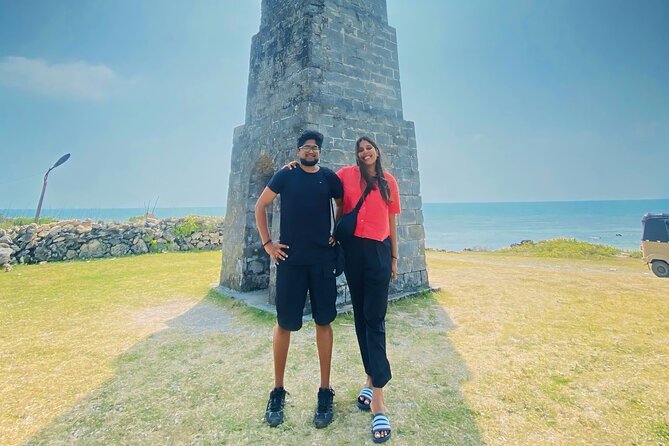
You visit Queen’s Tower, also known as Quindah Tower, built in the colonial era and located on the southeastern coast. The value of this stop is not that the tower is still fully intact. It is that the structure gives you a sense of how the island was once managed and watched.
A short stop at the Pigeon Nest follows. This is a small stone tower built during the Dutch colonial era, described as a message tower for messenger pigeons that carried important messages. It is the kind of detail that makes you look at old buildings differently. Instead of thinking “ruins,” you start thinking “a system that worked.”
Then you step into the coral-stone world of Dutch-era buildings, including the Old Dutch Hospital and Old Dutch Courts. Both are described as built with coral stones and limestone, and both help you understand the Dutch presence as practical infrastructure rather than just architecture. You will also visit the Dutch Fort, a limestone-and-coral stronghold whose ruins still outline the idea of protection and control.
A small consideration here: Delft is a walking day, but it is not a “trekking” day. The stops are designed as short visits that add up. You will want to pace yourself so you do not end the day feeling like you rushed everything.
Delft Beach: the swim and the seafood lunch reset
After the history and nature stops, the tour builds in a real breather: Delft Beach swim, a fresh seafood lunch, and return to the jetty.
The beach time matters for two reasons. First, you finally cool down after sun, wind, and sun again. The water is described as shallow with calm conditions and a soft sandy bottom, which usually makes it more comfortable than rougher coastal spots. Second, lunch on the island is part of what makes the day feel complete. You are not eating on the side of a highway. You are eating somewhere that matches the island theme.
One practical note: if it is breezy, the water can still feel chilly at first. Plan on a gradual entry, and keep your towel and dry layer handy. Also, if you are the type who hates sand getting everywhere, bring a small cloth or rinse kit if you have one.
Nainativu Island (Nagadeepa): sacred sites that feel close and personal
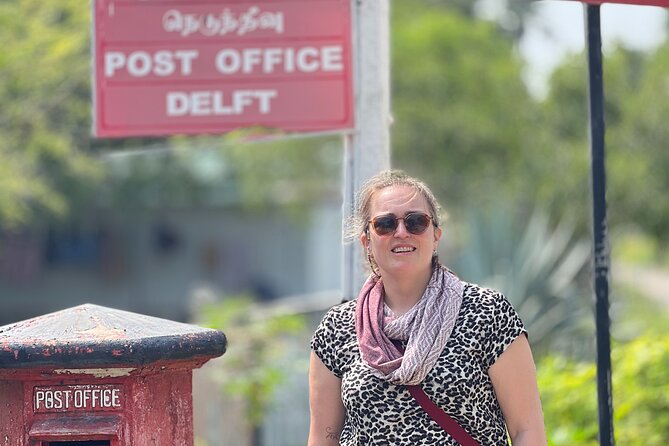
Then you shift to the other side of the island story: Nainativu, also known as Nagadeepa. This island is small, but spiritually significant, and that changes the mood of the day. Where Delft feels open and airy, Nainativu feels focused.
The first major stop is Nagapoosani Amman Kovil, a Hindu temple dedicated to Goddess Parvati, known locally as Nagapooshani Amman. You spend about 20 minutes there, which is enough time to understand the setting and observe how people move through the space. Even if you are not Hindu, the value is in seeing the devotion as part of daily life, not staged for visitors.
Next is the Nagadeepa Rajamaha Viharaya, a Buddhist site described as one of Sri Lanka’s sixteen holiest Buddhist sites. Tradition says the Buddha visited the site, and this is the kind of belief that gives the place a strong spiritual gravity. Again, you are there for a short, respectful visit, not a long meditation retreat. Still, that short time can land because the island is quiet and the sites are significant.
What I like about fitting both these temples into the same day is how it makes “religion” feel less like a label and more like lived practice across communities. Nainativu does not feel like a museum stop. It feels like a place where faith is active.
Guide, pickup, and the rhythm of a private 10-hour day
This is a private tour, meaning only your group participates. That matters because you are not stuck behind other groups or forced into a cookie-cutter pace. If you have mobility needs, it also tends to make timing easier to manage, since the guide can generally adjust the order and keep the day flowing.
The tour includes pickup offered and starts and ends at the meeting point in Jaffna. That convenience is underrated. On an island day, you want less logistics stress and more “just show up and go.”
You also get a mobile ticket, which helps reduce paperwork headaches. And while the info says the stops use admission ticket free notes, you should still budget for whatever local offerings and practical costs pop up around the ferry day, since not every expense is spelled out in the attraction list.
One more thing: expect the day to be structured around travel time. The tour duration is about 10 hours, and the remaining time in the schedule is for driving and ferrying. That means you will not have “extra hours” to roam. If you want maximum soaking-in time on a particular spot, I suggest you communicate that early to your guide.
$130 value check: what you are paying for (and why it can feel fair)
At $130 per person, the price is not cheap in a region where many half-day trips exist. So what makes it feel worth considering?
First, you are paying for two islands in one day: Delft and Nainativu. Delft alone includes multiple meaningful stops: wild horses, ancient trees, natural oddities, and several Dutch-era structures. Then Nainativu adds two major sacred sites. That kind of “one-day range” is hard to recreate on your own without knowing local ferry timing.
Second, the day includes comfort support: pickup is offered, transportation is arranged for your group size, and the tour is private. You are not spending the morning figuring out how to get everyone to the jetty and back, then hoping the ferry schedule lines up.
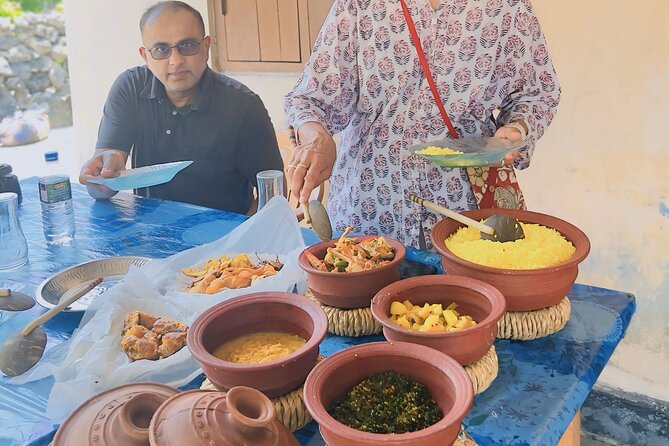
Third, you get a real meal component: fresh seafood lunch at Delft Beach. When a tour builds food into the experience, it often saves you from making your own restaurant decisions on a day that is already time-pressed.
My caution on value: the sea is a factor. If weather creates rough conditions, the day can shift. In at least one case with guide Arun, when Delft could not be reached due to rough seas, he created a compelling alternative plan focused on other worthwhile sights like bird watching and temples. That kind of flexibility is part of the value, but it is still worth knowing that the “island you plan” might not match the “island you get.”
Who this tour suits best
This is a strong fit if you want:
- Wildlife with a local story on Delft, not just a generic animal sighting
- Temple visits on Nainativu that connect you to Sri Lanka’s northern spiritual landscape
- A day that mixes nature, colonial-era stonework, and devotion without feeling like you are cramming too much in one hour at a time
- A guide-led format that handles the ferry day logic for you
It may be less ideal if you dislike early mornings, or if you are highly dependent on guaranteed access to Delft regardless of weather. The tour requires good weather, and sea conditions can affect the plan.
Should you book this Delft and Nainativu Island Adventure?
If your idea of a great day is wild ponies, ancient trees, coral-stone colonial remains, and two sacred islands in one loop, I think this tour is a very good call. You are getting variety without feeling like you are sprinting from one country-style attraction to the next. Plus, the private format and guide support help you stay calm during a long day.
Book it if:
- You are comfortable with a 6:00am start and a 10-hour schedule
- You want the combination of Delft nature and Nainativu faith
- You appreciate real island pace, not a rush-through circuit
Consider a different plan if:
- You hate uncertainty tied to sea conditions, or you cannot handle a possible change in what island access looks like that day
FAQ
Where does the tour start and end?
The tour starts at the Cargills Bank ATM in Jaffna (listed as M287+6G2) and ends back at the same meeting point.
What time does the tour begin?
The start time is 6:00am.
How long is the tour?
The duration is approximately 10 hours, including travel time.
Is pickup included?
Yes, pickup is offered.
Is this a private tour?
Yes. It is private, and only your group will participate.
Do I need a physical ticket?
You will use a mobile ticket.
What are the main island stops?
Delft Island (Neduntheevu) and Nainativu Island (Nagadeepa), with Delft wild horses and multiple Dutch-era sites on Delft plus Hindu and Buddhist sacred sites on Nainativu.
Is there a meal included?
The tour includes fresh seafood lunch during the Delft Beach portion.
Is the tour dependent on weather?
Yes. The experience requires good weather, and if it is canceled due to poor weather, you will be offered a different date or a full refund.
What is the cancellation window for a full refund?
You can cancel up to 24 hours in advance of the experience start time for a full refund.
More Tours in Jaffna
More Tour Reviews in Jaffna
Still browsing Jaffna? Start here
- Delft and Nainativu Island Tour with Local Guide ( Jaffna )★ 5.0 · 11 reviews
Full-Day, compared.
 ★ 4.8Yala National Park Safari Tours: Morning/Evening/Full DayFrom $25818 reviews
 ★ 5.0Full day Safari – Yala National Park – 04.30 am to 06.00 pm with – Janaka safariFrom $57603 reviews
 ★ 4.8Yala National Park: Half, 7-Hour, or Full-Day Safari & MealsFrom $14489 reviews
 ★ 5.0Full day / Half Day WildlifeAdventure in Yala-National-ParkFrom $42258 reviews
 ★ 4.7From Colombo: Kandy Full-Day TripFrom $50169 reviews
 ★ 4.9Yala National Park Safari Tours : Half Day & Full DayFrom $25161 reviews
 ★ 4.6From Colombo: Kandy Temples and Pinnawala Full-Day TourFrom $54144 reviews
 ★ 5.0Yala National Park – Full Day Safari (04:30 am – 06:00 pm)From $99132 reviews