
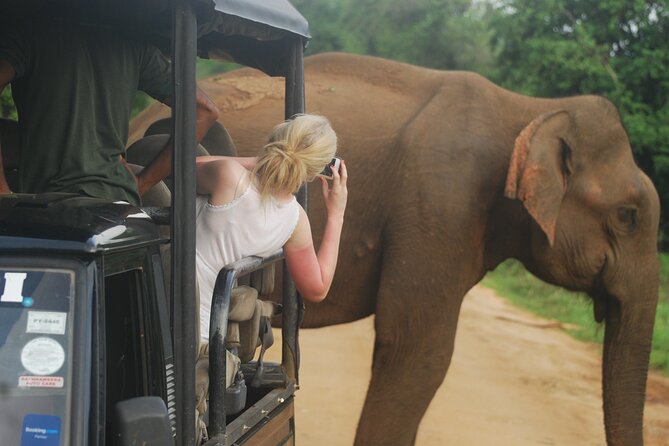
REVIEW · GUIDED
Half Day Safari Guided Tour
A short safari, big wildlife odds. This half-day guided tour packs several Sri Lanka wildlife hotspots into about 4 hours, with pickup offered and a comfy ride in converted Toyota safari jeeps. It also leans on professional experts to help you get the most out of each stop, rather than wandering around hoping for the best.
What I like most is the variety. You get bird watching potential at Bundala during the northern migratory period (September to April), leopard country at Yala, elephant focus at Udawalawe, and then a special human care stop at Elephant Transit Home. One consideration is cost clarity, because entrance fees are included for only one attraction, and if you visit more than one park, you may need to pay entrance fees separately (estimated $35 per person per park), and lunch is not included.
In This Review
- Key highlights I’d plan around
- How a 4-hour route hits birds, big cats, and elephants
- Getting there smoothly: pickup, mobile tickets, and private transport
- Stop 1 at Bundala National Park: migrant birds plus elephant country
- Stop 2 at Yala National Park: leopard country in a short time window
- Stop 3 at Udawalawe National Park: the elephant focus that drives demand
- Stop 4 at Elephant Transit Home (ETH): what to expect from a care-focused stop
- Price and logistics: is $89 good value for this route?
- What the 4 stops mean for your wildlife odds
- Timing tips for a day that stays short
- Who should book this half-day safari?
- Should you book this half-day safari route?
- FAQ
- How long is the half-day safari?
- Is pickup included?
- Do I get a mobile ticket?
- What does the tour price include?
- Is lunch included?
- Do I need to pay entrance fees for multiple parks?
Key highlights I’d plan around
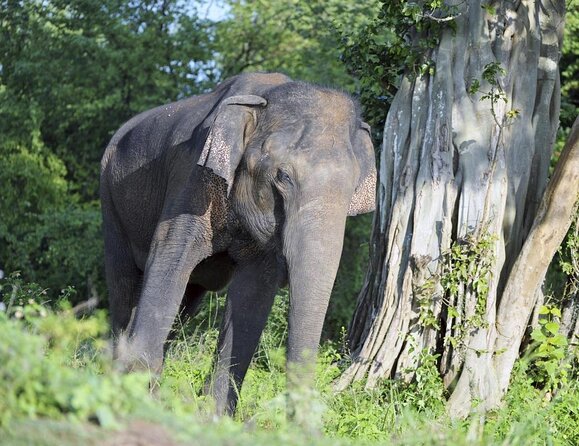
- Toyota safari jeeps for comfort and safety make a short day feel easier on your body and your eyes
- Bundala to Yala to Udawalawe gives you birds, big cats, and elephants in one tight route
- Migratory birds in Bundala (Sep to Apr) is a real seasonal advantage, not just marketing
- Udawalawe elephant numbers are a big reason this park is so popular
- Elephant Transit Home (ETH) is the standout educational stop for baby and young elephants
- Entrance fee rules can change your total cost, so plan your budget carefully
Still narrowing it down? These Yala National Park trips held up well.
- Full day Safari – Yala National Park – 04.30 am to 06.00 pm with – Janaka safari
★ 5.0 · 603 reviews - Yala National Park: Half, 7-Hour, or Full-Day Safari & Meals
★ 4.8 · 489 reviews - Yala National Park Wildlife Safari/ Game Drive – by Ajith Safari
★ 4.5 · 351 reviews - Leopard Safari Tour in Yala National Park
★ 4.5 · 281 reviews
How a 4-hour route hits birds, big cats, and elephants
This tour is designed for people who want wildlife without committing a full day. You get a guided loop that moves you between parks and then finishes at ETH, Elephant Transit Home, in Udawalawe. The schedule is tight, so the value comes from where the time goes, not from lingering in one spot.
I like that the itinerary is built around different animal “themes.” Bundala puts you in the right zone for migrant birds and a chance at mammals like Asian elephants. Yala shifts the focus toward big predators, while Udawalawe is the elephant magnet. Then ETH adds a calmer, story-driven stop centered on young elephants and how they are cared for before heading back out.
The half-day format has tradeoffs. You are not going to see everything a park offers, and your best results depend on what animals are actively moving. The upside is you get multiple chances across several habitats.
Getting there smoothly: pickup, mobile tickets, and private transport
The tour includes pickup, and that matters more than it sounds. When you are trying to fit safari time into a half day, every minute counts, and a smooth start helps you arrive when the day is still doing its animal things.
You also get a mobile ticket. That usually means less time spent sorting papers and more time focusing on the drive and the first viewing areas.
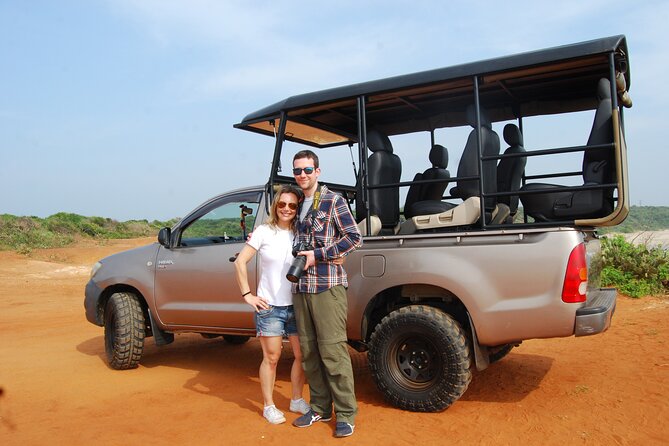
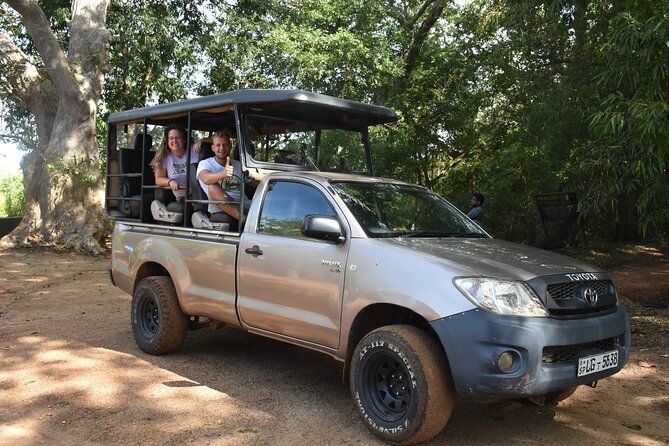
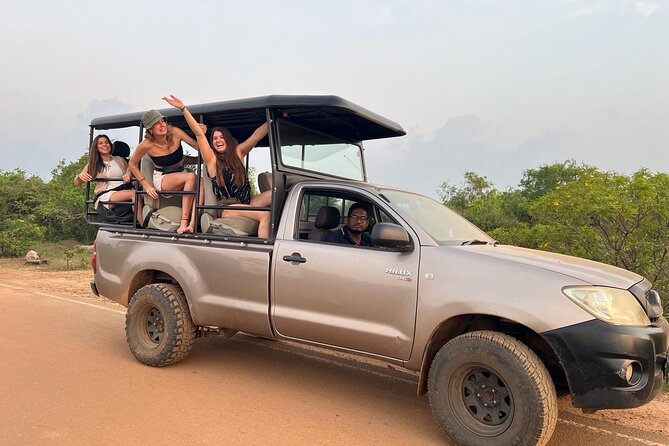
Transport is another practical plus. The jeeps are converted Toyota safari jeeps, built to be comfortable and to help keep you safe during the tour. In a park, comfort is not luxury. A long, bumpy ride can wreck your attention, and safari success is really about staying alert.
Stop 1 at Bundala National Park: migrant birds plus elephant country
Bundala National Park, often associated with big bird action, is where your itinerary starts. The tour notes that during the northern migratory period, from September to April, you can see lots of migrating birds. If you travel in those months, your odds lean more in favor of bird sightings because timing aligns with seasonal movement.
The stop is listed as one hour, and that is both a blessing and a challenge. You will have just enough time to get oriented, spot activity, and enjoy the wetlands and open areas that birds like. The drawback is that birdlife can be slow and subtle, so you need patience and a guide who knows where to look.
Bundala is also described as a place with many mammals, including Asian elephant. That gives you a double-purpose stop. Even if birds steal the show, you are not stuck with only one kind of wildlife.
Practical tip for this stop: expect a lot of scanning. If you are the type who wants action every 30 seconds, you might find bird watching a little more waiting-based. If you enjoy spotting small movement and building a “map” in your head, you’ll have a good time.
Other safaris we sat through
Stop 2 at Yala National Park: leopard country in a short time window
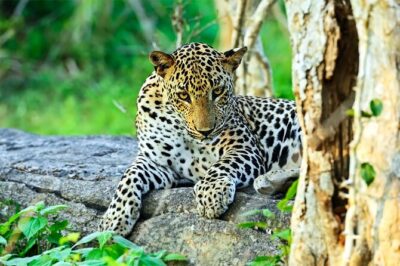
Yala National Park is the big name on this route, and the description hints at why. It is called one of Sri Lanka older national parks, and it is noted as the second biggest park of the country. It also gets labeled as leopard paradise, which tells you where the attention naturally goes.
In one hour, you are not trying to “cover” Yala. You are trying to find activity and be in the right areas at the right moment. The tour description points to many varieties of mammals, birds, and amphibians. That is useful because it means you are not only hunting one species. If the big cat drama does not happen immediately, you can still get plenty of wildlife interest from birds and amphibian habitats.
Another good sign for a half-day format: Yala is described as having recorded wildlife diversity. That implies your guide can shift focus based on what the area is currently offering, rather than you being trapped in one thin viewing window.
The main consideration here is expectations. With any safari, you cannot schedule an animal to appear on cue. If you treat Yala as your “big wildlife chance” stop and stay flexible, the hour can feel worthwhile rather than rushed.
Stop 3 at Udawalawe National Park: the elephant focus that drives demand
Udawalawe National Park is presented as the elephant hotspot for tourists. The tour notes that over 600 wild elephants were recorded during the last survey. That is the kind of number that makes a park stand out for a reason you can understand quickly.
Udawalawe is also described as a park named due to the Udawalawe development project, and that historical context helps explain why the landscape supports wildlife in a specific way. Even if you only care about seeing elephants, understanding why the park exists can make the experience feel more grounded and less like a checklist.
You get another one hour here. Elephant sightings can be dramatic or quiet depending on the time of day and what the herd is doing. The good news is that elephant country tends to offer something observable even when you are not seeing a full display, like movement along paths, feeding behavior, or calls from a distance.
If elephants are your priority, this stop is the anchor on the itinerary. If you are traveling with someone who wants proof of wildlife and not just scenery, you can frame Udawalawe as the part of the day where elephant interest is most likely to deliver.
Stop 4 at Elephant Transit Home (ETH): what to expect from a care-focused stop
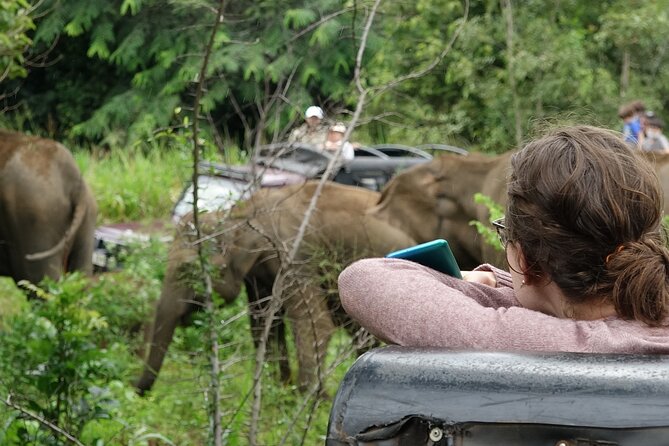
ETH, Elephant Transit Home, is described as the first elephant transit home in Sri Lanka. The details matter here because this is not just another viewing area. The tour says more than 60 babies and young elephants currently live there.
That changes the tone of the stop. The focus becomes observation and education, not only wild animal searching. You are getting a chance to understand how young elephants are supported and managed, which adds a meaningful layer to the rest of the day.
The stop length is listed as 40 minutes. That means you get enough time to learn the basics and watch the youngsters, without turning ETH into a long detour. For many people, it feels like the calm ending you want after a wildlife route that is heavy on scanning and movement.
One practical note: because ETH involves close observation, be ready for crowds or busy moments. The itinerary gives you a set time box, so just manage your expectations like you would at any popular educational site.
Price and logistics: is $89 good value for this route?
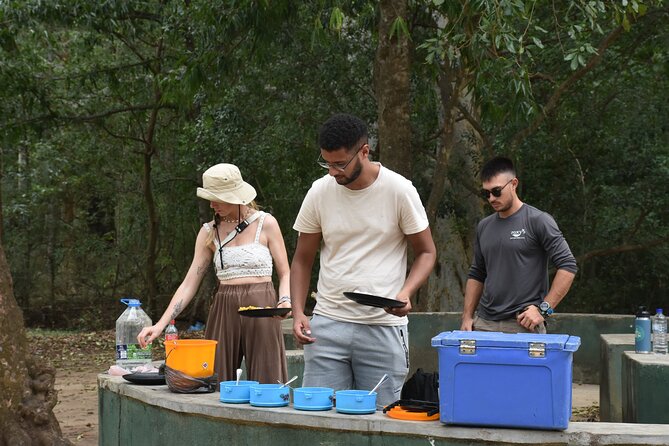
The price is $89 per person. For a half-day safari that includes private transportation and several major wildlife stops, that is a price point that can make sense, especially if you compare it to paying separately for guides and transport.
What is included is clear on paper: all fees and taxes, private transportation, and an entrance fee for one attraction only. That “one attraction only” detail is the key item to understand. If entrance fees apply differently to each park, your total cost could go up based on what is actually counted as included.
The tour description also warns that if you want to visit more than one park, you have to pay the entrance fee separately, estimated at $35 each person per park. That statement is important because this itinerary already lists multiple parks. It may mean the included entrance fee is limited, and additional park entrance fees are still required depending on how the operator bundles tickets for your specific departure.
So how do you judge value? Ask yourself what you want most:
- If you want a guided, time-efficient wildlife day and you are okay paying possible entrance add-ons, $89 can be fair.
- If you want a single fixed price with no surprises and no extra tickets, you may want to clarify what entrance fee is actually included for each stop in your case.
Also, lunch is not included. For a 4-hour day, this can be manageable if you eat before pickup, but plan your timing.
What the 4 stops mean for your wildlife odds
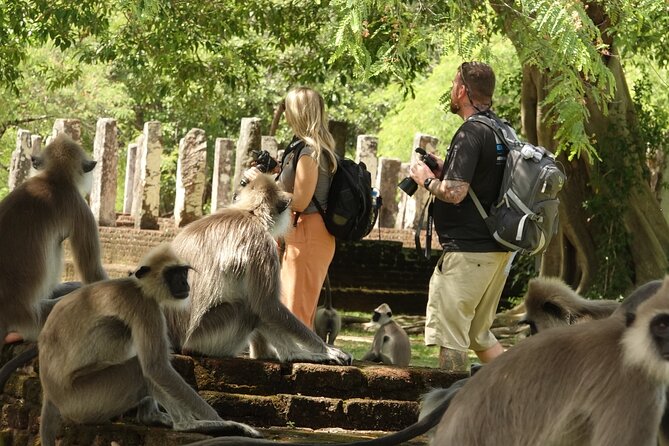
This itinerary builds a rhythm. You start in bird territory at Bundala, then switch to predator potential at Yala, move into elephant-heavy Udawalawe, and end at ETH for young elephants. That mix helps you avoid the most common safari disappointment, which is spending all your time on one species or one type of habitat.
Even the animal list in the tour overview supports that approach. It mentions leopards, deer, elephants, monkeys, flamingoes, and alligators. Flamingoes and migrating birds fit the Bundala theme, while elephants are the Udawalawe core. Amphibians in Yala also connect with water and habitat variety, which is where many parks surprise you.
Your biggest variable is always animal behavior. But your second variable is how tired you are. A half-day safari with comfortable jeeps and pickup is built to keep you alert enough to notice what is happening when it happens.
Timing tips for a day that stays short
This tour is listed as about 4 hours total, and the stop times are about 1 hour for Bundala, 1 hour for Yala, 1 hour for Udawalawe, and 40 minutes for ETH. That means you are moving often and spending relatively little time in each location.
To make the most of short time boxes, I suggest you treat each stop like a mini mission:
- At Bundala, focus on birds and water edges during your viewing window.
- At Yala, keep scanning for movement, not just big animals.
- At Udawalawe, prioritize elephant areas and herd movement.
- At ETH, slow down and focus on the young elephant observation component.
Wear clothing that handles sun and sudden stops. Even with a jeep, you can get exposed during wildlife viewing. Bring a hat and keep a small layer option. Not because you need luxury, but because comfort helps you concentrate.
Who should book this half-day safari?
This is a smart fit if:
- You want a wildlife highlight day without losing half your trip.
- You care about elephants and want a focused Udawalawe stop plus ETH.
- You travel between September and April and want Bundala bird potential aligned with the northern migratory period.
- You prefer guided scanning to self-driving uncertainty.
It may not be the best fit if:
- You want long, slow time in only one park.
- You hate the idea of possible additional entrance fees depending on how stops are charged.
- You are traveling when your group has very strict meal plans, since lunch is not included.
Should you book this half-day safari route?
If you’re looking for a compact, guided wildlife day with comfort and multiple chances, I think this tour is worth considering. The combination of Bundala bird season potential, Yala leopard-country attention, Udawalawe elephant focus, and the meaningful ETH stop creates a full arc in just a few hours.
But I would book it with your eyes open. Entrance-fee handling is the one part that can affect your final cost, since the tour includes entrance fee for one attraction only and mentions separate park entrance fees estimated at $35 per person per park for additional parks. Before you commit, confirm what entrance is covered for each park on your specific schedule.
If you can handle that detail and you want variety in one half day, this is a solid way to experience Sri Lanka wildlife without stretching your itinerary.
FAQ
How long is the half-day safari?
The tour duration is listed as about 4 hours.
Is pickup included?
Yes, pickup is offered.
Do I get a mobile ticket?
Yes, the tour includes a mobile ticket.
What does the tour price include?
The included items are all fees and taxes, private transportation, and an entrance fee (1 attraction only).
Is lunch included?
No, lunch is not included.
Do I need to pay entrance fees for multiple parks?
The information provided says entrance fees are paid separately if you want to visit more than one park, estimated at $35 each person per park.
More Tours in Yala National Park
More Tour Reviews in Yala National Park
- Full day Safari – Yala National Park – 04.30 am to 06.00 pm with – Janaka safari
- Yala National Park: Half, 7-Hour, or Full-Day Safari & Meals
- Yala National Park Wildlife Safari/ Game Drive – by Ajith Safari
- Leopard Safari Tour in Yala National Park
- Full day / Half Day WildlifeAdventure in Yala-National-Park
Still browsing Yala National Park? Start here
- Morning 07 Hour Private Safari at Yala National Park by Yala La Safari Tours★ 5.0 · 4 reviews
- Waterfall Tour & nine arch bridge Ella★ 5.0 · 4 reviews
- Private Yala Safari Full or Half Day Leopard Tour★ 5.0 · 4 reviews
- Lunugamwehera (Weheragala Entrance) National Park – Ajith Safari★ 5.0 · 4 reviews
- 1-Day Tour of Both Yala and Udawalawe National Parks★ 3.4 · 4 reviews
Guided, compared.
 ★ 4.9Kandy Private Guided City Tour by Tuk TukFrom $61,307 reviews
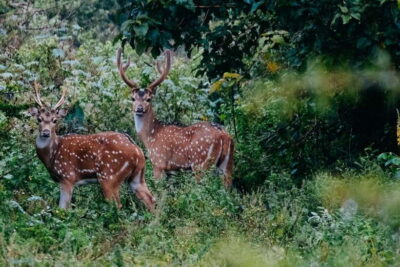 ★ 4.9Udawalawe National Park: Elephant Safari with Expert GuideFrom $30641 reviews
 ★ 4.9Colombo: Private Tuk-Tuk City Tour with Guide & All TicketsFrom $22471 reviews
 ★ 4.8Kandy to Ambuluwawa & Kandy City Guided Tuk Tuk Day TourFrom $12270 reviews
 ★ 4.9Kandy: Guided City Tour by Tuk-TukFrom $3227 reviews
 ★ 5.0Negombo city tour by Tuk Tuk Hotel Pickup & GuideFrom $17221 reviews
 ★ 4.9From Kandy: Sigiriya Guided Tuk-Tuk TourFrom $25166 reviews
 ★ 4.9Kandy to Pinnawala Orphanage and Ambuluwawa Guided Day ToursFrom $16144 reviews