
REVIEW · SEA TURTLE EXPERIENCES
Paradise Turtle Watching Tours
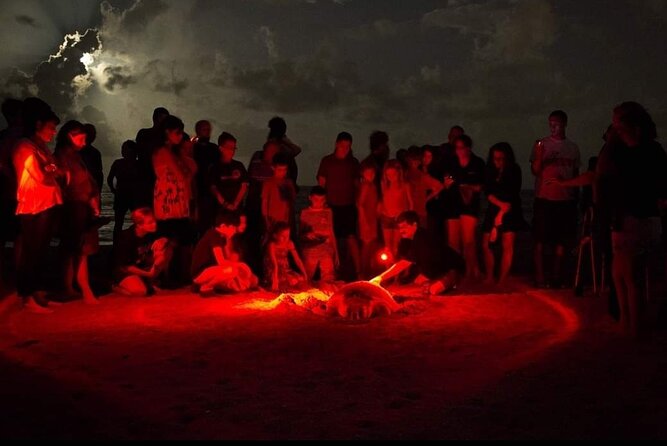
Night turtle spotting is a game of timing. Paradise Turtle Watching Tours from Tangalle lines up an 8:00 PM pickup and takes you to protected Rekawa, where green turtles most often come ashore to lay eggs; the tradeoff is that the turtle entrance ticket is extra.
In the accounts I found, the driver-guide Sujith is praised for clear explanations and keeping things on schedule, which matters when you are trying to catch a turtle doing what turtles do. One practical heads-up: for photos, you are advised to use a red light or cover your flasher with red polythene, so plan your lighting before you arrive.
Key things to know before you go
- Rekawa Turtle Watch is the star of the night, and it is set up as a protected area for turtles.
- Green turtles are the main hope, especially when they come ashore to lay eggs.
- Photography needs a turtle-friendly light setup, like a red light or red polythene over a flasher.
- You ride private in a tuk tuk, with pickup from your Tangalle hotel.
- Admission at the turtle station is not included, so you will budget for that on top of the tour price.
- Sujith is frequently named as an enthusiastic, helpful guide-driver.
In This Review
- Night Pickup From Tangalle and the 4-Hour Rhythm
- Rekawa Turtle Watch: What You’ll See and How Long to Stay Focused
- Entrance Tickets and the Real Cost of the Night
- Tuk Tuk Pickup and Private-Group Comfort
- Sujith and the Way Good Night Guidance Changes Everything
- Photography Rules: Red Light and Why They Matter
- What Each Part of the Night Feels Like
- Weather, Waiting, and How to Make This Night Go Smoothly
- Who This Tour Suits Best
- Should You Book Paradise Turtle Watching Tours?
- FAQ
- What time does the pickup happen in Tangalle?
- How long is the turtle watching tour?
- Where does the tour take you?
- Is the turtle entrance ticket included in the tour price?
- How much is the turtle watching entrance fee?
- Which turtle species are most often seen at Rekawa?
- Do I need to bring anything for turtle photography?
- Is this a private tour or shared activity?
- What happens if the weather is bad?
Night Pickup From Tangalle and the 4-Hour Rhythm

This trip is built around night-time wildlife viewing, so the pacing is simple. You start with a hotel pickup in Tangalle at 8:00 PM, then head toward the turtle watching area with about a 40-minute drive.
Once you reach the viewing area, you settle into a night session that runs roughly 3 hours. Afterward, you head back to Tangalle and typically arrive back around 12:00 AM, which keeps the whole experience close to the 4-hour total.
I like this schedule because it does not feel like you are burning half a day on logistics. It also means you can fit it neatly into a short stay in the area. The only real rhythm to remember is that you will be out late, and you are doing this for nighttime behavior, so patience matters.
More turtle stops along this coast
- Snorkeling with Turtles in Mirissa
★ 5.0 · 268 reviews - Mirissa Unforgettable Snorkeling Experience with Turtles
★ 5.0 · 120 reviews - Galle Private Day Tours with Sea Turtles visit & Boat Safari
★ 4.8 · 69 reviews - Snorkeling with Turtles in Mirissa
★ 5.0 · 28 reviews
Rekawa Turtle Watch: What You’ll See and How Long to Stay Focused
Rekawa Turtle Watch is described as a protected area for turtles, and it is used most often when green turtles come ashore to lay eggs. That is the key thing to aim for, since the action is tied to the turtles’ natural routine and timing.
At Rekawa, you are not just looking around and hoping. You are in a controlled setting designed to support turtle activity, which is why the rules for light and behavior matter so much. The tour runs long enough for you to get more than one chance at seeing something, rather than being herded through in a hurry.
Your goal is not only to spot a turtle, but to notice what it is doing. Egg-laying is a process, and if you show up with clear expectations, the night feels more rewarding. Even when you do not catch the exact moment, you usually still learn how turtles move through their egg-laying cycle, because your guide explains what you are seeing.
Entrance Tickets and the Real Cost of the Night
The tour price is listed at $9.00 per person, and that includes your private transportation by tuk tuk. What is not included is the turtle watching place entrance ticket, which you pay separately at the turtle station.
For budgeting, the ticket is given in Sri Lankan rupees as:
- 1 person: LKR 2000
- 2 persons: LKR 4000
- 3 persons: LKR 6000
The information also notes an approximate value of about $6.70 per person for the ticket.
So, if you are one person, you are likely looking at around $15 to $16 total for the evening (tour plus entrance). For small groups, the ticket scales based on the number of people, but the structure stays straightforward: you are paying for access to the protected turtle viewing area.
This is one of those “cheap transfer, paid entry” deals. The value comes from the fact that you are not paying for a pricey big-group bus, and you get a direct night ride from Tangalle rather than figuring out transport on your own after dark.
Tuk Tuk Pickup and Private-Group Comfort
This is set up as a private tour/activity, meaning only your group participates. That matters in a night wildlife context, because your experience is less about sharing noise and movement with strangers, and more about your group’s ability to focus on the dark and the sand.
Transport is included and provided as a tuk tuk ride, with pickup from your Tangalle hotel. The transfer being part of the plan is a big deal for night time. You reduce the stress of finding the right way there after the sun goes down, and your driver knows the route and the timing.
There is also mention of mobile ticket use. That is handy if you prefer keeping everything on your phone instead of managing printed documents late in the evening.


Sujith and the Way Good Night Guidance Changes Everything
In the stories tied to this experience, the name that keeps coming up is Sujith. People describe him as enthusiastic and informative, and they specifically mention that he explains what is happening as turtles do their work.
That kind of guidance is not a small perk. Turtle watching is slow and subtle. If you only see a shape in the sand, you miss the reason it matters. When a guide helps you understand the sequence, you notice details you would not otherwise catch, like how a turtle selects a spot and what it is doing as it settles into the behavior.
Sujith is also praised for being on time and for communicating well, with at least some reviews noting he speaks good English. In practical terms, that means you spend more of the night watching and less of it trying to decode instructions in the dark.
One more smart point from the experience accounts: if you are interested in videos and photos, the guide’s role includes helping you record what you see. That does not replace your own careful lighting choices, but it helps your images make more sense later.
Photography Rules: Red Light and Why They Matter
If you plan to photograph turtles, take the lighting advice seriously. The guidance is clear: if you want to take photographs, use a red polythene cover for your flasher or use a red light.
This is not just a random rule. Bright white flashes and strong lights can disrupt wildlife behavior and can also create glare that makes photos worse instead of better. Red light is less harsh, and covering the flasher reduces the impact of your camera moment.
Here is the practical approach I recommend: test your lighting before you arrive. If you rely on a flash, be ready to switch it off quickly and use red-light alternatives. It is better to plan once than to get halfway through your shoot and realize you cannot use your usual settings.
And if you end up choosing not to photograph, do not feel like you are losing out. Turtle watching is better when you keep your senses open. Even without a camera, you can enjoy the slow, purposeful pace of the turtles and the guide’s explanation.
What Each Part of the Night Feels Like
Here is how the evening typically breaks down, in human terms:
At Tangalle pickup, you are collecting your group and getting moving right away at 8:00 PM. There is enough time for the transfer to feel like a “start the night” moment, not a scramble.
During the drive and initial wait, you are positioning for the main viewing period. The timing matters because turtle activity can be fleeting, and getting there early helps you settle in calmly.
Once you reach Rekawa Turtle Watch, the experience becomes all about attention. You spend about 3 hours in the viewing area. That length gives you room to watch one turtle’s behavior evolve and, depending on the night, possibly see more than one activity.
On the return, the ride back to Tangalle happens at about 12:00 AM. This gives you a late but manageable end time, rather than an all-night excursion.
Weather, Waiting, and How to Make This Night Go Smoothly
This experience is listed as requiring good weather. That makes sense for sand, visibility, and how smoothly the viewing area operates at night.
If weather is poor and the tour cannot run, you should expect an alternative date or a full refund to be offered based on the stated policy. In practice, I suggest you keep your schedule flexible on the day you pick, because turtle nights depend on conditions.
The other part of “making it smooth” is simple: dress for a long night. You are out for about 4 hours, most of it at a turtle watching spot. Wear layers and plan for darkness. If your plan is only to arrive, take photos, and leave, you might feel rushed. If your plan is to settle in and watch, the experience starts to feel like a real night ritual instead of a quick stop.
Who This Tour Suits Best
This is a strong fit if you want a budget-friendly night activity with a focused goal. You get:
- direct pickup from Tangalle
- private group setup
- a guided night experience at a protected turtle area
- a clear set of photo lighting rules
It is also a practical pick for couples and small groups who want the flexibility of a private tuk tuk transfer without paying for something complicated.
I would especially recommend it if you care about understanding what you are seeing. When a guide like Sujith is part of the experience, the night becomes more than spotting animals. It turns into a chance to learn the behavior and make sense of the timing.
Should You Book Paradise Turtle Watching Tours?
If you are deciding between DIY transport and a guided night, I would lean toward booking this. For a $9 starting price, you are buying the tuk tuk pickup and the support of a guide-driver at night, which is the hardest part to sort out on your own.
Do consider the entrance ticket as part of your total budget. Your final cost will be higher than the base price once you add the turtle watching place ticket. If you are trying to hit a strict budget, count that number in now.
Also think about your photo expectations. If you want flash photos, you need to switch to turtle-friendly lighting like red light or red polythene for the flasher. If that sounds manageable, you are set up for good results and a more responsible viewing night.
If you can handle the late hours, enjoy quiet wildlife watching, and want a guide to help you follow the action, this is an easy yes.
FAQ
What time does the pickup happen in Tangalle?
Pickup starts at 8:00 PM from your hotel in Tangalle.
How long is the turtle watching tour?
The total duration is listed as about 4 hours.
Where does the tour take you?
You are driven from Tangalle to the Turtle Watch Rekawa area, which is described as a protected area for turtles.
Is the turtle entrance ticket included in the tour price?
No. The turtle watching place entrance ticket is not included.
How much is the turtle watching entrance fee?
The entrance fee is listed as LKR 2000 for 1 person, LKR 4000 for 2 persons, and LKR 6000 for 3 persons. It also notes an approximate value of $6.70 per person.
Which turtle species are most often seen at Rekawa?
The site notes that green turtles most often come to the area to lay eggs.
Do I need to bring anything for turtle photography?
If you want to take photographs, the guidance is to use red polythene to cover your flasher or bring/use a red light.
Is this a private tour or shared activity?
This is a private tour/activity, and only your group will participate.
What happens if the weather is bad?
The tour requires good weather. If it is canceled due to poor weather, you are offered a different date or a full refund.
More Tours in Galle
More Tour Reviews in Galle
More Turtles on the Coast
Still browsing Galle? Start here
- From: Ella – YALA Safari – Drop off: Arugam Bay / Arugambay★ 5.0 · 3 reviews
- Galle Instagram Tour: Most Famous Spots (Private & All-Inclusive)★ 5.0 · 3 reviews
- Galle Sightseein Rickshaw Tour★ 4.5 · 3 reviews
- From Colombo: Day Trip to Galle City, Koggala and Unawatuna★ 4.2 · 3 reviews
- Yala National Park Private Safari (All Inclusive) From Mirissa★ 4.5 · 4 reviews
Sea Turtle Experiences, compared.
 ★ 5.0Snorkeling with Turtles in MirissaFrom $25268 reviews
 ★ 4.5Mirissa: Snorkeling Experience with TurtlesFrom $29123 reviews
 ★ 5.0Mirissa Unforgettable Snorkeling Experience with TurtlesFrom $24120 reviews
 ★ 4.8Galle Private Day Tours with Sea Turtles visit & Boat SafariFrom $4569 reviews
 ★ 5.0Galle Day Trip with River Safari, Sea Turtle & Stilt FishermenFrom $11064 reviews
 ★ 4.8From Colombo/Negombo: Galle, Madu River, and Turtle HatcheryFrom $4641 reviews
★ 5.0Snorkeling with Turtles in MirissaFrom $3528 reviews
★ 4.8From Colombo/Negombo: Galle, Madu River, and Turtle HatcheryFrom $4641 reviews
★ 5.0Snorkeling with Turtles in MirissaFrom $3528 reviews
 ★ 4.5Snorkeling with Sea Turtles in Mirissa (Pickup and Drop included)From $4516 reviews
Browse the lists this tour appears in