
REVIEW · SRI LANKAN COOKING CLASSES
Sea waves sri lankan cooking class
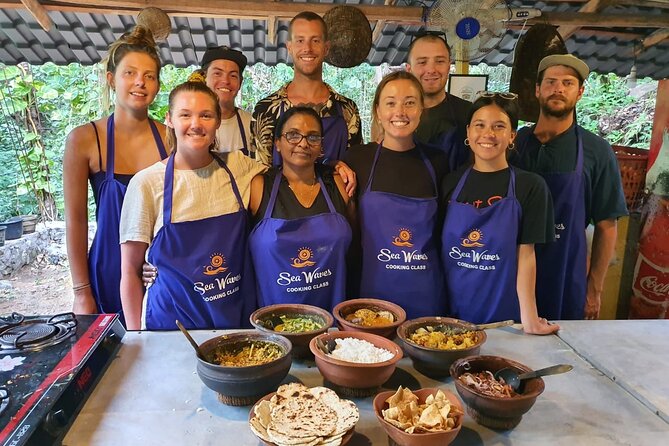
Curry starts with a morning market. This Sea Waves Sri Lankan cooking class in Galle pairs a fish-and-veg market visit with hands-on cooking in an open kitchen that looks out to jungle greenery. You get an English-speaking chef with decades of experience, plus a sit-down meal at the end.
I love the way the class starts with what you will actually cook, so you understand flavors before the first pot even heats. I also love that you cook with tools and ingredients provided, then you eat what you made. One consideration: even though it is advertised as private, double-check that it will stay just your party, since one class instance was not as private as expected.
In This Review
- Key highlights at a glance
- Cooking Curries With a Jungle-View Kitchen in Galle
- Stop 1 at Jungle Beach: How the Morning Gets Going
- Market Run First: Fish, Vegetables, and Flavor Planning
- Inside the Kitchen: What the Hands-On Lesson Really Covers
- What You’ll Cook: Five Vegetables Plus Fish or Chicken
- The Spice Skill: Blending, Adjusting, and Making It Yours
- Dining at the End: You Eat What You Cook
- Price and Value: Is $59 a Good Deal?
- Small-Group Reality: Private Lesson, Group Size Check
- Quick Tips to Make Your Class Go Smoothly
- Who Should Book This Cooking Class?
- Should You Book Sea Waves Sri Lankan Cooking Class?
- FAQ
- Where does the Sea Waves cooking class start?
- How long is the cooking class?
- What time does it start?
- Is this a private cooking experience?
- Do you provide ingredients and cooking tools?
- Do I choose what I cook?
- Can I choose fish or chicken?
- What do I eat after the class?
- What happens if the weather is bad or I need to cancel?
Key highlights at a glance
- Market shopping first, so your curries start with real choices
- English-speaking chef with 30+ years of cooking experience
- Open kitchen with jungle views, including monkeys and birds you can spot while you work
- Spice blending practice, not just watching from the sidelines
- You dine on your own meal at the end of the class
- Fish or chicken option, plus a dish built around five vegetables
Hungry still? More kitchens to sit in
- Galle Unawatuna Cooking Class
★ 5.0 · 142 reviews - Galle Fort cooking class
★ 5.0 · 60 reviews - Galle: Cooking Class at a Local Home and Market Tour
★ 5.0 · 47 reviews - Authentic Sri Lankan Cooking Class in Mirissa
★ 5.0 · 22 reviews
Cooking Curries With a Jungle-View Kitchen in Galle
If you want Sri Lankan food beyond the usual restaurant plate, this class is a smart way to do it. The whole flow is designed around one thing: getting you cooking while the ingredients are still fresh and the flavors are still explainable. In practice, that means you start with ingredient choices, then move to the kitchen where you learn how the dishes come together.
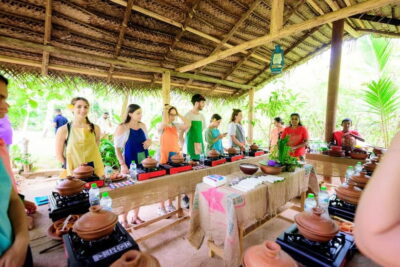
The setting is part of the appeal. You cook in an open kitchen with a jungle view, and that is exactly the kind of thing that makes the hour and change of chopping and stirring feel like more than a chore. You may spot monkeys and birds while you cook, and it adds a natural, everyday feel to the experience.
And you are not stuck with a vague lesson. The chef is described as having more than 30 years of cooking experience and speaks fluent English, so you can ask questions without playing charades. If you have ever struggled to understand what “a pinch” means in another country, this is the kind of class where you can finally connect the dots.
Stop 1 at Jungle Beach: How the Morning Gets Going
The day typically begins at Sea Waves Restaurant & Cooking Classes, on Dunwella road, yaddehimulla, Unawatuna (80600). The schedule shows a listed stop of Jungle Beach, which matters because this is where the “local day” vibe starts before you ever reach the pots.
One reason I like starting this way is that you are not rushed straight into a lesson. You get time to settle in, meet your chef, and understand what the plan is for your cooking choices. And since there are two sessions per day and the start time is listed as 10:00 am, you can pick the slot that fits your broader Galle plans.
Also worth noting: this is near public transportation. If you are staying in the area and do not want to rely on private rides everywhere, that is a practical plus.
Market Run First: Fish, Vegetables, and Flavor Planning
Here is the best part of the whole experience: the cooking starts in the market. Before the class, you go to the fish and vegetable markets to choose what you want to cook. This is not just a scenic detour. It changes how you cook.
When you select ingredients yourself, you learn what to look for. You also start to connect cooking results to starting materials. For example, if you choose certain vegetables because you like their flavor, you will remember how they behave when cooked in spice and coconut milk. That makes it easier to reproduce at home later, even if you are not buying the exact same produce.
You also get a chance to decide between fish or chicken, depending on what you prefer. The class then builds the main dish around five vegetables plus your chosen protein. That gives you a clear structure, but with enough freedom to make it feel personal.
In some versions of the market flow, you may see a short tuk tuk ride between the fish market area and the vegetable market. The point is the same either way: it is a quick, organized way to sample and choose without feeling lost.
Other Galle trips readers tend to shortlist
Inside the Kitchen: What the Hands-On Lesson Really Covers
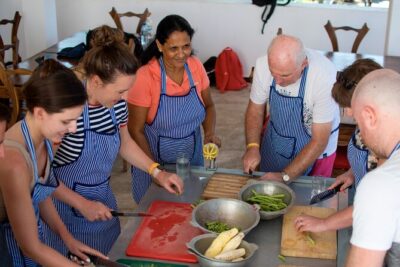
Once you are back at the restaurant, you move into the open kitchen, and the lesson becomes practical fast. The chef guides you through the steps with the kind of clarity that matters when spices are involved. You are not just learning recipes. You are learning the logic behind the flavors.
The core of the class is learning to make traditional Sri Lankan fare and blending your own spices. That means you are doing the work: grinding, mixing, and following the flow from raw ingredients to finished curry.
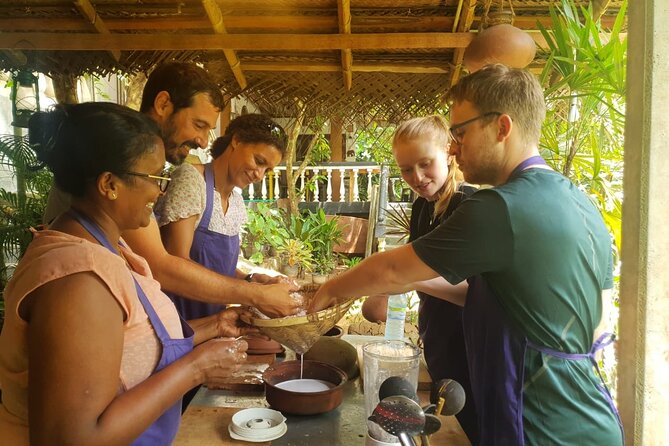
You also learn specific techniques that you can actually use later. For instance, some class sessions include learning how to make coconut milk, which is central to so many Sri Lankan dishes. If you have had coconut milk-based curries that tasted great but felt hard to replicate, a class that teaches you the step-by-step process can be genuinely useful.
And because the chef speaks fluent English, you are more likely to understand why certain spices are added at certain points. That is the difference between memorizing a dish and learning how to cook.
What You’ll Cook: Five Vegetables Plus Fish or Chicken
The class structure is built around a main dish that includes five vegetables and either fish or chicken. That is a good setup for a few reasons.
First, it teaches balance. Sri Lankan cooking often layers flavors, and vegetables are not just filler. When you work with multiple vegetables together, you start to understand how textures and tastes shift in curry.
Second, it keeps the experience focused. With a clear set of ingredients, you can get comfortable with spice handling and curry-making without feeling overwhelmed.
Third, it gives you options. You can choose vegetables based on your preferences at the market, and you can choose fish or chicken. Reviews highlight specific dishes like dhal and tuna curry, plus vegetable curries selected from the market. Even if your exact menu differs, the key takeaway is that you will cook a variety of curries and understand how they connect.
The Spice Skill: Blending, Adjusting, and Making It Yours
Spices are the star here, and this class treats them like something you can learn, not something you must fear. You will blend spices as part of your instruction, which is a huge value-add compared to cooking classes where you only assemble ingredients.
Here is what you should expect from a real spice lesson: you will learn what to combine and how to work with those blends so they taste right in the pot. The chef’s 30+ years of experience shows up in the explanations, and the English guidance makes it easier to ask follow-up questions.
This is also where the class becomes worth repeating later in your own kitchen. When you know how spice blending changes flavor, you can adjust for what you can find locally. You will not need every ingredient from scratch to make something that feels like the dish you learned.
Dining at the End: You Eat What You Cook
After the cooking comes the best reward, your meal. You dine on what you made at the end of the class, and that matters more than people expect.
For one, eating immediately lets you connect the taste to the steps you performed. It is not like cooking for guests who then give feedback later. You taste your own curry while it is still clearly linked to your decisions on spice level and ingredient choice.
It also makes the class feel complete. You are not just leaving with instructions. You are leaving with a full meal experience that you can remember.
If you have been on food tours that give you samples but leave you craving the technique behind them, this format solves that problem.
Price and Value: Is $59 a Good Deal?
At $59 for about 3 hours, this class is priced in a way that makes sense when you look at what is included. You get an experienced chef, ingredients and tools, a market visit to choose your own components, hands-on cooking, and a meal at the end.
Many food experiences charge for tasting, storytelling, or observation, but you still walk away without knowing how to cook what you tasted. Here, you are paying for the actual process, plus the ingredient selection step.
Also, there is a real value to having an English-speaking guide. If you have ever tried to decode curry-making from restaurant menus, you know how limited that can be. The ability to ask why and how while you cook changes the usefulness of the experience.
So unless you are looking for a purely passive activity, this is strong value for a half-day skill-building meal.
Small-Group Reality: Private Lesson, Group Size Check
The experience is advertised as a private tour/activity, meaning it should be just your party. That is a big selling point if you want personalized guidance and space to ask questions while you cook.
However, there is at least one note indicating a private expectation was not fully met in a specific instance. That tells me the right move is simple: before you go, confirm your group size and make sure the chef and restaurant know exactly how many people are in your booking.
If you do that, you should be set for a more relaxed, personalized lesson.
Quick Tips to Make Your Class Go Smoothly
A few practical things will help you enjoy this more.
Wear comfortable clothes you can stand in while cooking. You will be working in a kitchen environment where you might get spice smells on your hands, and you will likely be moving between steps.
Bring curiosity. Ask about how the spice blend should smell, and what you should watch for while it cooks. Those small questions can turn an enjoyable session into a useful cooking lesson you can remember.
If you are sensitive to strong flavors, tell your chef early. Since you are learning how to blend spices, you will often be able to adjust with guidance as you go.
And since there are two sessions per day and the start time is listed as 10:00 am, plan your morning in a way that does not leave you rushing across town.
Who Should Book This Cooking Class?
This is a great fit if you want hands-on learning instead of just eating. You will enjoy it if you like markets, enjoy cooking, and want to understand how Sri Lankan curries are built.
It is also a strong choice for couples, friends, and small groups because the flow is structured and guided, and the open kitchen setting makes the time feel lively rather than cramped.
If you are traveling with kids, this could still work, but it depends on how comfortable your group is around cooking heat and spice smells. The good news is that you will be actively doing something instead of sitting in a long lecture.
Should You Book Sea Waves Sri Lankan Cooking Class?
Book it if you want a real cooking skill tied to fresh ingredients. The market-first approach, the English guidance, and the fact that you eat what you cook all point to a class that teaches you more than it sells you.
Consider booking at a different time or confirming group details first if you care deeply about strict privacy. Also consider weather, since the experience notes a good weather requirement.
If your goal is to leave Galle with the ability to cook a curry at home, not just the memory of a great lunch, this class is one of the most practical ways to get there.
FAQ
Where does the Sea Waves cooking class start?
The class starts at Sea Waves Restaurant & Cooking Classes, Dunwella road, yaddehimulla, Unawatuna 80600, Sri Lanka.
How long is the cooking class?
It lasts about 3 hours.
What time does it start?
The start time is 10:00 am.
Is this a private cooking experience?
It is listed as a private tour/activity, meaning only your group participates. One note suggests private expectations may not always match on-site, so it is smart to confirm your group size.
Do you provide ingredients and cooking tools?
Yes. All ingredients and tools are provided.
Do I choose what I cook?
Yes. Before the class, you visit the fish and vegetable market to choose what you want to cook.
Can I choose fish or chicken?
Yes. The cooking plan includes five vegetables plus fish or chicken, depending on your preference.
What do I eat after the class?
You dine on the meal you cooked at the end of the class.
What happens if the weather is bad or I need to cancel?
Cancellation is free up to 24 hours before the experience starts for a full refund. The experience requires good weather, and if it is canceled due to poor weather, you will be offered a different date or a full refund.
More Cooking Classes in Galle
More Tour Reviews in Galle
More Kitchens to Sit In
Still browsing Galle? Start here
- From: Ella – YALA Safari – Drop off: Arugam Bay / Arugambay★ 5.0 · 3 reviews
- Galle Instagram Tour: Most Famous Spots (Private & All-Inclusive)★ 5.0 · 3 reviews
- Galle Sightseein Rickshaw Tour★ 4.5 · 3 reviews
- From Colombo: Day Trip to Galle City, Koggala and Unawatuna★ 4.2 · 3 reviews
- Yala National Park Private Safari (All Inclusive) From Mirissa★ 4.5 · 4 reviews
Sri Lankan Cooking Classes, compared.
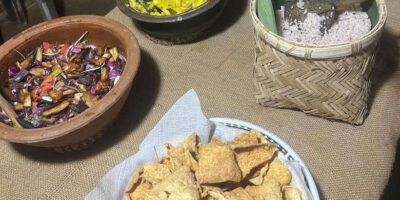 ★ 4.9Ella: Traditional Sri Lankan Cooking ClassFrom $19788 reviews
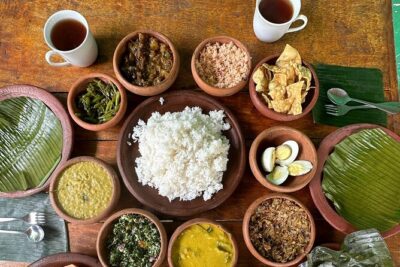 ★ 5.0Organic cooking class sigiriya (kumara & family)From $28650 reviews
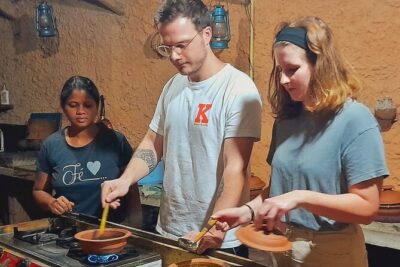 ★ 5.0Kandy Village Cooking ClassFrom $25536 reviews
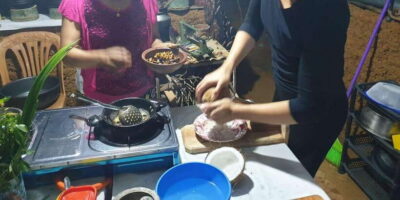 ★ 5.0Ella: Sri Lankan Cooking Class with Neranji at HomestayFrom $19276 reviews
 ★ 5.0Ella : Cooking class with amazing Spice Garden TourFrom $32239 reviews
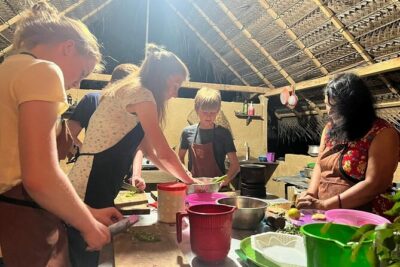 ★ 5.0Sajee’s Place Cooking ClassFrom $35237 reviews
 ★ 5.0Colombo Cooking ClassFrom $60151 reviews
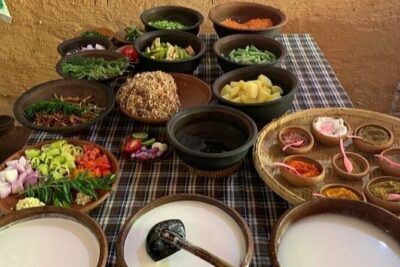 ★ 5.0Galle Unawatuna Cooking ClassFrom $30142 reviews
Browse the lists this tour appears in