
REVIEW · SURF LESSONS
PRIVATE Surf Lesson for Beginners
First wave training can be surprisingly fast. A private beginner surf lesson in Weligama gives you real instruction in about 1.5 hours, starting on soft boards and moving you toward real surf mechanics. You get a clear path from surfing safety to catching waves, with an instructor focused on getting you standing and paddling with confidence.
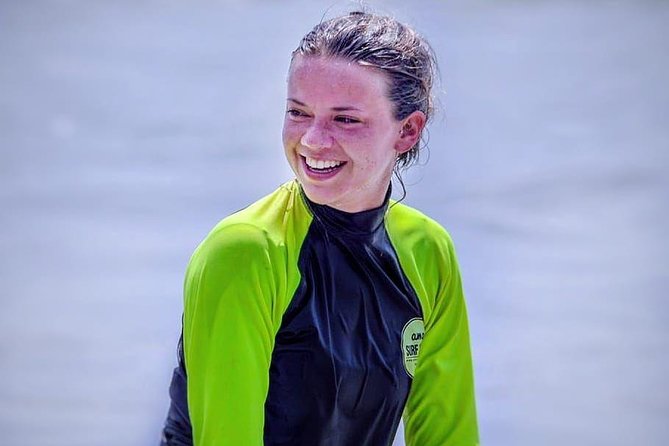
What I like most is the coaching style. If you get Akila, the vibe is calm and patient, and that matters when you are brand new and your brain is busy just figuring out which way the ocean is moving. I also love that the package is built for first timers: you get the instructor, a board, and a long-sleeved top, so you are not scrambling for gear or guessing what to wear.
One thing to consider: the lesson moves with a set progression. One account notes it can feel a bit fixed in pacing, and questions may be handled later rather than in the moment. If you want lots of back-and-forth coaching at every micro-step, you might feel slightly constrained.
In This Review
- Key Things You’ll Notice Right Away
- Why a Private Beginner Lesson in Weligama Beats Trial and Error
- What Happens in Your 1.5 Hours at Ama Surf School
- Stop 1: Weligama Beach, Where the Basics Actually Click
- Soft Foam to Fiberglass: How the Board Switch Helps You Improve
- Skills You’ll Practice: Safety, Jump-Ups, Paddling Out, and Riding Clean
- Surf safety, the stuff that keeps you and others okay
- The jump-up: timing and foot placement
- Stance, turning, and core balance
- Paddling out and catching unbroken waves
- Price and Value: Is $20 a Good Deal?
- Gear, Comfort, and What to Bring (Without Overthinking It)
- Who This Is Best For (And When to Pick Something Else)
- When Weather Matters: How to Think About Your Surf Day
- Should You Book This Beginner Surf Lesson?
Key Things You’ll Notice Right Away
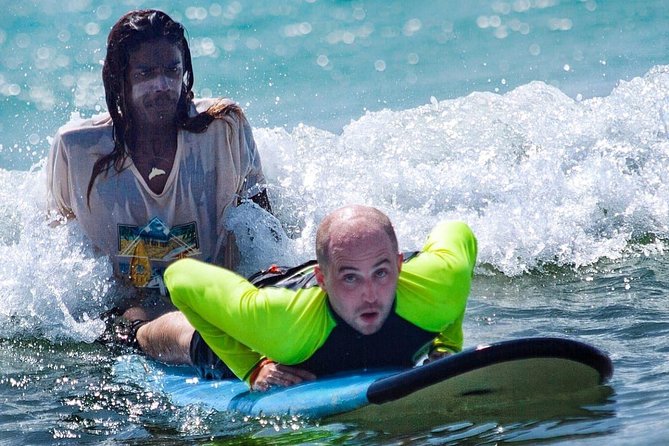
- Private group coaching so you get corrections instead of generic tips
- Foam first, fiberglass later, which helps your body learn without fighting the board
- Surf safety as a real lesson topic, not a quick lecture
- Jump-up, stance, and turning practice, with the basics broken into steps
- Paddling out and efficient paddling, so you spend less time flailing and more time catching waves
More breaks, more lessons
- Ride a Wave Surf School Weligama Sri Lanka
★ 5.0 · 161 reviews - PRIVATE Surf Lesson for Beginners
★ 5.0 · 80 reviews - Surf with Apple
★ 5.0 · 28 reviews - PRIVATE Surf lesson for Beginners Couple
★ 5.0 · 26 reviews
Why a Private Beginner Lesson in Weligama Beats Trial and Error
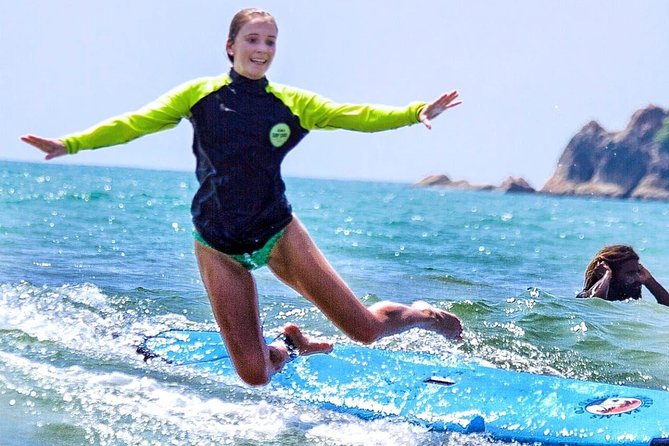
Weligama is a smart place to learn because it is used to surf learning. But the big advantage here is not just the beach. It is the structure: a private, beginner-focused session that teaches you how to handle the water before you chase speed or tricks.
If you try to learn on your own, you can burn a lot of energy without making progress. The lesson itself is blunt about this. It’s possible to learn independently, but it can take a very long time and even lead to injury. In practical terms, an instructor helps you avoid the worst habits early, like getting tangled, forgetting how to manage waves, or jumping at the wrong time.
You also get a smoother learning curve because you start on a soft foam board. That detail sounds simple, but it is the difference between feeling stuck and feeling like you are actually “doing surfing” quickly.
What Happens in Your 1.5 Hours at Ama Surf School
The session is about 90 minutes, and it is designed to cover the core beginner skills in a tight window. You meet at Ama Surf School (Weligama By Pass Rd, Weligama 81700) and the experience ends back at the meeting point.
For you, the rhythm usually looks like this: you warm up your body and get a quick briefing on what matters most, then you get hands-on help while you try the steps. Since this is private for your group, corrections can be more direct. That is valuable for beginners, because it is easy to repeat a mistake when nobody is watching your timing.
Also note the gear plan. The package includes the board and a long-sleeved top, so you can focus on learning instead of hunting down equipment or guessing what will protect you in the water.
And yes, it is beginner-friendly. The experience notes that most travelers can participate, which fits the whole “start from zero” approach.
Stop 1: Weligama Beach, Where the Basics Actually Click
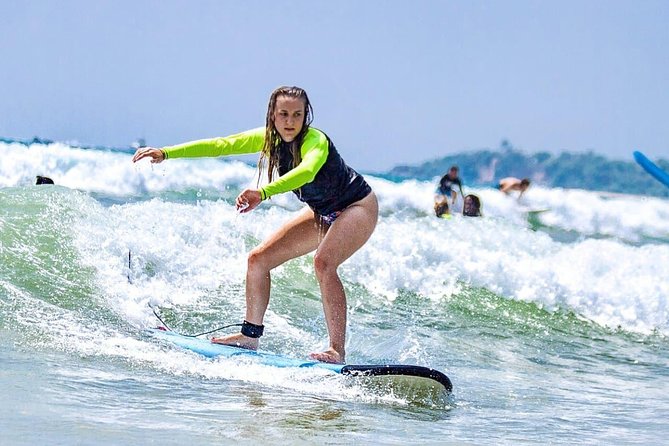
Your only stop is Weligama Beach. That matters because learning happens where conditions make sense for first attempts, not somewhere distant where you spend half the time traveling.
At the beach, you are not just standing around. The lesson covers the fundamentals that are hard to learn from videos. Instead of only watching someone else surf, you practice the steps and get feedback on what your body is doing.
The session includes training for:
- surf safety
- jumping up techniques
- footwork and stance
- core balance techniques
- turning the board
- paddling out and efficient paddling
- paddling technique
- catching and riding unbroken waves
That list is the real point. Beginners often think surf is all about catching waves. In reality, it is about getting into position and moving your body the right way at the right time. The lesson tackles both, which is why progress feels possible within a short session.
One practical benefit of an instructor on site is that they can correct you when you are doing something that feels right but is technically off. That is especially true for timing the pop-up and using your arms and torso during paddling.
Other Galle trips readers tend to shortlist

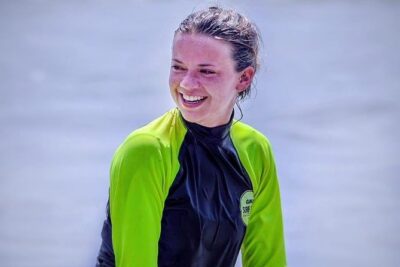

Soft Foam to Fiberglass: How the Board Switch Helps You Improve
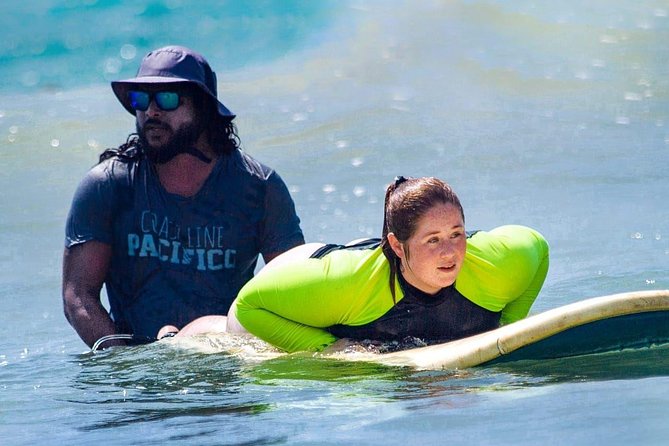
This lesson uses a two-stage board setup. You begin on a soft foam board, then you move up to fiberglass boards. That transition is one of the smartest parts of the plan.
Here’s why it works for you:
- Foam boards reduce the intimidation factor. You can focus on body position and movement instead of fighting wobble.
- Foam gives you a safer learning environment for early attempts at the basics like stance and balance.
- Once your timing improves, moving to fiberglass boards helps you experience how a more standard surf board responds.
That means you are not stuck forever on the easiest gear. You still get the feeling of surfing on a board that behaves more like what you’ll use later. But you earn that step because you start with the fundamentals.
And if you are worried about learning as an adult, do not be. One mention highlights a first-time surfer who was concerned about learning in their 30s, yet they were riding waves into shore within about 30 minutes. The takeaway is simple: good instruction beats age. Period.
Skills You’ll Practice: Safety, Jump-Ups, Paddling Out, and Riding Clean
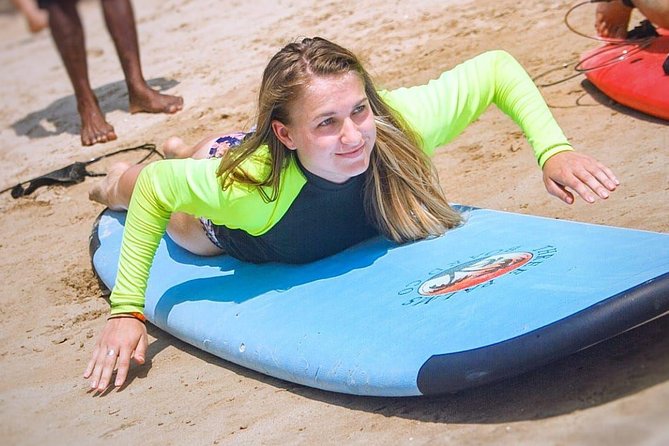
If you want to know whether a beginner lesson is worth your time, look for whether it teaches technique and also teaches judgment. This session does both.
Surf safety, the stuff that keeps you and others okay
The lesson includes surf safety early. That matters because surf is not just water and fun, it is also currents, timing, and wave direction. You learn what to do so you avoid chaotic mistakes that can lead to falls or risky interactions.
Even if you never plan to surf again, safety knowledge is useful. You spend less time guessing and more time moving with purpose.
The jump-up: timing and foot placement
The core beginner goal is learning the jump up. Not just “stand up,” but stand up at the correct moment and with stable foot placement.
You practice:
- getting into a position to pop up
- moving your feet into a working stance
- balancing your weight so you do not instantly tip
This is where private coaching can feel like magic, because a small correction can fix a big problem. If your feet land too wide, too narrow, or at the wrong time, your ride falls apart fast.
Stance, turning, and core balance
You also work on footwork and stance, plus core balance techniques. Those skills are what help you control the board instead of just being dragged along.
Turning the board gets included too. For beginners, turning is less about style and more about learning how to angle and respond so you can stay on the wave line instead of panicking.
Paddling out and catching unbroken waves
Then comes the part most beginners struggle with: getting out and staying efficient.
You learn paddling out and efficient paddling, plus paddling technique. When you do this correctly, you waste less energy and you end up in better position for the waves.
Finally, the lesson targets catching and riding unbroken waves. That phrasing is important. Beginners do not need advanced tricks. You need clean, continuous wave rides so you can feel what steering and balance actually mean when the board is moving.
Price and Value: Is $20 a Good Deal?
At $20, this is priced for people who want to try surfing without betting the farm. The value comes from what’s included and how the time is used.
You are getting:
- a private instructor for your group
- a board
- a long-sleeved top
- instruction focused on the actual beginner skill set
If you have ever tried to piece together lessons and rentals separately, you know how quickly costs climb. Here, the package approach lowers friction. You can also better judge whether surfing is your thing because you get feedback right away, not just a vague “good job.”
One more value point: the 90-minute duration is long enough to practice and short enough that you are not exhausted before you learn. For first-timers, that balance matters.
Gear, Comfort, and What to Bring (Without Overthinking It)
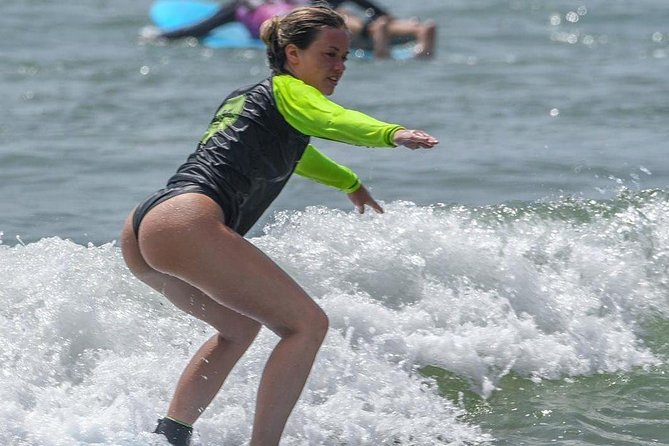
The package includes a long-sleeved top and the board, so you are partway covered. For your comfort, think about what will help you stay focused.
You might want to bring:
- your usual swimwear (or shorts and a swim layer you are comfortable moving in)
- sunscreen and water for before and after the session
- a towel and a change of clothes for afterward
Also plan to be ready for beach learning conditions. Good weather is required, so if the day looks rough, keep flexibility in mind.
If you want a smoother start, arrive a bit early so you can settle in. Surf sessions can feel rushed when you are late, and that puts extra pressure on a brand new routine.
Who This Is Best For (And When to Pick Something Else)
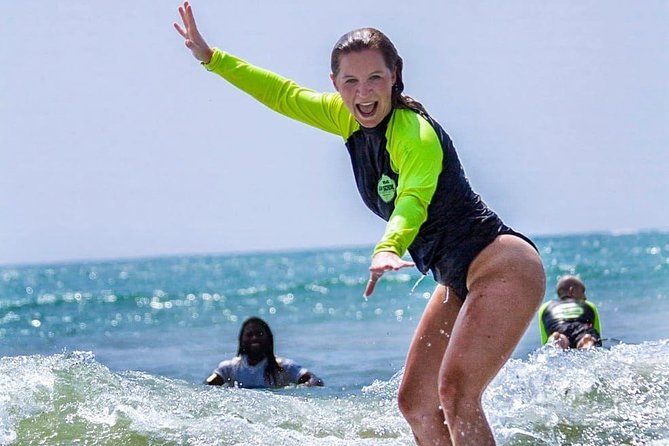
This lesson is best for you if:
- you are a total beginner and want clear, step-by-step coaching
- you learn better with a calm instructor correcting your form
- you want a fast start, not a vague “watch and hope” experience
- you prefer a plan that goes foam first, then upgrades you to fiberglass
It may be less ideal if:
- you want maximum flexibility mid-lesson to jump off script and ask many different questions in real time
- you need a very slow pace with constant discussion, rather than a structured progression
That note about pacing comes from one account that describes the instruction as geared toward standing quickly for early success, even if that means questions get answered later. If you are the kind of person who wants constant clarification as you move, you can still learn a lot here, but go in expecting the lesson has a rhythm.
When Weather Matters: How to Think About Your Surf Day
The experience requires good weather. If the lesson is canceled due to poor weather, you are offered a different date or a full refund. That is a practical setup because surf conditions can change fast, and you do not want to be stuck on a bad day without the right conditions for learning.
Also, because it’s about catching and riding unbroken waves, the sea state matters. When waves are messy or unsafe, a good instructor will adapt, but beginners generally need more consistent conditions to progress.
Should You Book This Beginner Surf Lesson?
If you want a smart first step into surfing, I’d book it. The biggest reasons are simple: you get private coaching, you start on foam, and the instruction covers the whole chain, safety, paddling, jump-up, and catching rides. That is the difference between being entertained for an hour and learning skills you can build on.
My practical advice for the decision:
- Book if you want structure and direct corrections in a short time.
- Book if you are nervous about learning, because the approach is designed for first timers and the coaching style is described as calm and patient, including instructors like Akila.
- Consider another option if you hate structured lessons and need lots of spontaneous Q and A during every step.
For most beginners in the Galle area, especially if you are staying near Weligama, this is a strong value way to test your surf dreams with real basics you can carry forward.
More Private in Galle
- Sports Boat- Private Whale Watching Trip( free breakfast & paid pick-up)
- Galle Private Day Tours with Sea Turtles visit & Boat Safari
- Udawalawe Safari – Private & Customize Tour
- Yala Safari Private Day Trip with Return Transport -All Inclusive
- Sinharaja Rainforest Private Half Day Tour with Licensed Guide
More Tour Reviews in Galle
More Breaks, More Lessons
Still browsing Galle? Start here
- From: Ella – YALA Safari – Drop off: Arugam Bay / Arugambay★ 5.0 · 3 reviews
- Galle Instagram Tour: Most Famous Spots (Private & All-Inclusive)★ 5.0 · 3 reviews
- Galle Sightseein Rickshaw Tour★ 4.5 · 3 reviews
- From Colombo: Day Trip to Galle City, Koggala and Unawatuna★ 4.2 · 3 reviews
- Yala National Park Private Safari (All Inclusive) From Mirissa★ 4.5 · 4 reviews
Surf Lessons, compared.
 ★ 5.0Ride a Wave Surf School Weligama Sri LankaFrom $20161 reviews
 ★ 4.5Surf & Stay – Private Surf Lesson Experience in WeligamaFrom $3529 reviews
 ★ 5.0Surf with AppleFrom $3528 reviews
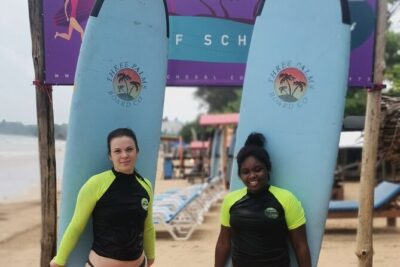 ★ 5.0PRIVATE Surf lesson for Beginners CoupleFrom $3426 reviews
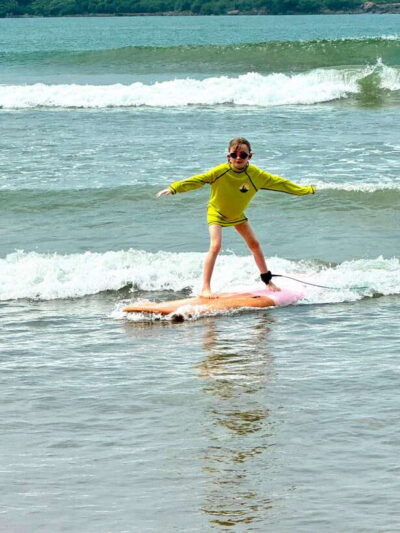 ★ 5.0Surf School in Unawatuna, GalleFrom $2723 reviews
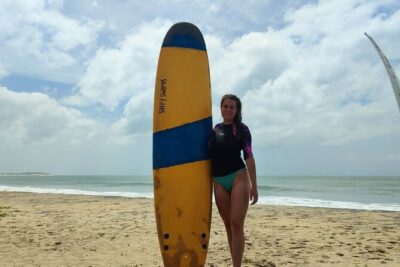 ★ 5.0Surf Lessons in Sri lanka Semi – Private or Group OptionsFrom $1822 reviews
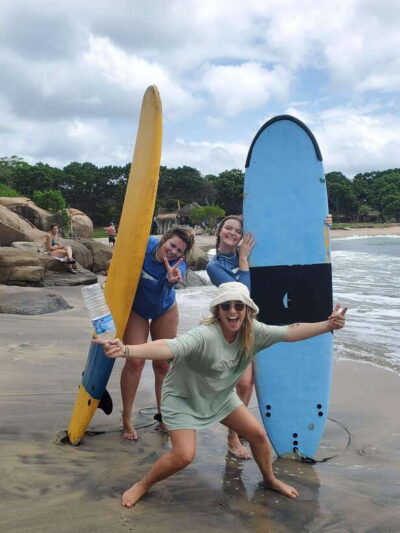 ★ 4.4Surf & Stay: Private Surf Lesson in mirissaFrom $3515 reviews
 ★ 4.5Surfing Lessons at UnawatunaFrom $3511 reviews
Browse the lists this tour appears in