
REVIEW · KANDY TOURS
Private Traditional Sri Lankan Cooking Class in Kandy with Hotel Transfers
Sri Lankan spice lessons in Kandy.
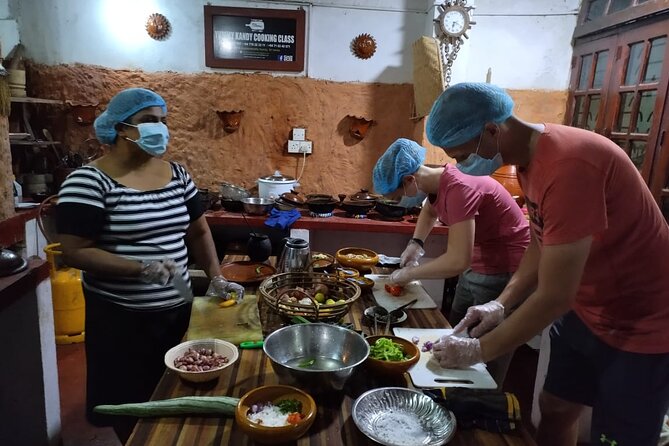
This private cooking class puts you in Chitra’s hands-on kitchen, where you learn to make dishes like lentils and jackfruit curry, then sit down and eat what you cooked. I like that it’s small-group focused, with personal attention as you chop, stir, and taste, and I also love the added cultural context around spices, vegetables, and how they work together on the stove.
You’ll get door-to-door hotel transfers plus a tea or coffee welcome, so the whole thing feels easy to fit into a Kandy day. One thing to consider: it starts at 10:00 am, so if mornings are hard for you, plan an early night and keep your schedule calm.
In This Review
- Key things that make this cooking class worth it
- Door-to-door Kandy pick-up and a tea or coffee start
- The Hanthana Mountain Range stop and what it adds
- Spices and vegetables: the lesson behind the flavor
- Choosing your curry and getting to cut and chop
- The kitchen method: how Sri Lankan curries come together
- Sharing the meal at the end, with Chitra and your group
- Vegan and gluten-free options that don’t feel like an afterthought
- Hotel transfers and timing: how to fit it into your Kandy day
- Price and value at about $120
- Who this cooking class is best for
- Should you book this private cooking class in Kandy?
- FAQ
- What time does the cooking class start in Kandy?
- Is hotel pickup and transfer included?
- Will I be able to choose what I cook?
- Are vegan or gluten-free options available?
- Is this a private experience?
- How does cancellation work?
Key things that make this cooking class worth it
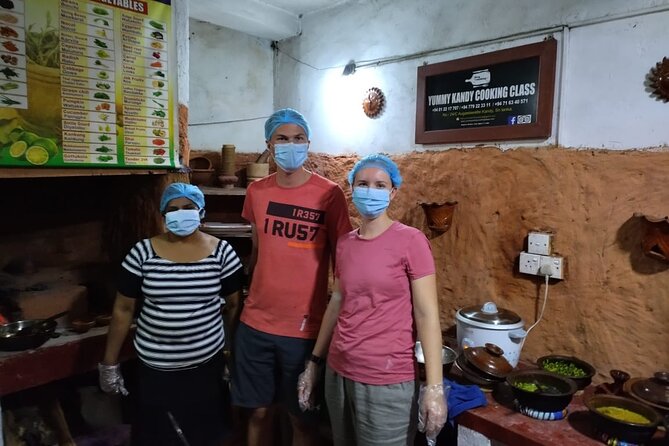
- Chitra leads the learning: you cook with an experienced instructor who explains spices and vegetables as you go.
- You choose your curry: pick what you want to cook, then do the cutting and chopping yourself.
- Welcome drink on arrival: tea or coffee sets a relaxed pace before the kitchen work starts.
- Eat together at the end: the class ends with a meal shared with your instructor and fellow students.
- Diet options are built in: vegan and gluten-free recipe options are available.
- Hanthana Mountain Range starts the day: the experience begins with a stop tied to the mountain area.
Kandy has more going on than one day allows
- Kandy Private Guided City Tour by Tuk Tuk
★ 4.9 · 1,307 reviews - From Kandy: Sigiriya Rock & Dambulla Cave Temple Adventure
★ 4.9 · 785 reviews - Kandy Village Cooking Class
★ 5.0 · 536 reviews - Kandy to Ella Train Tickets – Reserved Seats
★ 4.5 · 523 reviews
Door-to-door Kandy pick-up and a tea or coffee start
The day begins with pickup from your hotel in Kandy, which is a big deal in real life. Cooking classes are fun, but the “getting there” part can turn stressful fast, especially when you’re mixing it with sightseeing. Here, you’re handled from the start, and you can stay in vacation mode.
After pickup, you’ll get a welcome drink of tea or coffee. It’s a small moment, but it helps set the tone. You’re not rushed into cookware and chaos. You get a breather, then the instructor walks you into the basics: what you’re cooking, why certain ingredients matter, and how Sri Lankan flavors come together.
If you like activities that feel structured but not rigid, this format tends to work well. You’re guided, but you still get hands-on time in the kitchen.
The Hanthana Mountain Range stop and what it adds
The itinerary includes a stop connected to the Hanthana Mountain Range area. Even if your main goal is cooking, that kind of first stop helps you feel like you’re in the real Kandy region, not just going from hotel to kitchen and back again.
It also changes the rhythm. By the time you reach the cooking portion, you’ve already had some time outside and oriented to the day. For many people, that makes the food lesson more meaningful, because you’re already “in it” before you start learning flavors and techniques.
You should also think of this as a gentle pacing tool. A three-hour class can feel compact, so any outdoor start makes the whole block feel fuller without adding extra hours.
Spices and vegetables: the lesson behind the flavor
Once you’re settled, you’ll talk spices and vegetables before you start cooking. This is one of the most valuable parts of the class, because Sri Lankan cooking is not just about memorizing recipes. It’s about understanding how flavors build: heat, aroma, acidity, and the way different vegetables absorb spice.
The instructor explains what you’re working with, so when you later stir or simmer, it makes sense. That’s the difference between following a list and actually learning how to cook. I like when the class gives you “why this works” along with “how to do it.”
You also get to choose what to cook as a curry. That choice matters. If you like lentils, you can lean into that. If you want something fruit-forward and hearty, jackfruit curry is on the menu. Either way, you’re steering the outcome, which keeps the lesson engaging.
Hungry still? More kitchens to sit in
Choosing your curry and getting to cut and chop
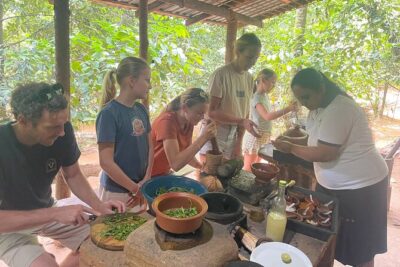
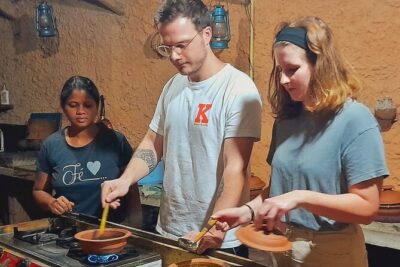
A big part of this class is active cooking. You don’t just watch. You can cut and chop vegetables, then you’ll learn how to cook the curry you chose.
That hands-on time is where cooking classes often rise or fall. If you end up stuck taking pictures while someone else cooks, you learn less and you feel less connected to the meal. Here, you’re involved from the prep stage, so by the time sauce meets vegetables, you already understand what went where and why.
It’s also a practical skill. If you ever try to cook Sri Lankan food at home, the texture and balance depend on prep. Cutting and chopping are not glamorous, but they make a real difference in how ingredients cook and how the final dish feels.
And because it’s a private tour/activity and focused on a small group, you’re more likely to get the right kind of attention during the kitchen steps. That means less guesswork if you’re unsure about timing or technique.
The kitchen method: how Sri Lankan curries come together
While the class is hands-on, the goal isn’t just to produce a meal. The goal is to teach technique in a way that you can understand quickly.
You’ll learn how to cook your curry. Even though you might choose different dishes, the logic tends to follow the same pattern: build flavor with spices, cook the base ingredients properly, then let everything come together at the right simmer so the curry tastes integrated, not just spiced.
You’ll also be tasting and adjusting as you go. That’s important because curries can swing based on ingredient freshness and your heat level. When an instructor is guiding you, you’re not just hoping it turns out. You learn what to look for as the curry thickens and flavors meld.
One of the strongest themes from the experience is that questions are welcome. The instructor and the people running the class can answer things clearly, which makes the class feel more like learning with a host than paying for a one-way performance.
Sharing the meal at the end, with Chitra and your group
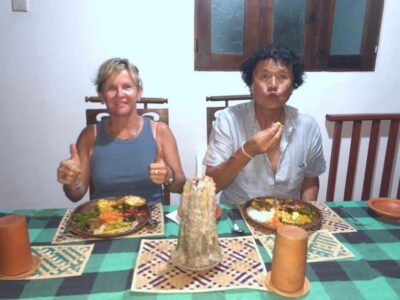
The class ends with a sit-down meal. You eat the creations you made, and you share the table with Chitra and your fellow students.
This matters more than it sounds. Cooking classes can feel like work if you never get to enjoy the results. Here, the structure closes the loop: you learn, you cook, then you taste what your choices created.
It’s also a social angle that adds meaning. You’re in Kandy, and food is a natural conversation starter. People tend to ask about spice levels, ingredient substitutions, and what dish pairs well with what. Having that table time with the instructor makes the learning stick.
If you enjoy food education that is friendly and not overly formal, this format hits the right balance. The overall vibe is warm and focused on the meal, not on showmanship.
Vegan and gluten-free options that don’t feel like an afterthought
You can request vegan and gluten-free recipe options. That’s a practical inclusion, especially in a cooking class where the whole point is to cook what you can actually eat.
What I appreciate is that the class is flexible enough to plan around dietary needs without turning the experience into a consolation prize. When diet options are available, you can focus on learning techniques and flavor building instead of worrying about swaps.
If you have dietary restrictions, I’d treat this as a major plus. Many experiences claim to be flexible but don’t offer clear recipe support. Here, the availability is explicitly part of the class.
Hotel transfers and timing: how to fit it into your Kandy day
The class runs about 3 hours and starts at 10:00 am, so you can think of it as a morning anchor. This is a great time slot if you want your later afternoon free for the Kandyan sights, viewpoints, or a slower lunch.
The hotel transfers help you keep the schedule tight. You don’t need to organize transport or worry about where you’ll meet. For a single activity day, that convenience is real value.
I also like that the pace feels manageable. Three hours is long enough to learn prep, cooking, and flavors, but not so long that you leave tired and cranky.
Price and value at about $120
At around $120 for a 3-hour private class with hotel transfers, it’s not a budget snack. But it also isn’t overpriced for what you actually get.
You’re paying for several things at once:
- An experienced instructor, Chitra, who teaches spices and vegetables and guides you during cooking
- Hands-on cooking time, not just watching
- The meal you eat at the end
- Pickup and transfers, which save time and reduce stress
- Recipe options for vegan and gluten-free diets
- A format described as small-group and private activity, meaning you’re less likely to be lost in the crowd
In plain terms, the value comes from instruction plus results. You’re not only entertained. You’re leaving with better cooking instincts, a fuller understanding of Sri Lankan flavors, and a meal you made yourself.
If you love food, this pricing usually feels fair. If you’re purely sightseeing oriented and only mildly interested in cooking, you might decide to spend that time elsewhere. But for anyone who wants a hands-on cultural experience, this is the kind of activity that pays back later when you try to recreate dishes at home.
Who this cooking class is best for
This class is a strong match if you:
- Want an authentic Sri Lankan cooking lesson focused on spice logic and technique
- Prefer active learning, where you cut, chop, and cook rather than watch
- Like small groups and a more personal experience
- Want a friendly, structured activity with a meal at the end
- Need vegan or gluten-free options
It may be less ideal if you dislike kitchens, hate cooking prep work, or have a schedule that can’t handle a 10:00 am start.
Should you book this private cooking class in Kandy?
If your goal is to eat well and learn fast, I’d book it. The combination of hotel transfers, an experienced instructor named Chitra, hands-on prep and cooking, and the sit-down meal makes the hours feel well spent.
I’d also book it if your diet needs vegan or gluten-free support. The fact that recipe options are available turns it from a gamble into a plan.
If you want a cooking experience that feels fun, informative, and practical, this is a good one to put near the top of your Kandy list.
FAQ
What time does the cooking class start in Kandy?
The class start time is 10:00 am. The duration is approximately 3 hours.
Is hotel pickup and transfer included?
Yes. You’ll be picked up from your hotel and provided transfers as part of the experience.
Will I be able to choose what I cook?
Yes. You can choose what curry you want to make, and you’ll also be able to cut and chop the vegetables.
Are vegan or gluten-free options available?
Yes. Vegan and gluten-free recipe options are available.
Is this a private experience?
Yes. It’s listed as a private tour or activity, and only your group participates.
How does cancellation work?
Free cancellation is available. You can cancel up to 24 hours in advance of the experience for a full refund. If you cancel less than 24 hours before the start time, the amount paid is not refunded.
More Tour Reviews in Kandy
More Kitchens to Sit In
Still in Kandy?
Still browsing Kandy? Start here
- Udawalawe National Park Private Full-Day Safari★ 5.0 · 3 reviews
- Wasgamuwa National Park Safari from Kandy★ 5.0 · 3 reviews
- Private Sri Lanka Tour & Hike Experience to Ambuluwawa Tower★ 5.0 · 3 reviews
- Kandy Instagram Tour: Most Famous Spots (Private & All-Inclusive)★ 5.0 · 3 reviews
- Kandy to Ella★ 5.0 · 3 reviews
Kandy Tours, compared.
 ★ 4.9Kandy Private Guided City Tour by Tuk TukFrom $61,307 reviews
 ★ 4.9From Kandy: Sigiriya Rock & Dambulla Cave Temple AdventureFrom $29785 reviews
 ★ 5.0Kandy Village Cooking ClassFrom $25536 reviews
 ★ 4.5Kandy to Ella Train Tickets – Reserved SeatsFrom $26523 reviews
 ★ 4.8From Kandy: Pinnawala Day TourFrom $15331 reviews
 ★ 4.8Kandy to Ambuluwawa & Kandy City Guided Tuk Tuk Day TourFrom $12270 reviews
 ★ 5.0Day tour to Sigiriya & Dambulla from KandyFrom $25252 reviews
 ★ 5.0Kandy to Sigiriya Day Tour and Dambulla cave temple with private vehicleFrom $42232 reviews
Browse the lists this tour appears in