
REVIEW · UDAWALAWE SAFARIS
Udawalawe: Farm to Table Cooking & Authe: Village Experience
Cinnamon tea sets the pace in Udawalawe. I love the hands-on cooking class with local women and the mix of garden picking plus real village meals, and I also like the ancient gem mine stop that adds context to what you are seeing in Sri Lanka. The main thing to consider is that this is a short walking tour, about 90 minutes on foot, so comfortable shoes matter.
You’ll do it all in about 2 hours near Udawalawe Elephant Orphanage (the meeting point is just 1.2 km away). It’s a private group with a live guide in English and Singhalese, and you get a welcome drink, cinnamon peeling, vegetable picking, cooking, lunch, and even time around local melas if they are happening.
In This Review
- Key things to look forward to
- A 200-year-old village style experience, close to Udawalawe
- Cinnamon tea welcome and the start of your village loop
- Ancient gem mine visit: what you should pay attention to
- Cinnamon peeling: the spice lesson you can actually picture
- Vegetable picking in the organic garden, then cooking in a village kitchen
- The meal: eat what you helped prepare
- Local melas after lunch: how to enjoy without getting overwhelmed
- Price and value: is $30 for 2 hours worth it?
- Who should book this Udawalawe village cooking experience
- Small logistics that can make or break your day
- Should you book this Udawalawe farm to table cooking tour?
- FAQ
- How long is the Udawalawe farm to table village cooking experience?
- What is included in the $30 per person price?
- Where is the meeting point?
- What languages are the guides?
- Is this activity wheelchair accessible?
- Do you cook yourself or just watch?
- What happens during the ancient gem mine visit?
- Is free cancellation available?
Key things to look forward to
- Cinnamon tea welcome, a warm start that fits Sri Lankan tastes fast
- Ancient gem mine visit, seeing how mining is explained and taught in village terms
- Cinnamon peeling demonstration, learning why this spice is so tied to daily life
- Pick vegetables, then cook with the ingredients, straight from the garden to the pot
- A village kitchen meal you help make, including the dishes you are cooking
- Local mela time, music, dance, crafts, and local food in a social setting
Udawalawe, compared run by run
- Udawalawe National Park Entrance Ticket with Private Safari
★ 5.0 · 115 reviews - Udawalawe National Park Safari
★ 5.0 · 71 reviews - UDAWALAWA National Park ALL INCLUSIVE Tour with PICK UP INCLUDED
★ 4.5 · 60 reviews - Udawalawe National Park Safari with Elephant Transit Home Visit
★ 4.5 · 26 reviews
A 200-year-old village style experience, close to Udawalawe
This experience is built around a reconstructed, 200-year-old-style Sri Lankan agricultural village setting in the Sabaragamuwa Province area. That matters because it is not only about food as a show, it is about the rhythm of how people used to live and work, with cooking, spices, and small-scale farming at the center.
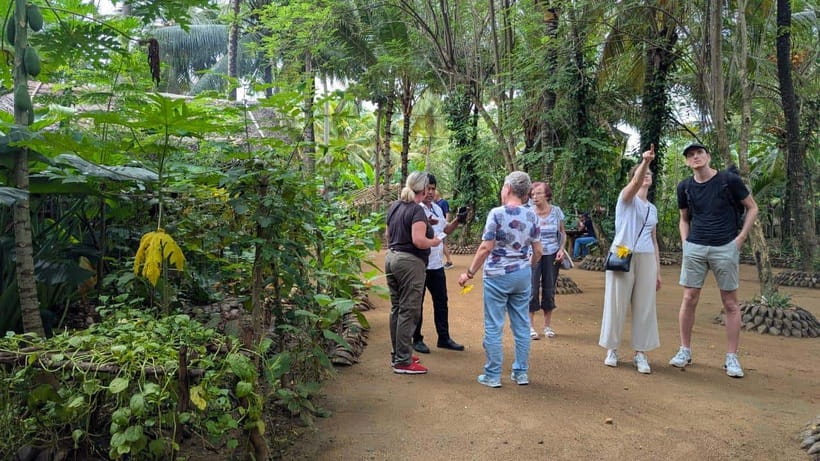
You’ll be based very close to Udawalawe Elephant Orphanage, so it is easy to slot into a day. The tour runs about 2 hours, but the active part is roughly 90 minutes of walking and moving between stops, garden areas, and the cooking space. If you are coming off safari time, this is one of those activities that still feels active, just in a slower, human way.
I also like that it is structured as a loop. You start with a welcome drink, move through demonstrations and a mine visit, then shift into hands-on work in the village kitchen. That flow keeps you from feeling like you are only watching.
Cinnamon tea welcome and the start of your village loop
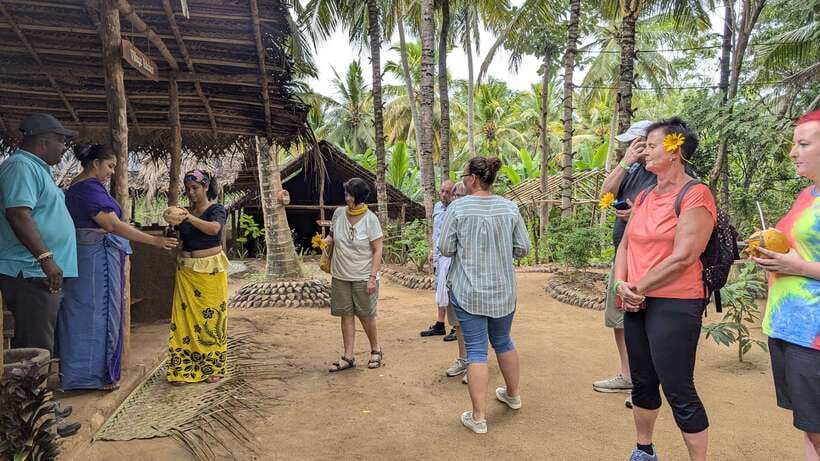
The day kicks off with a welcome drink of cinnamon tea. It sets expectations for what you are about to learn, spices are not just a flavor here, they are part of the local economy and everyday culture.
From there, you transition into the first big stop: the ancient gem mine. Even if you are not a gem-person, this is useful. It frames why certain skills and industries mattered historically in Sri Lanka, and it gives you a mental map before you start seeing how village craft knowledge is passed along.
Then you’ll get the cinnamon part in a more direct, hands-on way. You will watch a cinnamon peeling demonstration by skilled artisans, where you can see how sticks are prepared rather than just tasting the finished spice in a curry.
Practical note: this portion involves moving between spots outdoors. Even in a short tour, plan for warm sun and stickiness. Water helps, and comfortable shoes will make the walking feel like less of a chore.
Ancient gem mine visit: what you should pay attention to
A visit to an ancient gem mine is one of the most distinctive parts of this tour. You’ll learn about the gem mining industry, including the processes involved in uncovering precious stones and the techniques miners used in older times.
The value here is not only seeing a mining-related site. It is how the guide connects mining to practical work and local knowledge. In a village setting, explanations tend to be grounded: how people found materials, what tools and steps look like, and why certain stages mattered.
If you are the type who likes context, this is your moment. You can use it to understand what you might see later in Sri Lanka about gem trade and the way craft knowledge spreads through communities. And if you are not, it still serves as a good contrast to the cooking steps that come next, so your brain stays interested.


Cinnamon peeling: the spice lesson you can actually picture
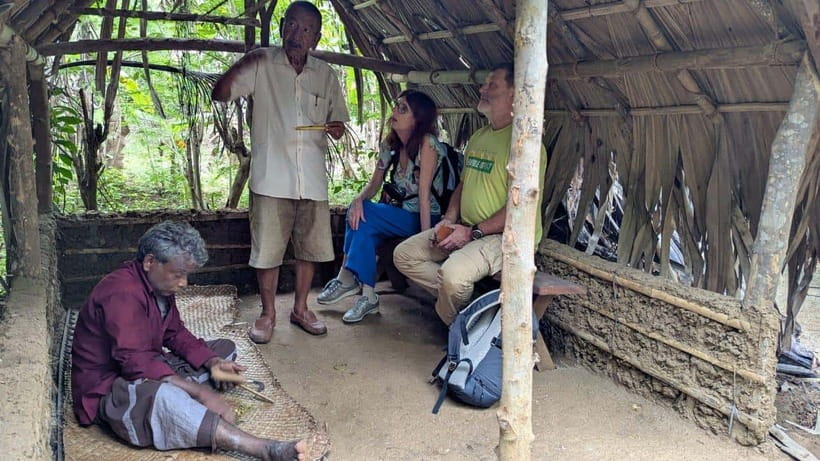
Cinnamon is one of those spices you usually meet in supermarkets, already packaged and ready to sprinkle. Here, you learn the process behind it through a cinnamon peeling demonstration by skilled artisans.
Watch closely for two things. First, notice the texture and care involved in peeling, because cinnamon quality comes down to how it is prepared. Second, listen for the explanation of why cinnamon matters in Sri Lanka, both culturally and economically.
This stop also makes your cooking class more satisfying. Once you understand where cinnamon sticks come from, you taste them differently in the meal that follows. The spice stops being a vague background note and becomes part of the story you just learned.
Vegetable picking in the organic garden, then cooking in a village kitchen
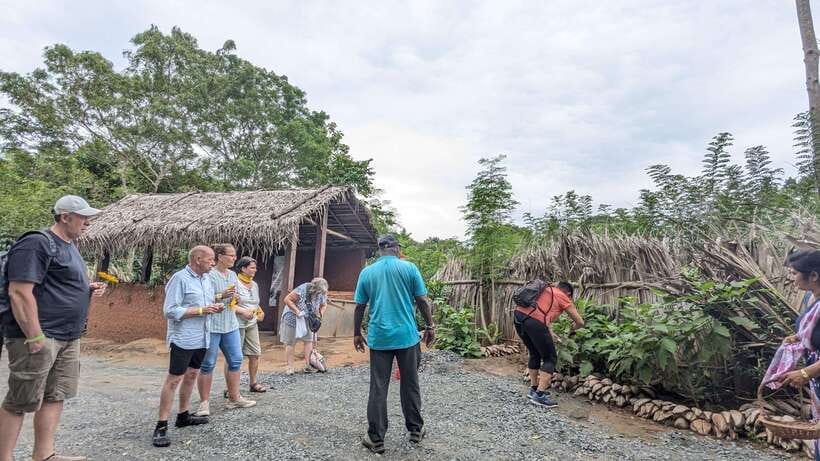
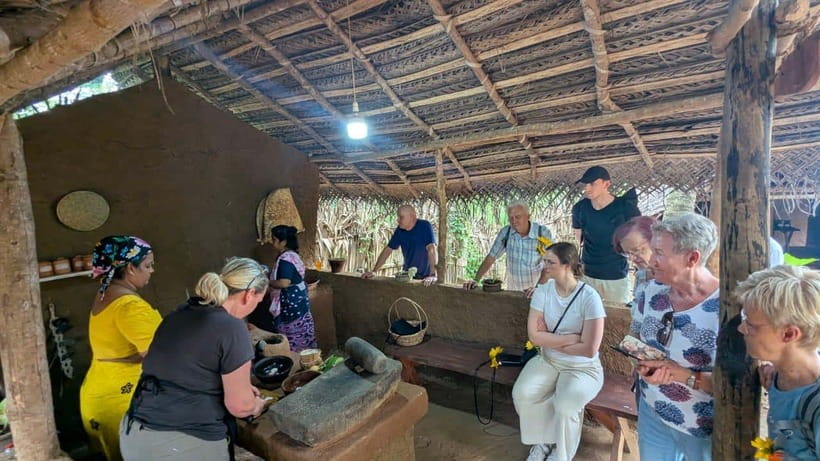
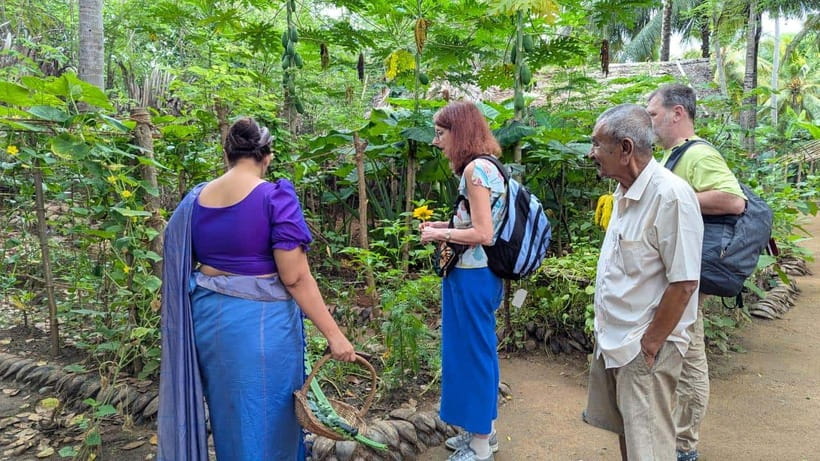
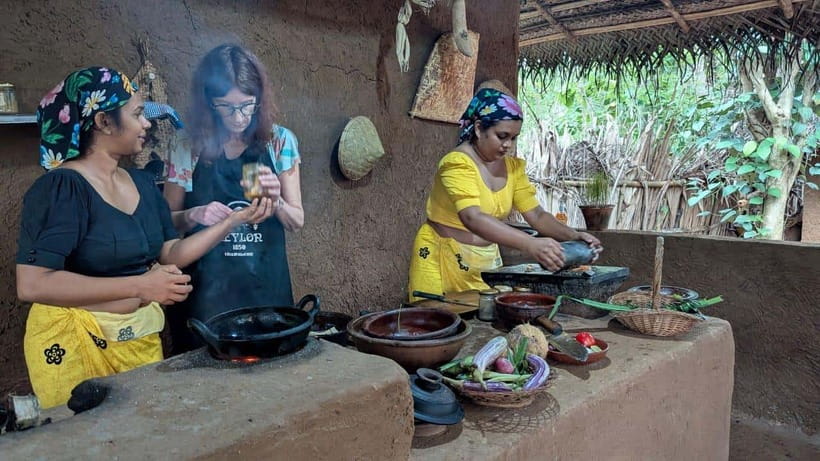
This is the heart of the experience, and it is where you get the most value for the money. You will pluck vegetables from the garden, then cook them in a traditional village kitchen with local women.
I like this structure because it is not only a class where someone talks while you sit. You get the ingredient first, then you work with it. That makes the final meal feel like something you earned, not just something you were served.
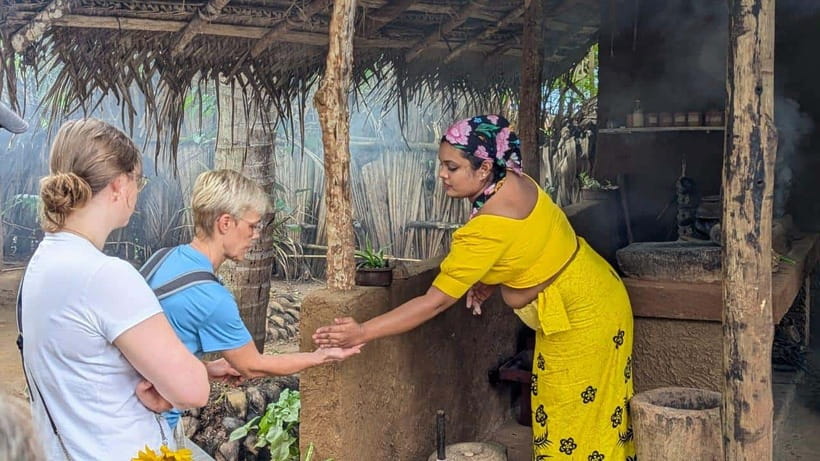
In the kitchen, you can expect age-old recipes and techniques. The process includes steps like grinding spices and cooking over an open flame. Even if you have cooked before, these are the kinds of details that change the flavor. Spice grinding right before cooking tends to bring out aroma, and flame cooking can shift how heat moves through a pan.
Also pay attention to how the cooking is taught. Local women guiding you through the steps usually means the instructions are practical, focused on what to do, and flexible depending on your pace. One person was especially happy with how involved the staff got them in the process, and that matches the style you should look for in a real village kitchen.
Common dishes you may encounter include Sri Lankan favorites like coconut sambal and dahl. The exact menu can vary, but if those flavors appeal to you, you are in the right place.
The meal: eat what you helped prepare
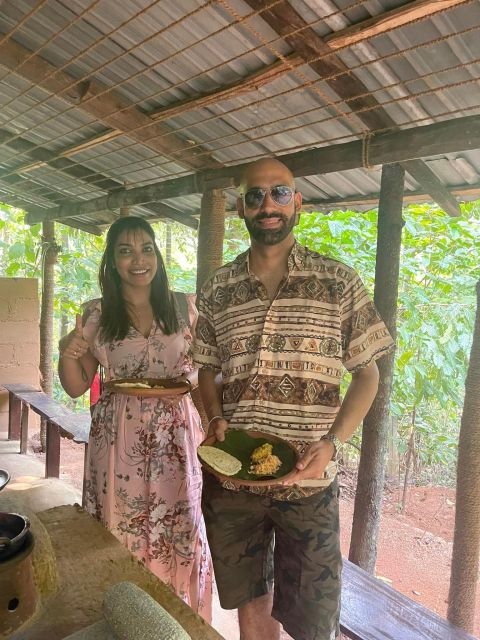
After cooking, you sit down for the local meal featuring the dishes you made during the class. This is communal, village-style, so the pace is slower than a restaurant.
The biggest win is that you taste the food with a clear sense of what went into it. When you grind spices and cook over heat yourself, the meal becomes more than fuel. It becomes proof that the techniques matter.
One important consideration from the experience details: drinks during the meal may not be included. There has been at least one complaint about beverages being charged at a much higher rate than at a shop, without clear advance warning that drinks were extra. So if you want a soft drink or juice, ask first how pricing works and whether anything is included.
Local melas after lunch: how to enjoy without getting overwhelmed
The tour includes participation in local melas, which are traditional fairs. You can expect music, dance, crafts, and local delicacies, plus time to mingle with villagers and get a feel for customs.
This portion is less about structured learning and more about atmosphere. It is a good way to see how the village social calendar plays out beyond the kitchen and garden. You get to move from food work into community life, and that keeps the day feeling complete.
If you are sensitive to crowds, you can still enjoy the mela. Focus on crafts and small bites rather than trying to follow every performance at once. It is okay to linger, look, and return to the calm areas. Fair environments can be loud and busy, so you will enjoy it more if you give yourself permission to go at your own pace.
Price and value: is $30 for 2 hours worth it?
At $30 per person for a 2-hour experience, this tour is in the midrange for Sri Lanka village-style activities. The good news is where that price goes.
You are paying for several distinct elements that cost time and labor:
- a welcome drink and guided stops
- a gem mine visit with an explanation
- a cinnamon peeling demonstration
- vegetable picking and a hands-on cooking session with local women
- the meal featuring what you cooked
- mela participation
That is a lot packed into a short window, and you also get a live guide in English and Singhalese, plus a private group format. If you compare this to paying separately for a guide, a food class, and entry to a site, the bundled experience can feel fair.
The main value risk is not the base price. It is the possibility of extra spending during the meal if drinks are added. Since one participant reported surprise markups, I recommend you plan to spend only what you have clearly confirmed. If you want drinks, ask ahead. If you prefer to avoid surprises, stick to water.
Who should book this Udawalawe village cooking experience
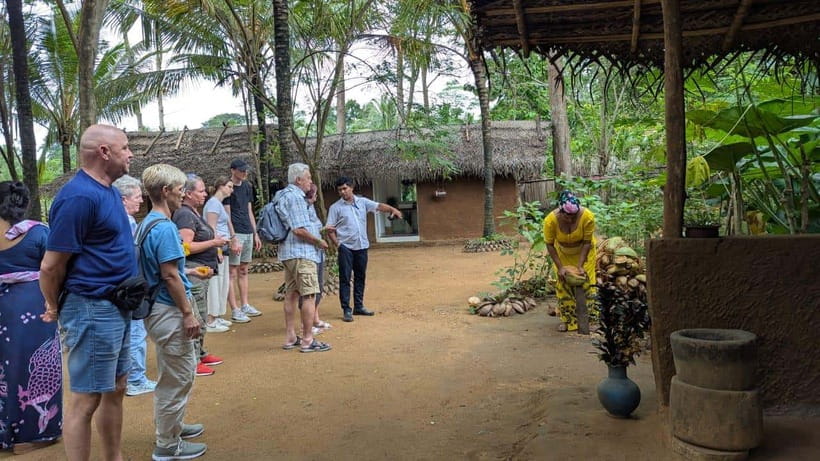
This fits best if you want food and culture together, not just a cooking demo. It also works well if you like practical learning, like picking vegetables, grinding spices, and cooking over an open flame.
Book it if:
- you are interested in Sri Lankan spice culture, especially cinnamon
- you want a hands-on cooking class rather than a passive meal
- you like animal safari days and want something human and calm afterward
- you enjoy village craft and community events like melas
Consider skipping or adjusting your expectations if:
- you have limited walking ability, since this is a full walking tour around 90 minutes
- you are expecting a museum-level gem geology explanation, because it is taught in a village context
- you do not like any chance of extra charges for drinks, since beverage pricing during the meal may not be included
Small logistics that can make or break your day
Because the tour is a walking loop, dress for movement. Wear shoes that can handle uneven outdoor ground. Bring a hat if you get sun easily, and consider a light layer if you expect evening breezes.
Language is covered. You’ll have a live guide who speaks English and Singhalese, so the key parts of the story and instructions should be easy to follow. If you want to cook the same way they do, ask a question while you are working, not after the meal.
Finally, bring a mindset that this is village life, not a staged performance. The best moments tend to come when you watch what is happening, ask what you are curious about, and stay present during the cooking steps.
Should you book this Udawalawe farm to table cooking tour?
I think this is a strong choice if your priority is hands-on Sri Lankan cooking in a real village-style setting. The combination of cinnamon tea, cinnamon peeling, garden vegetable picking, cooking with local women, and a meal you help prepare is the kind of day you can remember when you get home.
If you are price-conscious, it is still fair, but go in smart. Confirm whether drinks are included at the meal, or plan to skip ordering beverages. And if you are sensitive to walking, be ready for about 90 minutes on foot.
If those small cautions are easy for you, you should book. This is the sort of activity that turns food from something you ate into something you understood.
FAQ
How long is the Udawalawe farm to table village cooking experience?
The experience lasts about 2 hours. It includes a full walking tour of around 90 minutes.
What is included in the $30 per person price?
You get a cinnamon tea welcome drink, an English and Singhalese guided visit to an ancient gem mine, a cinnamon peeling demonstration, vegetable picking from the garden, a traditional cooking class with local women, the meal featuring dishes you helped prepare, and participation in local melas with crafts and local delicacies.
Where is the meeting point?
The meeting point is 1.2 km away from the Udawalawe Elephant Orphanage.
What languages are the guides?
The live guide speaks English and Singhalese.
Is this activity wheelchair accessible?
No, it is not suitable for wheelchair users.
Do you cook yourself or just watch?
You participate in the cooking class. You pick vegetables and then cook in a traditional village kitchen with local women, followed by a meal featuring the dishes you prepared.
What happens during the ancient gem mine visit?
You visit an ancient gem mine and learn about the processes involved in uncovering gems, including the techniques used by miners of older times.
Is free cancellation available?
Yes, you can cancel up to 24 hours in advance for a full refund.
More Tour Reviews in Sri Lanka
Udawalawe: The Other Runs
Still browsing Sri Lanka? Start here
- Colombo privet Day Tour and shopping★ 5.0 · 3 reviews
- Colombo/ Negombo: Kithulgala White Water Rafting Adventure★ 5.0 · 3 reviews
- Udawalawe National Park Safari and Elephant Transit Home★ 5.0 · 3 reviews
- Yala National Park Wildlife safari from Mirissa★ 3.3 · 4 reviews
- Udawalawe: Farm to Table Cooking & Authe: Village Experience★ 4.7 · 4 reviews
Udawalawe Safaris, compared.
 ★ 4.9Udawalawe National Park: Elephant Safari with Expert GuideFrom $30641 reviews
 ★ 4.9Udawalawe: National Park Safari & Elephant Transit Home TourFrom $21183 reviews
 ★ 4.8Udawalawa National Park Safari Tour with Experienced GuidesFrom $19122 reviews
 ★ 5.0Udawalawe National Park Entrance Ticket with Private SafariFrom $27115 reviews
 ★ 4.8Hikkaduwa/Galle/Weligama/Mirissa/Tangalle: Udawalawa SafariFrom $27114 reviews
 ★ 4.7From Mirissa/Galle/Hikkaduwa: Udawalawa National Park SafariFrom $27106 reviews
 ★ 5.0Udawalawe National Park Wildlife Safari ToursFrom $4078 reviews
 ★ 5.0Udawalawe Safari DayTrip frm Bentota/Kalutara/Ahungalla/HikkaduwaFrom $20077 reviews
Browse the lists this tour appears in