
REVIEW · ANURADHAPURA TOURS
Hands-On Cooking Class in Anuradhapura: Cook Like a Local
Smoky fire, stone-ground spices, and real village pace. In Anuradhapura, you’ll cook in a clay house kitchen under a coconut-leaf roof, and grind spices on the miris gala stone grinder. One heads-up: this is hands-on cooking over wood smoke and fire heat, so plan for comfort and a little spice on the go.
I like that you do more than watch. You pick your own coconut, use traditional tools, and finish with a full Sri Lankan meal that includes curries, greens, sambal, and a sweet finish. For $40 and about 3 hours, it’s strong value if you want practical food skills, not just a photo stop.
In This Review
- Key highlights you will actually feel during the class
- A clay house kitchen in Anuradhapura, built for real work
- How the 3-hour flow turns ingredients into a full Sri Lankan meal
- The miris gala stone grinder is the class’s secret weapon
- Hiramanaya coconut scraping, where small motions create big flavor
- Wood-fired stove cooking and clay pots: the flavor lesson
- The Rajarata menu you will cook and taste
- Learning with an English instructor, in a private setting
- Price and value: what $40 buys in 3 hours
- When to book and what to bring to stay comfortable
- Who this Anuradhapura cooking class is for
- Should you book this cooking class in Anuradhapura?
- FAQ
- How long is the cooking class in Anuradhapura?
- How much does the hands-on cooking class cost?
- What language is the instructor?
- What dishes are included in the meal?
- Where does the class take place?
- Is the class a private group?
Key highlights you will actually feel during the class
- Pick-your-own coconut straight from the tree, then turn it into a key ingredient for the meal
- Miris gala stone grinder work, where the aroma hits fast and you control the spice mix
- Hiramanaya coconut scraping training, a home-kitchen technique you can repeat later
- Wood-fired stove cooking that brings a smoky flavor you cannot fake with a modern burner
- Rajarata menu of classics, including ambarella curry, lake fish curry, and banana blossom mallum
- Simple village setting at a clay kitchen shaded by a coconut-leaf shelter, with a local welcome drink
Deeper into Anuradhapura
- Explore & Ride the history of anuradhapura with Vogel Tours
★ 5.0 · 62 reviews - Delve Into Ancient Anuradhapura with Optional Visit to Mihintale
★ 5.0 · 42 reviews - Anuradhapura Private Ancient City Day Tour
★ 5.0 · 39 reviews - Anuradhapura Heritage Mountain bike / bicycle Tour
★ 5.0 · 34 reviews
A clay house kitchen in Anuradhapura, built for real work
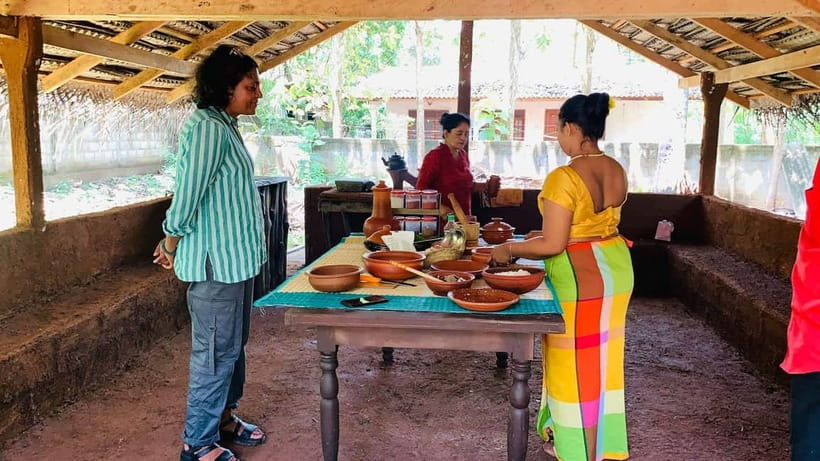
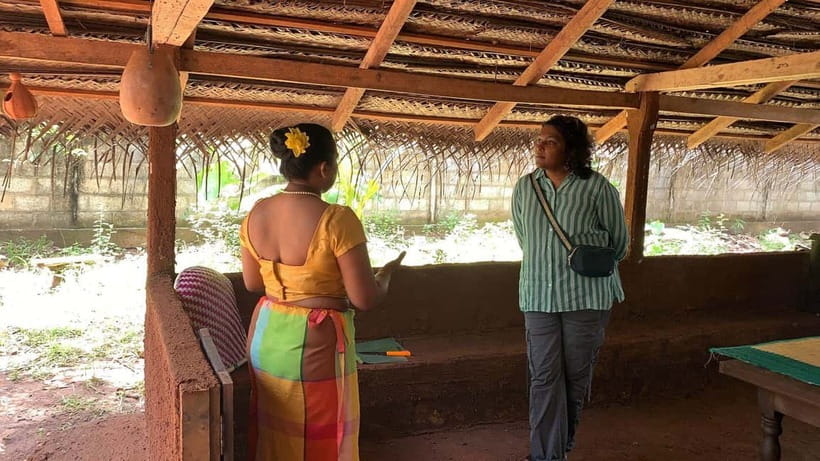
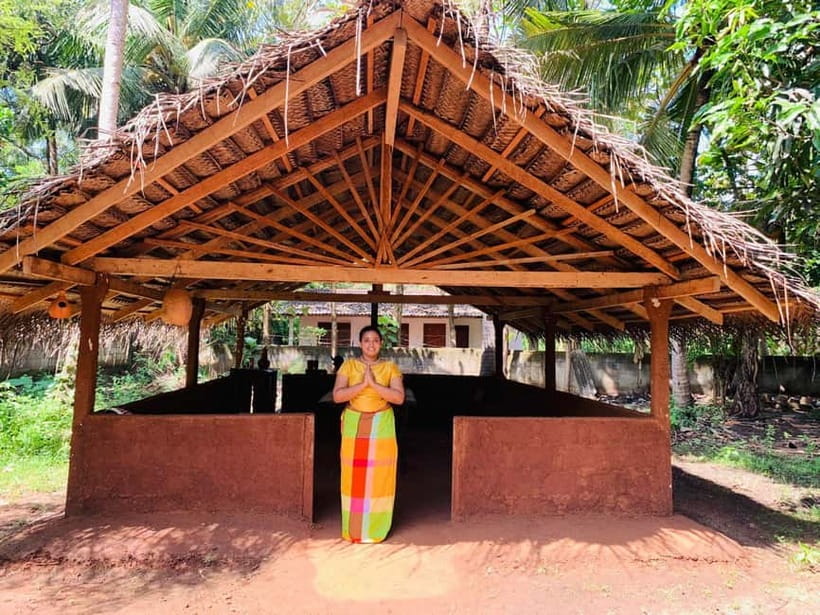
This class takes place at GK Immersions-Best things to do provider at a clay house kitchen in Anuradhapura, shaded with a traditional coconut leaf shelter. The setup matters because it changes how you cook. You are not in a glossy studio pretending to be local, you are in a working village-style space that slows you down just enough to learn.
You’ll start by settling in under that rustic shelter and getting oriented by an English instructor. Then the pace turns practical. Before the first curry simmers, you’ll already be touching tools, ingredients, and textures that make Sri Lankan cooking feel intuitive instead of mysterious.
Also, it’s a private group experience. That usually means more time for questions and less “everyone watch, nobody touch.” If you prefer learning one-on-one or with just your travel partner, this format tends to suit.
How the 3-hour flow turns ingredients into a full Sri Lankan meal
You should expect a class that moves through the typical Sri Lankan sequence: prep first, spice next, then cooking over fire, and finally eating everything you made. The time is short enough that it stays focused, but long enough for you to feel the process rather than just sample dishes.
A common starting rhythm looks like this:
- A welcome local drink, then a quick introduction to what you’ll cook
- Picking your own coconut, so you start the class with the ingredient source
- Tool work like grinding spices and scraping coconut, which builds the flavors before cooking
- Cooking over a traditional wood-fired stove using clay pots and fresh ingredients
- Eating together with the full menu, then closing with a sweet finish
Even if you’ve cooked before, the “hands-on” part is the point here. You’ll be doing the work, not just tasting the results. That makes it easier to take the skills home, because you remember the texture of the spice paste and the feel of the coconut scraping.
The miris gala stone grinder is the class’s secret weapon
The most memorable skill for me is the miris gala stone grinder moment. You grind spices yourself and smell them intensify as they break down. It is also a useful lesson in why Sri Lankan cooking often tastes so full. Freshly ground spices hit different than pre-ground powder.
The class is built around traditional technique, not shortcuts. You’ll also learn the overall logic of spice building, which helps when you cook outside of a class kitchen. Instead of thinking, I need a specific jar of spice, you start thinking about balance, aroma, and what goes into the base.
If you like food science, this part scratches that itch. The grinder changes the aroma immediately. Your nose becomes your guide. And yes, you’ll likely smell like spices afterward, but in a good way.


Hiramanaya coconut scraping, where small motions create big flavor
After spice work, you’ll scrape coconut using a hiramanaya. This is one of those “everyone’s done it at home” skills that sounds simple, until you try it. The motion is repetitive but satisfying, and it gives you a direct connection to dishes that rely on coconut for body and softness.
This step also explains why coconut shows up across Sri Lankan cooking. It’s not just for sweetness. It helps make curries creamy, adds texture, and smooths out the sharp edges of chili and tangy fruit flavors.
And because you picked your coconut earlier, you understand the ingredient story end to end. That continuity is part of the value here. You’re not only learning recipes, you’re learning sourcing and technique.
Wood-fired stove cooking and clay pots: the flavor lesson
Cooking over a wood-fired stove is where the class becomes more than a technique workshop. Firewood adds a smoky character that you cannot fully replicate with modern appliances. Even when the ingredient list is familiar, the flavor profile shifts because of that cooking environment.
The class also uses clay pots. Clay changes how heat behaves around food, and it supports slower simmering. You’ll get a chance to cook over firewood while the dishes come together as a group meal.
Practical tip: this is real cooking. You may want to wear something comfortable and breathable, especially if you’re visiting in warmer daytime conditions. You can also expect mosquitoes to be around, since it is a village-style outdoor or semi-outdoor setup. One review specifically called out that mosquito repellent is useful, and I agree. Pack it, even if you’re only outside briefly.
The Rajarata menu you will cook and taste
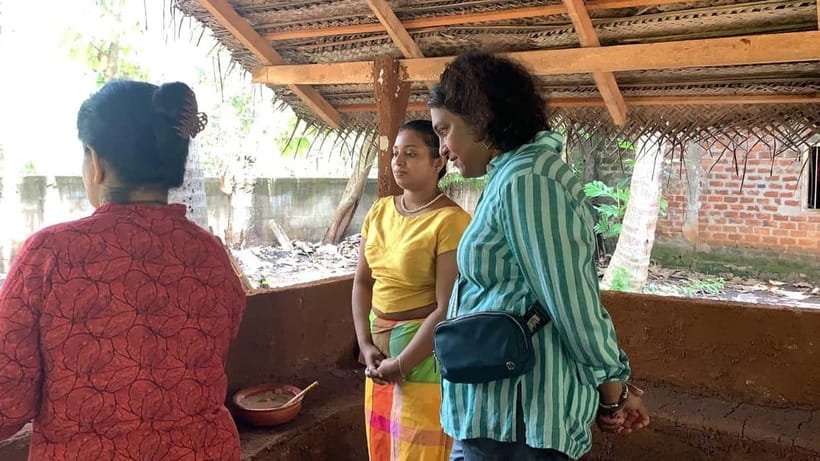
This class is built around a set menu of traditional Sri Lankan dishes from the Rajarata region. You’ll cook and taste what’s included, and you’ll see how they work together as a meal rather than a list of separate dishes.
Here’s what’s on the plan:
- Yellow rice or white rice as the foundation, steamed and served as the heart of the meal
- Ambarella curry, made from ambarella, a tropical fruit used like a vegetable with tangy bite
- Banana blossom mallum, a curry featuring banana flower with earthy, textured flavor
- Lake fish curry, prepared with locally caught lake fish simmered with spices and creamy coconut milk
- Kathurumurunga mallum, a greens-based dish mixed with coconut and spices
- Coconut sambal, a spicy side with freshly grated coconut, red chili, lime, and onion
- Pumpkin curry, creamy and comforting with gentle spice and a slightly sweet feel
- Sweet finish: fresh curd and treacle, plus ripe papaya
What you should take from this menu is how balanced it is. You get:
- Rice to ground everything
- A tangy fruit curry (ambarella)
- A flower-based dish (banana blossom) that adds texture
- Greens cooked with coconut, so they feel soft and flavorful, not bitter or harsh
- Fish curry that leans creamy and spiced, not one-note
- Sambal that brings chili, lime brightness, and crunch from onion
- A pumpkin curry that makes the meal feel comforting
- A sweet ending with curd and treacle plus fruit
If you’re someone who wants Sri Lankan food in one sitting, this menu is a strong sampler. If you dislike fish or certain greens, you might want to check in ahead of time, but your provided details list these items as part of the included meal.
Learning with an English instructor, in a private setting
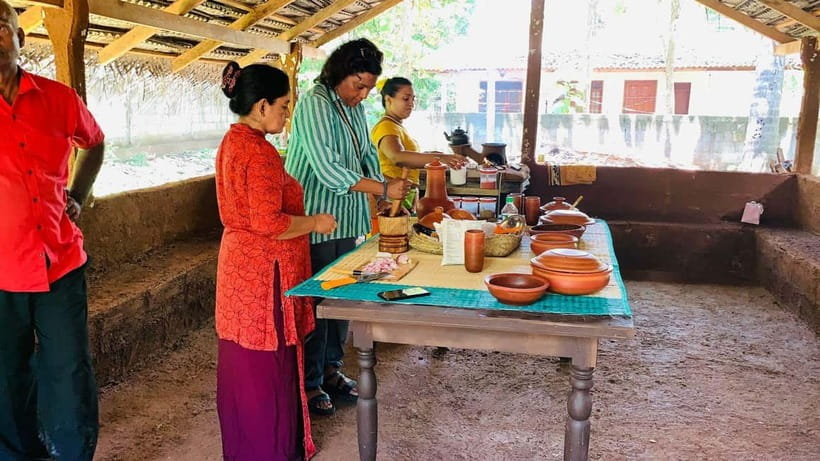
The instructor speaks English, and the experience is described as suitable for a private group. That matters because cooking classes are communication heavy. When you’re learning spices, tools, and timing, you want clear instructions, especially if you don’t know the ingredient names.
One reason I like this setup is that it supports questions. You can ask why a spice mix goes in first, or what changes when coconut gets added. That back-and-forth is often what turns a class from entertainment into real skill.
From the class experience, you should also expect a big focus on tool use. Grinding spices, scraping coconut, and cooking on fire are taught, not assumed. In the reviews, people praised the instructions on which spices and vegetables to use, and that aligns with the structure: you are actively building the dishes.
Price and value: what $40 buys in 3 hours
At $40 per person for a 3-hour class, you’re paying for ingredients, tools, instruction, and a full meal. Many cooking experiences either focus on one dish or leave you with only a tasting plate. Here, the meal is the main event, and the included menu is substantial.
You also get extra value in the form of ingredient participation. Picking your own coconut and doing the grinding and scraping makes the class feel earned. You are less likely to think, I paid to watch someone else cook. The class is also private, so your time with the instructor is less diluted.
Is there any “gotcha”? The only real consideration is that this is not a hands-off culinary tour. If you hate getting your hands involved, or you want a purely air-conditioned experience with zero fire heat, you might find it demanding. Otherwise, the price feels fair for the time, the tools, and the meal you leave with.
When to book and what to bring to stay comfortable
The class is offered with starting times based on availability, and the activity runs about 3 hours. It’s a good fit for travelers who want something cultural and practical without committing to a full day.
Here’s how I’d prepare based on the experience style:
- Bring mosquito repellent. The class environment is nature-adjacent and shaded by a coconut-leaf shelter, and one review specifically highlighted this.
- Wear comfortable clothing you don’t mind getting curry-scented.
- If you like photos, plan to capture the tools and the cooking steps. The experience is visual, especially when spices are freshly ground and coconut is being scraped.
Also, remember the meal includes both savory items and a sweet finish like fresh curd and treacle plus ripe papaya. You’ll likely want to arrive with an appetite.
Who this Anuradhapura cooking class is for
This class is ideal if you:
- Want a hands-on cooking experience with traditional tools, not a tasting tour
- Care about learning process, especially spice grinding and coconut prep
- Like Sri Lankan classics and want a meal that covers rice, curries, sambal, greens, and fruit-based flavors
- Prefer a private group setting and an English instructor
It may be less ideal if you:
- Want a slow, sightseeing-heavy day with minimal physical effort
- Avoid all wood smoke and strong heat while cooking
- Don’t eat several of the listed dishes, since the menu items are part of the included meal
Should you book this cooking class in Anuradhapura?
If you want practical Sri Lankan cooking skills, this is an easy yes. The class focuses on the parts that actually change flavor, stone-ground spices, coconut prep, and cooking on a wood-fired stove, then it rewards you with a full Rajarata menu.
Book it if you’re the kind of traveler who remembers the smell of spices and the feel of real tools, not just the final plate. Skip it only if you want a more passive experience or if fire heat, smoke, and hands-on work would be stressful for you.
FAQ
How long is the cooking class in Anuradhapura?
The class lasts about 3 hours.
How much does the hands-on cooking class cost?
It costs $40 per person.
What language is the instructor?
The instructor teaches in English.
What dishes are included in the meal?
The included menu features rice (yellow rice or white rice), lake fish curry, ambarella curry, Kathurumurunga mallum, coconut sambal, pumpkin curry, banana blossom mallum, and a sweet finish of fresh curd and treacle plus ripe papaya.
Where does the class take place?
All activities take place at the clay house kitchen, shaded with a traditional coconut leaf shelter.
Is the class a private group?
Yes, it is described as a private group, and it is wheelchair accessible.
More Tour Reviews in Anuradhapura
Anuradhapura, Deeper
Still browsing Anuradhapura? Start here
- Rangiri Jeep Safari Sigiriya Lion Rock & Evening Jeep Safari★ 4.0 · 3 reviews
- Half Day – Minneriya National Park Safari Tour From Habarana/Sigiriya★ 3.5 · 3 reviews
- Sunrise or sunset tour pidurangala Rock and Sigiriya Rock★ 5.0 · 4 reviews
- Wilpattu Half Day Safari From Anuradhapura★ 5.0 · 4 reviews
- Minneriya National Park Half Day Elephant Safari★ 5.0 · 4 reviews
Anuradhapura Tours, compared.
 ★ 5.0Private City Day Tour in AnuradhapuraFrom $30383 reviews
 ★ 5.0Explore & Ride the history of anuradhapura with Vogel ToursFrom $4062 reviews
 ★ 4.4From Anuradhapura: All Inclusive Full Day Safari at WilpattuFrom $11750 reviews
 ★ 4.5Day tour sigiriya to anuradhapuraFrom $12045 reviews
 ★ 5.0Delve Into Ancient Anuradhapura with Optional Visit to MihintaleFrom $3042 reviews
 ★ 5.0Anuradhapura Private Ancient City Day TourFrom $3039 reviews
 ★ 5.0Anuradhapura Heritage Mountain bike / bicycle TourFrom $2534 reviews
 ★ 4.5Anuradhapura: Full-Day Wilpattu All Inclusive Private SafariFrom $9024 reviews
Browse the lists this tour appears in