
REVIEW · ANURADHAPURA TOURS
Explore & Ride the history of anuradhapura with Vogel Tours
Anuradhapura makes sense fast with a guide. Vogel Tours strings together the key Buddhist sites in a few focused hours, with snacks and coffee or tea to keep you comfortable. The biggest plus is how your guide connects the dots on architecture and Buddhism so the monuments stop feeling like random stone. One thing to watch: you still need to budget the $30 UNESCO entrance fee per person, and you will be taking off your shoes in certain sacred areas.
This is a true private experience, meaning it is just your group, not a shared bus with strangers. You can ask questions as you go, and the guide can handle groups up to 10 people, so it works well for friends and small families. Timing runs about 1 to 5 hours depending on pace, but plan roughly half a day to enjoy it without rushing.
Your route hits the city’s most important landmarks, including sacred trees and major stupas, plus the lesser-seen architectural details like moonstones and old bathing ponds. You get a mobile ticket, pickup is offered, and the whole thing is built for people who find Anuradhapura tricky to navigate alone.
In This Review
- Key things to love about Vogel Tours in Anuradhapura
- Why Anuradhapura feels easier with a guide
- Price and Logistics: What you pay, what you budget
- Pickup, transport, and the tour pace you should expect
- The route: Anuradhapura’s main monuments plus the details
- Stop 1: Jaya Sri Maha Bodhi Temple (sacred bo tree)
- Stop 2: Lovamahapaya, also known as the Brazen Palace
- Stop 3: Ruwanwelisaya (Ruwanweli Maha Seya)
- Stop 4: Twin Baths, Kuttam Pokuna
- Stop 5: Samadhi Statue at Mahamevnāwa Park
- Stop 6: Abhayagiri Dagaba
- Stop 7: Main Refectory of Abayagiri Monastery
- Stop 8: Moonstone or Sandakada Pahana
- Stop 9: Eth Pokuna, the Elephant Pond
- Stop 10: Rathna Prasadaya and Guardstone
- Stop 11: Jethawanaramaya
- Stop 12: Jethawanaramaya Museum
- Etiquette, comfort, and small tips that prevent headaches
- Who should book this tour
- Should you book Vogel Tours for Anuradhapura?
- FAQ
- How long is the Vogel Tours Anuradhapura experience?
- Is this tour private?
- What group size is this tour priced for?
- Are pickup services included?
- Is transportation included?
- What is included in the tour?
- Are entrance fees included?
- What sites will we visit?
- Do I need to remove my shoes?
- What happens if the weather is bad?
Key things to love about Vogel Tours in Anuradhapura
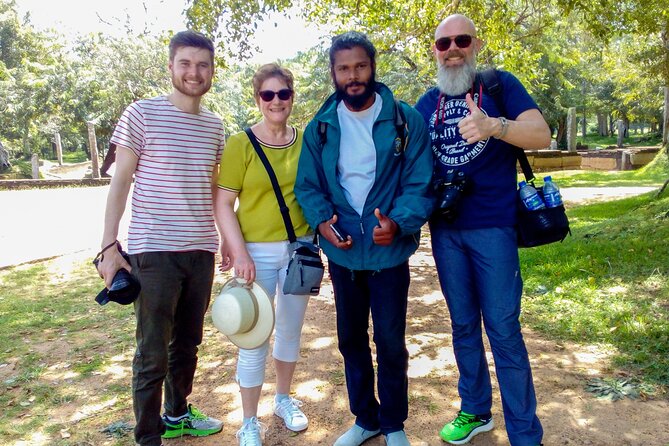
- Ajee Vogel guides you through the big religious sites in plain, understandable terms
- Jaya Sri Maha Bodhi and Ruwanwelisaya are must-see anchors of the route
- You get breaks with local snacks, plus coffee or tea
- You see more than temples, including Kuttam Pokuna and Sandakada Pahana
- Plan for the $30 per person UNESCO entrance ticket, since it is not included
Deeper into Anuradhapura
- Explore & Ride the history of anuradhapura with Vogel Tours
★ 5.0 · 62 reviews - Delve Into Ancient Anuradhapura with Optional Visit to Mihintale
★ 5.0 · 42 reviews - Anuradhapura Private Ancient City Day Tour
★ 5.0 · 39 reviews - Anuradhapura Heritage Mountain bike / bicycle Tour
★ 5.0 · 34 reviews
Why Anuradhapura feels easier with a guide
Anuradhapura can be a lot all at once. You step from stupa to stupa, garden to monastery ruins, and it is easy to feel like you are admiring shapes without understanding what you are looking at. This tour helps you read the sites. You walk up to the sacred features and get the story behind them, including how Buddhism shaped the design of religious spaces in Sri Lanka.
The standout for me is the way the guide connects architecture with meaning. Names like Jaya Sri Maha Bodhi and Ruwanweli Maha Seya are not just labels. You get context for why these places matter, which changes how you look at the carvings, relic structures, and the layout of the ancient city.
The other big win is pacing. Instead of trying to hit everything, you focus on a sequence of high-value stops. It keeps your energy for the places that really land, especially when the sun and heat start doing their thing.
Price and Logistics: What you pay, what you budget
The tour price is listed as $40 per group (up to 3). That is the amount you pay for the experience for your group, and it is why it can be good value if you are traveling with 1 or 2 companions.
But here is the part that matters for your wallet: the $30 UNESCO entrance fee per person is not included. Since it is per traveler who enters the UNESCO area, your total cost depends on group size. For example, if you are 2 people, you likely pay $40 for the tour plus $60 for entrance. If you are 3 people, you likely pay $40 plus $90 for entrance.
Also note that the included items are practical rather than fancy. You get snacks and coffee or tea, which sounds small, until you are standing outside temple gates with hungry legs. The tour is designed for your comfort so you stay in the zone longer.
Pickup, transport, and the tour pace you should expect
Pickup is offered, and you are near public transportation, which helps if you need to coordinate your timing. There is also a note that private transportation can be supplied for up to 3 persons if you request it. If you are a small group and you want less hassle, ask about transport when booking.
The overall duration is about 1 to 5 hours, which is a wide window. Your exact time will depend on how long you spend at each site, how many questions you ask, and how quickly you move between locations. The itinerary itself adds up to roughly a few hours of site time, and then you have walking and transition time.
Good weather matters. If conditions are poor, the tour can be moved to another date or refunded. If you are planning around rainy season, pick a flexible day if you can.
More history on the ground in Anuradhapura
The route: Anuradhapura’s main monuments plus the details
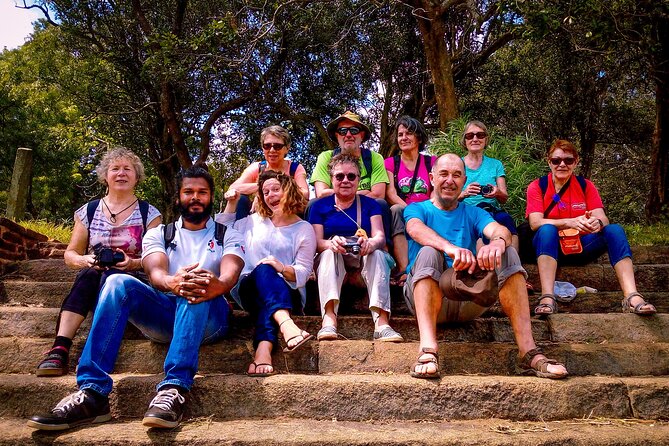
This tour is structured like a loop through the core religious area, with short, focused stops. You are not stuck for hours at one site, but you still get enough time to notice carvings, layouts, and why certain structures are positioned where they are.
Stop 1: Jaya Sri Maha Bodhi Temple (sacred bo tree)
You start at Jaya Sri Maha Bodhi, a historical sacred Ficus religiosa tree in the Mahamewuna Garden. The value here is simple: it is a living link to the spiritual life of the city. Taking 30 minutes at the tree gives you time to slow down and understand how sacred nature plays a role in Buddhism, not just stone monuments.
Admission is free for this stop, which helps you start the day feeling like you are ahead of the cost curve.
Stop 2: Lovamahapaya, also known as the Brazen Palace
Next up is Lovamahapaya, a building known as the Brazen Palace or Lohaprasadaya. It sits between Ruwanweliseya and Sri Mahabodiya, so it acts like a connective landmark between major religious areas. You spend about 15 minutes here, which is right for seeing the structure, getting the basics, and moving on.
If you like architectural context, this is one of the stops where a guide’s explanations make a big difference. The ruins and foundations look more meaningful once you know what they were built to do.
Stop 3: Ruwanwelisaya (Ruwanweli Maha Seya)
Then you reach Ruwanwelisaya, also called Ruwanweli Maha Seya, often described as the Great Thupa. It is a major stupa, a hemispherical structure meant to contain relics. You get around 30 minutes, which is enough to appreciate the scale and to understand the role of stupa forms in Buddhist worship.
Admission is free at this stop, another easy win early in the route.
Stop 4: Twin Baths, Kuttam Pokuna
After the big religious anchor, you switch to a practical architectural feature: Kuttam Pokuna, the Twin Baths or twin ponds. It is a well-preserved set of old bathing tanks, and it is exactly the kind of stop that makes the ancient city feel lived in. You spend about 15 minutes, which is ideal for seeing what makes it special without turning it into a long lecture.
This stop is also a good reminder that temple life was connected to everyday routines like cleansing and preparation.
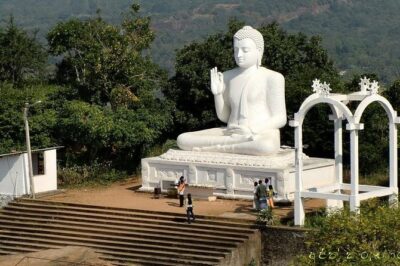
Stop 5: Samadhi Statue at Mahamevnāwa Park
Next is the Samadhi Buddha statue in Mahamevnāwa park. It is associated with meditation and linked to the Buddha’s first enlightenment posture, and it is noted as about 7 feet 3 inches high. You get about 15 minutes, and this stop works best if you are open to spiritual symbolism, not just sightseeing.
If you ask questions here, you can often get answers that make the meditation themes feel less abstract.
Stop 6: Abhayagiri Dagaba
Now you move into the major monastery zone: Abhayagiri Dagaba. It is described as a significant monastery site connected to Theravada, Mahayana, and Vajrayana Buddhism. You only get about 15 minutes, so you will want your guide to focus your attention on what makes Abhayagiri different from the other major complexes.
Short stop, big payoff. This is where you start seeing how Anuradhapura was not one-style Buddhism, but multiple traditions interacting through time.
Stop 7: Main Refectory of Abayagiri Monastery
You continue to the main refectory of the Abayagiri Monastery, the alms-giving place located close to Uttara Mula. The site description mentions a square building, about 42.7 meters on one side. You spend around 10 minutes.
This is a good example of why a guide helps. When you know it was tied to communal alms giving, the scale stops being just impressive and starts being meaningful.
Stop 8: Moonstone or Sandakada Pahana
You then see Sandakada Pahana, also called the moonstone. These carved semi-circular stone slabs are a distinctive part of ancient Sri Lankan stairway architecture. You get about 15 minutes, which is enough to notice the carving style and understand how these details fit the flow of temple entry.
This is one of those stops where you will likely end up taking a few slow looks, because the design is meant to be seen from the right angle.
Stop 9: Eth Pokuna, the Elephant Pond
Next is Eth Pokuna, also called the Elephant Pond. It is a large rectangular pond, with noted dimensions of about 159 meters in length and 52.7 meters across, plus an additional depth figure in the listing description. The stop time is about 10 minutes.
Even if it is not a place you linger for long, it helps you understand the city as an engineered system, not just a set of religious buildings.
Stop 10: Rathna Prasadaya and Guardstone
You then visit Rathna Prasadaya and the guardstone, also written as පොහොය ගෙය and මුරගල. The note says it is one of the finest ancient guard stones of Sri Lanka. You spend about 10 minutes here.
If you like details, this is a quick hit: you see the power of guardianship symbolism and the craftsmanship that goes into the threshold areas around sacred spaces.
Stop 11: Jethawanaramaya
Then you move to Jethawanaramaya, another major monastery complex built by King Mahasena. The itinerary gives about 30 minutes here, so you should have enough time to soak up the scale and to connect it with what you learned at Abhayagiri.
This stop is a strong late-morning or early-afternoon anchor. You feel like you are looking at a city that knew how to make religion monumental.
Stop 12: Jethawanaramaya Museum
Finally, you end at the Jethawanaramaya Museum, housed in a 1937 British colonial building. The museum stop is about 30 minutes and it is free. This ending is practical. After seeing the ruins and structures in the open air, you get a chance to attach names and meanings to objects and treasures.
If you are short on time, museums can feel optional. Here, it is worth it because it helps your tour make more sense.
Etiquette, comfort, and small tips that prevent headaches
Plan to remove your shoes in certain secret places. That is a specific instruction on this experience, so I recommend wearing footwear that is easy to take off and put back on quickly.
Bring basic temple-day comfort items for Sri Lanka heat. The tour includes snacks and coffee or tea, which helps, but you should still dress smart for sun and walking. The itinerary has many short stops, so you will move, turn, and stand around.
If you are the type who likes asking questions, this tour rewards you. The setup is built around you having time to ask about Buddhism and Sri Lankan culture, not just watch the guide point and go.
Who should book this tour
I think this tour fits best if you want:
- A private way to understand Anuradhapura without getting lost
- Clear explanations tied to what you can physically see
- A route that mixes big names like Jaya Sri Maha Bodhi and Ruwanwelisaya with interesting architectural details like Sandakada Pahana and Kuttam Pokuna
It also works well if you travel in a small group. The price is per group up to 3, and private transportation can be requested for up to 3 people, which is handy if you prefer a smoother day.
If you only want photos and do not care about context, you might find the guide time less valuable. But if you want the why behind the stone, it is a strong match.
Should you book Vogel Tours for Anuradhapura?
Book it if you want a guided circuit that makes the city readable in a half-day or less, without trying to cram everything into one chaotic scramble. The combination of Ajee Vogel’s explanations, the snack and tea break, and the mix of major monuments plus detailed architectural stops gives you more value than you would get by wandering on your own.
Only hold back if you hate budgeting for entrance fees, because the $30 UNESCO ticket per person is a real extra line item. Also remember shoes-off etiquette for certain sacred spots. If you can handle those two practical points, this is a smart, focused way to experience Anuradhapura.
FAQ
How long is the Vogel Tours Anuradhapura experience?
The duration is listed as about 1 to 5 hours.
Is this tour private?
Yes. It is private, and only your group participates.
What group size is this tour priced for?
The price is $40 per group up to 3. The guide can accommodate a group of up to 10 people.
Are pickup services included?
Pickup is offered, and the meeting area is near public transportation.
Is transportation included?
Private transportation can be supplied for up to 3 persons if you request it.
What is included in the tour?
Snacks, coffee and/or tea, and a mobile ticket are included.
Are entrance fees included?
No. Entrance fees are not included. The UNESCO area entrance fee is $30 per person.
What sites will we visit?
The stops include Jaya Sri Maha Bodhi, Lovamahapaya, Ruwanwelisaya, Kuttam Pokuna (Twin Baths), the Samadhi Statue, Abhayagiri Dagaba, the Main Refectory of Abayagiri Monastery, Sandakada Pahana (Moonstone), Eth Pokuna, Rathna Prasadaya & Guardstone, Jethawanaramaya, and Jethawanaramaya Museum.
Do I need to remove my shoes?
The experience notes that you have to remove your shoes when you enter to secret places.
What happens if the weather is bad?
The experience requires good weather. If it is canceled due to poor weather, you will be offered a different date or a full refund.
More Tours in Anuradhapura
More Tour Reviews in Anuradhapura
Anuradhapura, Deeper
Still browsing Anuradhapura? Start here
- Rangiri Jeep Safari Sigiriya Lion Rock & Evening Jeep Safari★ 4.0 · 3 reviews
- Half Day – Minneriya National Park Safari Tour From Habarana/Sigiriya★ 3.5 · 3 reviews
- Sunrise or sunset tour pidurangala Rock and Sigiriya Rock★ 5.0 · 4 reviews
- Wilpattu Half Day Safari From Anuradhapura★ 5.0 · 4 reviews
- Minneriya National Park Half Day Elephant Safari★ 5.0 · 4 reviews
Anuradhapura Tours, compared.
 ★ 5.0Private City Day Tour in AnuradhapuraFrom $30383 reviews
 ★ 4.4From Anuradhapura: All Inclusive Full Day Safari at WilpattuFrom $11750 reviews
 ★ 4.5Day tour sigiriya to anuradhapuraFrom $12045 reviews
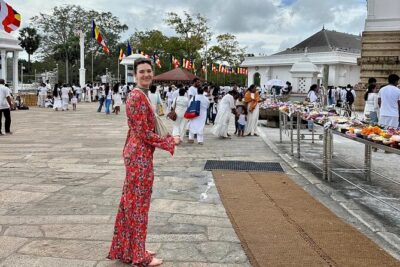 ★ 5.0Delve Into Ancient Anuradhapura with Optional Visit to MihintaleFrom $3042 reviews
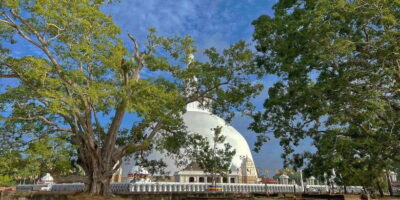 ★ 5.0Anuradhapura Private Ancient City Day TourFrom $3039 reviews
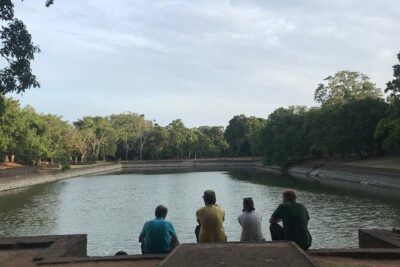 ★ 5.0Anuradhapura Heritage Mountain bike / bicycle TourFrom $2534 reviews
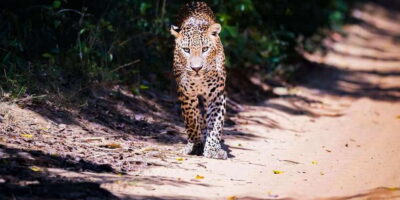 ★ 4.5Anuradhapura: Full-Day Wilpattu All Inclusive Private SafariFrom $9024 reviews
 ★ 4.5Half day tour – in Sacred city of Anuradhapura Or sacred city of Mihintale.From $3024 reviews
Browse the lists this tour appears in