
REVIEW · ANURADHAPURA TOURS
Anuradhapura Heritage Mountain bike / bicycle Tour
Pedal through Sri Lanka’s ancient living city. This Anuradhapura Heritage mountain bike tour has you circling UNESCO sights with Saranga, an English-speaking guide, plus time for temples, tanks, and quiet local backroads at an easygoing pace.
I especially like the balance here: you get a professional mountain cycle from well-known brands such as Giant, Trek, and Louis Garneau, and you’re not just passing by monuments, you’re stopping long enough to understand them. The included vegetarian meal at Hela Bojun, plus bottled water, makes the half-day feel complete instead of rushed.
One thing to plan for: the UNESCO entrance ticket is not included. You’ll also want a wraparound cloth for temple visits if your knees are not covered.
In This Review
- Key highlights worth your attention
- Pedal the UNESCO heart of Anuradhapura
- Price and what you actually get for $25
- Your bike, guide Saranga, and how the 4.5-hour rhythm works
- What to bring (so the day stays easy)
- Stop by stop: from Jetavanaramaya to Sri Maha Boodhi
- Jetavanaramaya, the giant stupa
- Samadhi Statue in meditation form
- Abayagiriya Stupa, a monastery that crossed traditions
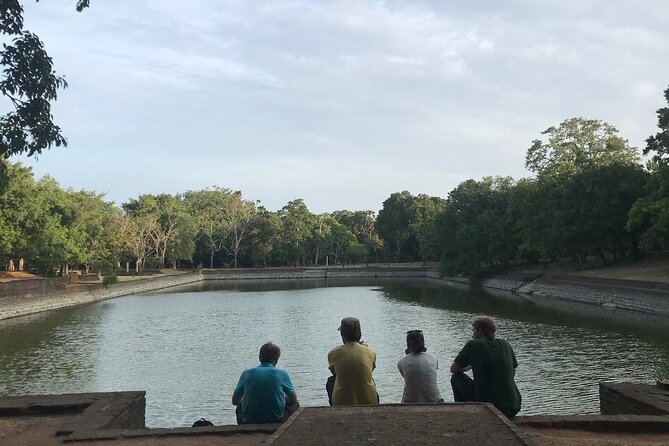
- Twin Baths (Kuttam Pokuna), old bathing tanks still doing their job
- Eth Pokuna, the Elephant Pond reservoir
- Moonstone (Sandakada pahana), the stair-carving detail
- Basawkkulama Tank, ancient irrigation logic
- Main Refectory of Abayagiri Monastery, food for thousands
- Ruwanweli Maha Seya, royal builders in monumental form
- Sri Maha Boodhi Temple, the sacred living fig tree
- Scenic riding between temples, and why the hidden routes matter
- Food, pace, and temple dress tips that keep the day smooth
- A quick expectation check
- Who this tour is best for
- Should you book this Anuradhapura Heritage mountain bike tour?
- FAQ
- How long is the Anuradhapura Heritage mountain bike tour?
- How much does it cost, and what about the UNESCO ticket?
- Is the tour private?
- What bike will I ride?
- What should I bring for temple visits?
- What if weather is poor?
Key highlights worth your attention
- 10 km loop, about 4.5 hours that fits into a half-day without feeling sprinty
- English-speaking guide Saranga who explains Buddhism and culture as you ride
- Mountain bike brands listed include Giant, Trek, and Louis Garneau
- Temple plus irrigation stops like twin ponds and the Elephant Pond reservoir
- Vegetarian lunch at Hela Bojun with bottled water included
Deeper into Anuradhapura
- Explore & Ride the history of anuradhapura with Vogel Tours
★ 5.0 · 62 reviews - Delve Into Ancient Anuradhapura with Optional Visit to Mihintale
★ 5.0 · 42 reviews - Anuradhapura Private Ancient City Day Tour
★ 5.0 · 39 reviews - Anuradhapura Heritage Mountain bike / bicycle Tour
★ 5.0 · 34 reviews
Pedal the UNESCO heart of Anuradhapura
Anuradhapura has that special feel where religion, ancient engineering, and everyday village life all touch each other. This tour is built for that exact reason. You’re on a mountain bike, but the day is paced like a history walk, with breaks to look, listen, and ask questions.
Because it’s a loop around the heritage area, you avoid the “taxi zigzag” problem. You’re not wasting time figuring out routes or negotiating each stop. Instead, you follow a guide who keeps the flow moving while still giving you time to slow down at key sites.
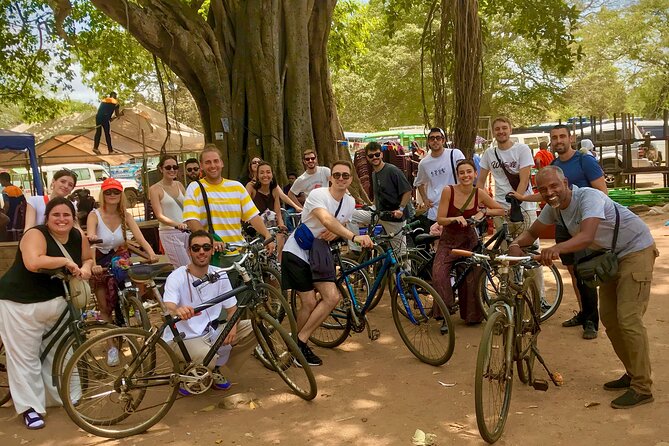
The tour is also private, meaning it’s only your group. If you’re traveling with friends or family, that matters. It keeps the experience calmer and makes it easier for Saranga to match the ride rhythm to your comfort level.
Price and what you actually get for $25
At $25 per person for about 4 hours 30 minutes, the headline price looks like a steal for a guided, vehicle-based heritage circuit. But here’s the real value question: what’s included versus what’s not.
You do get meaningful inclusions:
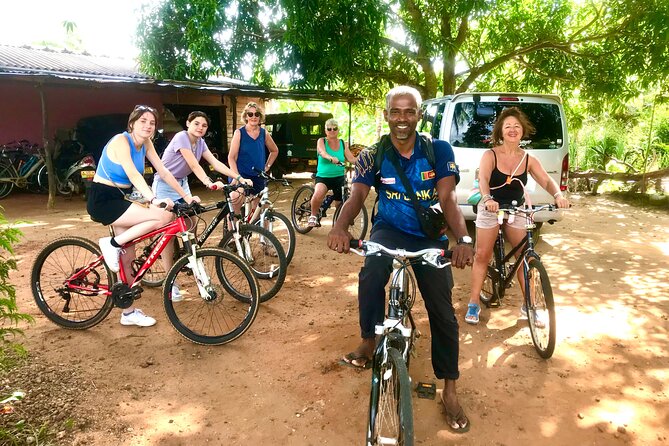
- Mountain bike use (with brands like Giant, Trek, and Louis Garneau)
- Guide tour
- Bottled water
- Parking fees
- A vegetarian meal cooked by local people at Hela Bojun
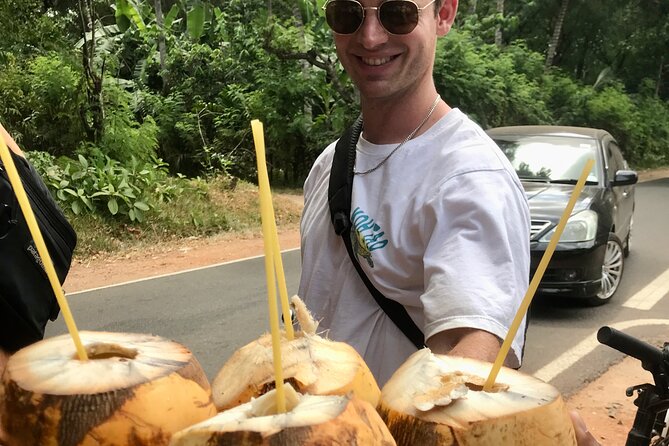
What’s not included is the UNESCO entrance ticket (listed as 30 USD per person, with a lower rate for ages under 13). On top of that, temple visits may require that your knees are covered, so bring a wraparound cloth if needed.
So, is it good value? For most people, yes, because you’re paying for the guide, the bike, and the meal, not just access to stones and statues. The extra UNESCO ticket is a separate cost, but it’s still usually less painful than trying to DIY every stop, especially when you’re factoring in a bike plus a cooked lunch.
Your bike, guide Saranga, and how the 4.5-hour rhythm works
This is a 10 km loop with site stops that range from about 10 minutes to 30 minutes each. That time structure is one of the best parts. You’re not stuck for too long at any single point, yet you’re also not rushing through places where details actually matter.
The guide, Saranga, is a big reason the tour tends to land well for visitors. He’s English-speaking and focuses on culture and religion as you move through the ancient grounds. The result is that the monuments stop feeling like random ruins and start feeling like parts of a larger story, including how Buddhism is shown in statues and sacred fig trees.
Your fitness needs are described as moderate physical fitness. This helps set expectations: you should be comfortable riding a mountain bike for a few hours, with frequent short pauses. If you’re used to regular walking but not cycling, you might still be fine, but you should take the pace seriously and ride conservatively.
Bikes are supplied, so you do not need to bring your own. The tour also uses a mobile ticket, and you should get confirmation at booking time.
What to bring (so the day stays easy)
- A wraparound cloth for temple visits if your knees are not covered
- Sunscreen and water are smart, even though bottled water is included
- Wear something that lets you move, because you’ll be transitioning from bike to temple paths repeatedly
Stop by stop: from Jetavanaramaya to Sri Maha Boodhi
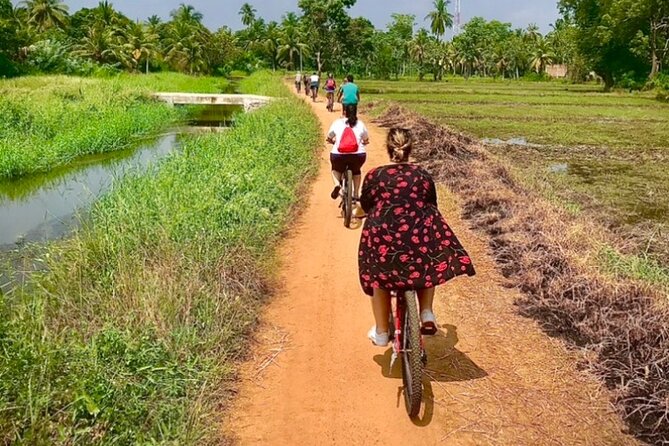
The route is structured like a guided circuit through major Anuradhapura highlights. Here’s what you can expect at each stop, and why each one is worth your attention.
Jetavanaramaya, the giant stupa
Your first major stop is Jetavanaramaya, tied to the era when Anuradhapura was a powerhouse city. When it was built under King Mahasena, it’s described as the world’s tallest stupa at 122 metres, and the third tallest structure worldwide at the time.
Why it’s special: the scale helps you understand why stupas were not small religious decorations. This was civic and spiritual ambition in stone. Even if you only spend 15 minutes here, the goal is to grasp how dominating the structure was in its day.
Practical note: this is a quick stop, so I’d treat it like a first-orientation moment. Look up, get your bearings, then move on ready to notice details at the next points.
Samadhi Statue in meditation form
Next comes the Samadhi Statue, showing the Buddha in the Dhyana Mudra posture, the hands-and-body position associated with meditation.
Why it’s special: this kind of statue is about calm and mental practice, not ceremony theatrics. If you’ve spent the morning visiting huge structures, this stop shifts your focus from monument size to religious posture and meaning.
Time is about 20 minutes, and admission is included.
Abayagiriya Stupa, a monastery that crossed traditions
Then you’ll reach Abayagiriya Stupa, part of Abhayagiri Vihara, described as a major monastery site linked with Mahayana, Theravada, and Vajrayana Buddhism.
Why it’s special: this is where you get a clearer sense that Buddhism in Sri Lanka wasn’t one single straight line. The ruins reflect layered traditions that shaped worship and learning.
Expect about 20 minutes. Admission is listed as included.
Twin Baths (Kuttam Pokuna), old bathing tanks still doing their job
You’ll stop at Twin Baths, also called Kuttam Pokuna. These well-preserved bathing tanks were built by the Sinhalese in ancient Anuradhapura.
Why it’s special: it’s an irrigation and water-use site that also served daily life. You’ll see how ancient engineering supported health, ritual washing, and routine.
This stop is about 20 minutes, with admission included.
Eth Pokuna, the Elephant Pond reservoir
The Elephant Pond (Eth Pokuna) is a large reservoir built during the ancient Anuradhapura Kingdom. It’s described as roughly 159 metres long.
Why it’s special: it connects the dots between temples and survival. Big religion needs stable water systems, and these tanks show that practical side of spiritual life.
You’ll have about 20 minutes, with admission included.
Moonstone (Sandakada pahana), the stair-carving detail
Next is the Moonstone, also called Sandakada pahana, an elaborately carved semi-circular stone slab often found at the base of staircases and entrances.
Why it’s special: you can get so caught up in big stupas that you miss the craftsmanship in the small architectural details. This is the stop that rewards slow looking, and 25 minutes is long enough to actually notice the carving style.
Admission is listed as included.
Basawkkulama Tank, ancient irrigation logic
Then you’ll visit Basawkkulama Tank. The notes explain that irrigation works in Sri Lanka date back to around 430 BCE during King Pandukabhaya’s reign, with continued development over time.
Why it’s special: it frames Anuradhapura as a place that engineered water to sustain a city. If you like understanding how societies worked, this stop gives context that temple-only tours often skip.
This stop is listed as free, and you’ll spend about 20 minutes.
Main Refectory of Abayagiri Monastery, food for thousands
Another Abayagiriya-related stop is the Main Refectory of Abayagiri Monastery. A Chinese traveler monk, Fa-Hien, is mentioned as visiting in the 5th century and saying the monastery housed up to 5,000 monks, including communal meals.
Why it’s special: it turns a ruin into a lived routine. Food, schedules, learning, and community all show up in a place like a refectory, not just in meditation halls.
This is a shorter stop, about 10 minutes, with admission included.
Ruwanweli Maha Seya, royal builders in monumental form
You’ll then come to Ruwanweli Maha Seya, built by King Dutugamunu (137 BC to 119 BC) and completed by his younger brother, as described in the tour notes.
Why it’s special: it’s the kind of site where you can feel the political weight behind religious construction. The name is tied to royal sponsorship, which helps explain why Anuradhapura grew into a major spiritual center.
This stop lasts about 30 minutes, with admission included.
Sri Maha Boodhi Temple, the sacred living fig tree
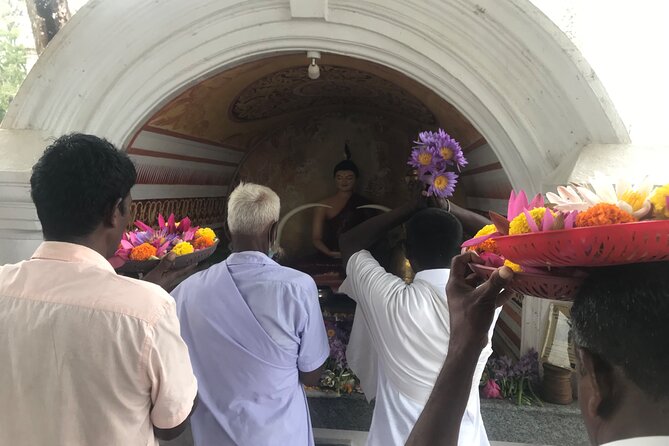
Finally, you’ll finish with the Sri Maha Boodhi Temple and the sacred fig tree, Jaya Sri Maha Bodhi. It’s described as the closest authentic living link to Gautama Buddha.
Why it’s special: unlike statues or large ruins, a living sacred tree changes your sense of time. It’s harder to treat as just a photo stop because it’s still part of the religious present.
You’ll spend about 30 minutes, with admission included.
Scenic riding between temples, and why the hidden routes matter
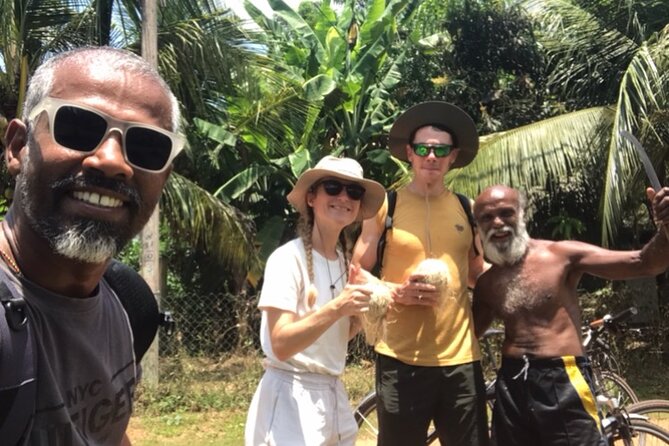
Most people think of Anuradhapura as temples only. This tour treats it as a living heritage area you move through by bike. The ride itself helps with that mental shift, because you’re not just standing still. You’re moving past trees, tanks, and open stretches that feel calmer than the busiest sightseeing flow.
The tour notes describe hidden-route cycling that takes you beyond the usual paths. That matters because the common routes can turn into a series of photo stops. A quieter backroad keeps the day from turning into a checklist.
A slow pace is also supported by the way the stop times are allocated. When each site gets a defined window, you don’t feel trapped at one spot, and you can pay attention when the scenery or the architecture catches your eye.
If your timing aligns, you might even catch local religious moments near the end of the ride. The schedule is built to allow for the day to breathe, not just race forward.
Food, pace, and temple dress tips that keep the day smooth
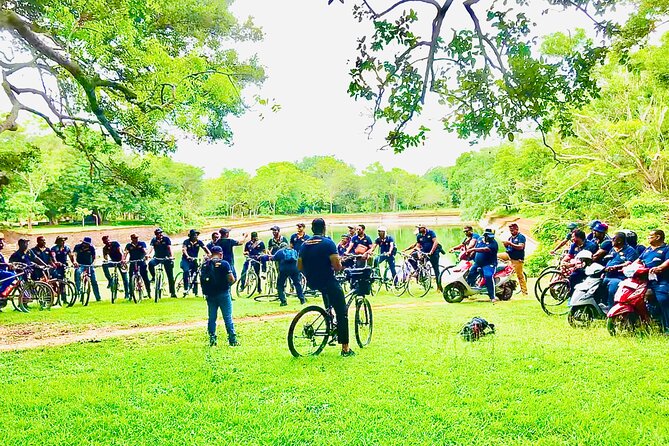
The most underrated part of a heritage tour is food that actually works with the day. Here, you get a vegetarian meal at Hela Bojun, cooked by local people, and it’s included. That’s a practical win if you’re trying to avoid searching for a restaurant right after temples.
It also supports the rhythm. With a meal built into the program, you can ride, stop, and then refuel without adding extra logistics.
Temple etiquette is also spelled out. Since you’ll be visiting places of worship, bring a wraparound cloth if your knees are not covered. That one small detail can save you from last-minute issues at entrances, and it shows respect.
A quick expectation check
- You should be ready for a mix of biking and walking around monuments.
- You’re getting about 10 to 30 minutes at each site, so you’ll have time to look and listen, not just pass through.
- The UNESCO ticket cost is separate, so budget for it.
Who this tour is best for
This works best if you want a heritage day that includes movement and meaning.
You’ll likely enjoy it if:
- You want an active way to see major Anuradhapura sites in about half a day
- You like explanations tied to Buddhism and how religious life shows up in architecture
- You prefer a calm private-group atmosphere over crowds and hurried pacing
You might not love it if:
- You want a long, slow full-day deep exploration without any bike time
- You’re expecting every entrance fee to be included, since the UNESCO entrance ticket is not part of the $25 rate
If you’re traveling as a couple or small family and you can handle a moderate cycling day, this kind of private circuit can be a smart way to maximize comfort.
Should you book this Anuradhapura Heritage mountain bike tour?
Book it if you want a guided, budget-friendly, half-day way to see the Anuradhapura UNESCO core with both temples and water-history stops. The included bike use, bottled water, and vegetarian lunch at Hela Bojun make it feel like a real day out, not just a transport service.
Before you go, budget for the UNESCO ticket and bring the wraparound cloth if needed. If you’re fine with moderate cycling and you like learning as you move, this is the kind of tour that leaves you with more than photos, you’ll come away with clearer connections between structures, rituals, and the city’s ancient water systems.
FAQ
How long is the Anuradhapura Heritage mountain bike tour?
The tour lasts about 4 hours 30 minutes (approximately).
How much does it cost, and what about the UNESCO ticket?
The tour price is listed as $25.00 per person, and the UNESCO entrance ticket is not included. The UNESCO ticket is listed as 30 USD for a person (and 15 USD for under age 13).
Is the tour private?
Yes. It is a private tour or activity, and only your group participates.
What bike will I ride?
You’ll use a mountain cycle provided by the tour, with brands listed such as Giant, Trek, and Louis Garneau.
What should I bring for temple visits?
Since you’ll be visiting temples, you should bring a wraparound cloth if your knees are not covered.
What if weather is poor?
The experience requires good weather. If it’s canceled due to poor weather, you’ll be offered a different date or a full refund.
More Tours in Anuradhapura
More Tour Reviews in Anuradhapura
Anuradhapura, Deeper
Still browsing Anuradhapura? Start here
- Rangiri Jeep Safari Sigiriya Lion Rock & Evening Jeep Safari★ 4.0 · 3 reviews
- Half Day – Minneriya National Park Safari Tour From Habarana/Sigiriya★ 3.5 · 3 reviews
- Sunrise or sunset tour pidurangala Rock and Sigiriya Rock★ 5.0 · 4 reviews
- Wilpattu Half Day Safari From Anuradhapura★ 5.0 · 4 reviews
- Minneriya National Park Half Day Elephant Safari★ 5.0 · 4 reviews
Anuradhapura Tours, compared.
 ★ 5.0Private City Day Tour in AnuradhapuraFrom $30383 reviews
 ★ 5.0Explore & Ride the history of anuradhapura with Vogel ToursFrom $4062 reviews
 ★ 4.4From Anuradhapura: All Inclusive Full Day Safari at WilpattuFrom $11750 reviews
 ★ 4.5Day tour sigiriya to anuradhapuraFrom $12045 reviews
 ★ 5.0Delve Into Ancient Anuradhapura with Optional Visit to MihintaleFrom $3042 reviews
 ★ 5.0Anuradhapura Private Ancient City Day TourFrom $3039 reviews
 ★ 4.5Anuradhapura: Full-Day Wilpattu All Inclusive Private SafariFrom $9024 reviews
 ★ 4.5Half day tour – in Sacred city of Anuradhapura Or sacred city of Mihintale.From $3024 reviews
Browse the lists this tour appears in