

REVIEW · GALLE & GALLE FORT TOURS
Galle Fort Walk with Glamorous Stories
Galle Fort tells stories in stone. This 90 to 120 minute walking tour threads Portuguese to Dutch to modern Galle through bastions, churches, and fort walls, with the kind of local detail that makes UNESCO feel personal. I liked how the route is tight enough to keep moving, but paced so you can actually look up and ask questions.
Two things I really valued were the guide, Dilip, who made the fort feel alive with clear answers, and the way the tour connects hard history to human moments, from traders and sieges to the 2004 tsunami. One possible drawback: it is not a private experience if other people book the same time block, and you will still be walking for about 2 hours with only moderate fitness expected.
If you want Galle Fort as more than a photo stop, this is a strong bet.
In This Review
- Key highlights you should know
- Why Galle Fort works best with a guide on foot
- Price and value: what $35 buys you in real time
- Meeting at Flag Rock Bastion, and how the route stays easy to follow
- Old Harbour to Portuguese clay forts, then Dutch stone walls
- Moon and Star bastions: why these names feel less random than they seem
- Clock Tower and the front wall with 3 bastions
- Ammunition store tunnel and the practical engineering stories
- Dutch Reformed Church (1755) and the story behind its purpose
- Portuguese sieges: surviving on cats and dogs
- VOC trade, treaty tricks, and how power got negotiated
- The 2004 tsunami: how the walls held when Galle City was hit hard
- Dutch Hospital and modern life inside old walls
- Flag Rock lighthouse ruins and the ending moment
- What to bring and how to dress for a comfortable walk
- Who should book this walk, and who might skip it
- FAQ
- FAQ
- How long is the Galle Fort walking tour?
- What does it cost?
- Where does the tour start and end?
- Does the tour include a guide?
- Is it a private tour?
- Do I get a ticket on my phone?
- What should I bring for rain or sun?
- What are the operating hours?
- Can I cancel for a refund?
- Should you book this Galle Fort walk with Dilip?
Key highlights you should know
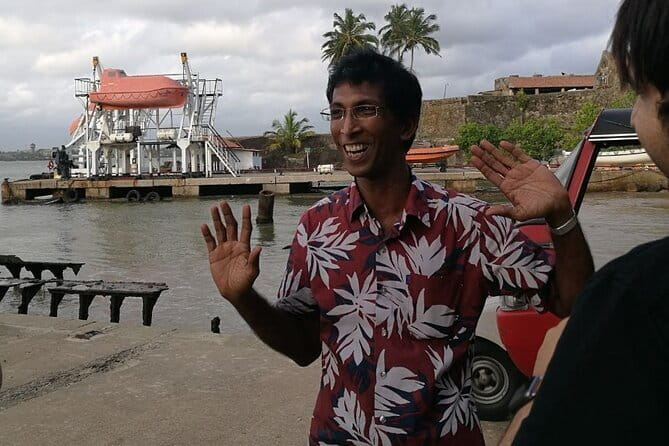
- Small group size, up to 6 people, so questions and back-and-forth are easy
- Flag Rock Bastion is both start and finish, which makes the plan simple on foot
- Portuguese, Dutch, and English power shifts explained with specific examples, like treaties and trade
- Tsunami survival on the fort walls in 2004, contrasted with what happened to parts of Galle City
- Practical local touches like a pause to shelter in bad weather, when needed
Inside the ramparts and well past them
- Galle: Traditional Gems & Jewellery Workshop with Transfers
★ 4.9 · 539 reviews - Galle Fort Walking tour
★ 4.9 · 285 reviews - Galle/Mirissa/Hiriketiya: Drop to Ella & Udawalawa Safari
★ 4.9 · 186 reviews - Galle Unawatuna Cooking Class
★ 5.0 · 142 reviews
Why Galle Fort works best with a guide on foot
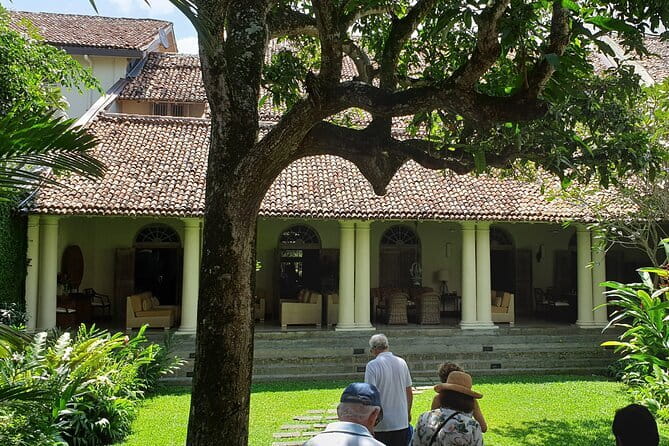
Galle Fort is a UNESCO World Heritage Site, but the real magic is how the place “stacks” centuries on the same lines of stone. From the Old Harbour area where Chinese, Arab, and European traders anchored, to Portuguese clay forts and then Dutch stone walls, the fort reads like a living timeline.
A guided walk helps you notice the logic behind the buildings. You are not just seeing walls and towers. You are learning what those walls were designed to do, how power changed hands, and why the fort still matters today. When you hear the story while you are standing near the structure, the details stick much better than if you read a plaque alone.
I also liked that the tour leans into stories, not just dates. You get the origin of the local name Galla, the Portuguese siege tales, and the Dutch trade and treaty tricks, all placed in the real setting where they happened.
Price and value: what $35 buys you in real time
At $35 per person for about 1.5 to 2 hours, you are paying for three things: route guidance, interpretation, and flexibility with your pace. There is no private transportation included, so the value is concentrated on the walking experience itself, from Flag Rock Bastion onward.
This is also set up for small-group learning. With a maximum of 6 travelers and an English-speaking guide in person, you are unlikely to get lost in a crowd. The “group discounts” element can be a bonus if you are traveling with others, but even as a solo traveler, you are not relying on a giant bus model.
The main value test is simple: do you want context while you look? If yes, the guide is the product. If you are purely there for photos and you plan to wander on your own with a guidebook, you might feel the time is slightly structured for your style.
Meeting at Flag Rock Bastion, and how the route stays easy to follow
The tour starts and ends at Flag Rock Bastion (plus code 26F8+FXH). That matters more than it sounds. You do not have to solve a second meeting point or worry about getting back to the fort area.
The route is built around iconic positions inside Galle Fort, so the walking feels purposeful. Expect a moderate fitness requirement, which is typical for a historic area with uneven surfaces and steady walking time. The good news is the tour is designed as a short loop rather than a long hike.
Timing is flexible, because the experience runs daily from 8:30 AM to 6:00 PM. If you like cooler weather and clearer visibility, earlier slots are usually the better bet. If you enjoy softer light and want that dramatic ending, later start times can be nicer, assuming conditions are good.
More on foot in Galle

Old Harbour to Portuguese clay forts, then Dutch stone walls

One of my favorite ways to understand Galle Fort is to track who controlled the harbor and how that control showed up in the architecture. The tour starts from the Old Harbour angle, where Chinese, Arab, and European traders anchored. That opening sets the tone: this was always a trading hub, not just a fortress.
Then comes the Portuguese phase, described as clay forts. Clay can sound temporary, but it makes sense when you picture an early stage of occupation and expansion. After that, Dutch stone walls take over the story, and the change in materials helps you feel the shift from short-term presence to long-term defense.
The tour also points out how the Portuguese period ties into trade. You hear how the ancient Chinese-dominated cinnamon trade got overtaken by the Portuguese. That is the kind of detail that turns Galle Fort from “European forts” into “global trade crossroads.”
Moon and Star bastions: why these names feel less random than they seem

Inside the fort, bastions like Moon and Star help you see how Dutch defense planning worked. Bastions are not decorative. They are about controlling lines of fire and shaping how attackers could approach.
When a guide calls out these bastions by name, it trains your eye. You start looking at angles and sightlines rather than only walls and doors. That makes the fort feel more like a designed system and less like a maze.
Even better, the stories give these points context. The fort’s layout stops feeling arbitrary once you connect it to siege risk and the realities of foreign powers competing over trade.
Clock Tower and the front wall with 3 bastions

As you walk, the fort’s standout markers keep you oriented. You will pass the Clock Tower, then move to the front wall with 3 bastions. These are the kinds of features you would notice on your own, but a guide helps you understand why they matter.
The clock tower is easy to treat as a landmark. With a guide, it becomes part of the daily rhythm of the place, a signal that life was never only about warfare. And the front wall is where you start appreciating the scale of Dutch fortification thinking, because the wall is meant to control movement and pressure from multiple directions.
If you like architecture that has a job, this section is where the fort starts to click.
Ammunition store tunnel and the practical engineering stories
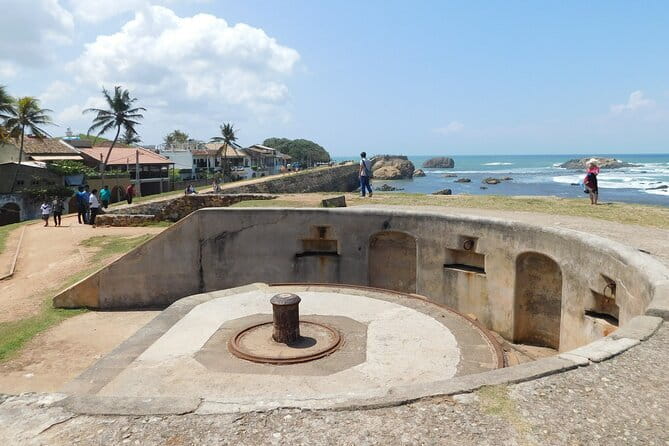
A key highlight is the ammunition store with a tunnel. You might walk right past a structure like this without context, but once you understand it as storage linked to movement and defense, it feels much more significant.
This is where the tour’s emphasis on tunnels and VOC trade comes in. You learn about hidden tunnels and other functional features. The tour also mentions coral cooling walls, which adds a neat physical detail to the story of how people managed heat, storage, or operations inside the fort.
Even if you do not go inside every feature, you still learn what you are looking at. That is the real payoff of a guided walk: you leave with a mental map and an explanation for the odd-looking parts.
Dutch Reformed Church (1755) and the story behind its purpose

At Dutch Reformed Church (1755), the tour turns from defense into community and belief. The story shared on the walk is that the church was built as a vow for a child’s birth. That detail changes the mood instantly.
This is one of those moments where history stops being abstract. Instead of only thinking about sieges and trade, you think about families, prayers, and the personal reasons people invested in major buildings. It is also a reminder that colonial-era construction was not only about control. It was also about settling, worship, and the social life inside the walls.
If you like places that show human scale, this stop tends to be a highlight.
Portuguese sieges: surviving on cats and dogs
The tour includes a memorable Portuguese siege story, including soldiers suffering for three months and surviving on cats and dogs. It is a grim detail, but it is also very telling.
When you connect siege survival to the fort’s defensive design, the stories feel less like gossip and more like survival logic. This is also where the tour’s style works: you get a dramatic episode, then you link it back to the walls, the layout, and why attackers and defenders behaved the way they did.
It is not the kind of history you forget, because it sticks to something you can picture. And it makes the shift to Dutch control feel more concrete, not just like a change in rulers.
VOC trade, treaty tricks, and how power got negotiated
The fort’s story includes VOC trade and the ways outside powers tried to control wealth. The tour also brings up the idea of foreign investment reshaping this living heritage. That theme matters because it explains why the fort today is still evolving, even as it is protected.
Two sharp treaty stories are part of the walk. One is described as the Portuguese building Colombo Fort by cheating the local king with a piece of leather. Another is that the Dutch replaced the Portuguese and cheated the local king with two copies of treaties.
Even if you do not remember every political detail, this is a useful way to read the fort. You start to see that European control was not only battles and cannons. It was paperwork, agreements, and manipulation as well.
If you enjoy “how the deal was made” history, this section is a strong reason to book.
The 2004 tsunami: how the walls held when Galle City was hit hard
One of the tour’s biggest anchors is the 2004 tsunami story. You hear how the fort’s walls withstood the tsunami waves and how the surrounding areas, including parts of Galle City, suffered far worse.
Standing in the fort while you hear this can be surprisingly emotional. You are looking at physical defenses, but the story turns them into lived outcomes: what protected people, what failed elsewhere, and why the fort’s structure mattered in that moment.
The key value here is contrast. The tour does not treat the fort as an old object. It treats it as a real structure with a real-world test.
Dutch Hospital and modern life inside old walls
Another stop tied to today’s Galle Fort experience is the Dutch Hospital, now a cuisine hub. This is where you see the fort as a living place, not just a museum set.
I like this kind of pairing. You go from defense engineering and siege stories into a space where people eat, chat, and unwind. It is also a practical benefit: after a couple hours of walking and looking, you end up with a straightforward option for a meal nearby.
It is an easy mental transition. The fort’s past does not get frozen in time. It turns into a backdrop for current life.
Flag Rock lighthouse ruins and the ending moment
Near the Flag Rock Bastion area, the tour ties in the lighthouse ruins. This kind of ending helps you wrap the whole fort story in one theme: sea access, trading routes, and the constant pull of the ocean.
One detail that really impressed me in the tour style is how it can time a closing moment around sunset, including the lowering of the fort flag. That kind of visual cadence gives your brain a natural “done” signal for the day.
Even if you do not catch every routine, the general idea holds: the walk finishes where the views and the coastline context are easiest to feel.
What to bring and how to dress for a comfortable walk
This is a walking tour, so pack like you are in an outdoor historic district.
- Bottled water is not included, so bring water
- Umbrellas on rainy days are not included, a light rain jacket can help
- Hats on sunny days are not included, protect your head and face
- Plan for a moderate walking level, with enough stamina for about 2 hours
If you tend to get cold easily, bring a light layer even in warmer months, because early or late day can feel different near the sea. And if you want great photos, bring a phone power bank or be ready to ration battery use.
The tour also runs from 8:30 AM to 6:00 PM, so you can match it to your day plan.
Who should book this walk, and who might skip it
You should book if you want your Galle Fort visit to feel guided and story-driven. This is especially good if you care about the mix of Portuguese, Dutch, and English influences, and you like forts explained as real defensive systems.
It also fits families and mixed ages reasonably well, as long as everyone is comfortable with steady walking and moderate fitness. Dilip is known for answering questions and keeping the pace enjoyable, which helps a lot when people have different interests.
You might skip it if you are already a confident self-guided fort explorer, or if you hate structured walking routes. And remember, it is not a private tour when the time block is busy, so do not expect total one-on-one attention.
FAQ
FAQ
How long is the Galle Fort walking tour?
It runs about 1 hour 30 minutes to 2 hours.
What does it cost?
The price is $35.00 per person.
Where does the tour start and end?
It starts and ends at Flag Rock Bastion, 26F8+FXH, Galle 80000, Sri Lanka.
Does the tour include a guide?
Yes. It includes an in-person English guide.
Is it a private tour?
It is not private if many tourists are booked in the same time block. The tour has a maximum of 6 travelers.
Do I get a ticket on my phone?
Yes. It uses a mobile ticket.
What should I bring for rain or sun?
Umbrellas and hats are not included, and bottled water is also not included. Bring what you need for your comfort.
What are the operating hours?
Monday through Sunday, 8:30 AM to 6:00 PM.
Can I cancel for a refund?
Yes, it has free cancellation. You can cancel up to 24 hours in advance for a full refund, and changes within 24 hours are not accepted.
Should you book this Galle Fort walk with Dilip?
If you want Galle Fort to make sense, book it. The value is in the stories linked to specific places: the bastions, tunnels, the church vow from 1755, Portuguese and Dutch power shifts, and the 2004 tsunami survival angle.
I would especially recommend it if you are short on time or you dislike the feeling of wandering without context. With the small group size, English guide, and a route that hits iconic spots, you get a lot of clarity per minute.
Just come prepared for a solid walking block, and plan your transport back to your lodging since private transportation is not included.
On Foot in Galle
More Tour Reviews in Galle
Galle Beyond the Fort Walls
Still browsing Galle? Start here
- From: Ella – YALA Safari – Drop off: Arugam Bay / Arugambay★ 5.0 · 3 reviews
- Galle Instagram Tour: Most Famous Spots (Private & All-Inclusive)★ 5.0 · 3 reviews
- Galle Sightseein Rickshaw Tour★ 4.5 · 3 reviews
- From Colombo: Day Trip to Galle City, Koggala and Unawatuna★ 4.2 · 3 reviews
- Yala National Park Private Safari (All Inclusive) From Mirissa★ 4.5 · 4 reviews
Galle & Galle Fort Tours, compared.
 ★ 4.9Galle: Traditional Gems & Jewellery Workshop with TransfersFrom $13539 reviews
 ★ 4.9Galle Fort Walking tourFrom $15285 reviews
 ★ 4.8Hikkaduwa/Galle/Weligama/Mirissa/Tangalle: Yala Safari TourFrom $45263 reviews
 ★ 4.7Galle and Bentota Day-Tour From ColomboFrom $45200 reviews
 ★ 5.0Galle Unawatuna Cooking ClassFrom $30142 reviews
 ★ 4.6From Mirissa / Galle / Tangalle to Yala Safari & Drop- EllaFrom $11124 reviews
 ★ 4.8YALA SAFARI TOUR from TANGALLE/HIRIKETIYA/MIRISSA/GALLEFrom $43121 reviews
 ★ 4.8Hikkaduwa/Galle/Weligama/Mirissa/Tangalle: Udawalawa SafariFrom $27114 reviews
Browse the lists this tour appears in