
REVIEW · GEM, JEWELLERY & BATIK WORKSHOPS
Interactive Batik Workshop and Lessons in Sri Lanka
Batik starts with patience, and this class teaches it step by step. In Kandy, you get an interactive, hands-on session focused on traditional wax batik methods, with enough small-group time to ask questions and get guided help.
I like that the workshop walks you through the full workflow, from fabric selecting to finishing and de waxing, so it makes sense as a complete craft process rather than random steps. I also like the family-studio feel, where the instructor and family members guide each participant closely and explain what you are doing as you do it.
One thing to consider is that you are working with wax and dye processes, so it can take a bit of focus and careful attention during the hands-on parts. If you want a super casual, no-pressure activity, this may feel more work than play.
In This Review
- Key things to know before you go
- Kandy Batik Lessons in a Real Home Studio Setting
- The 3 Hours 30 Minutes Flow, From Fabric Choice to Finished Piece
- Tools and Wax Work: What You Actually Practice
- Design, Cracking, and Brush Arts: The Creative Middle of Batik
- Dye Mixtures and Techniques: What You Learn About Color
- De Waxing and Finishing: The Surprise Moment
- Price and Value: Why $28 Can Make Sense
- What You Will Probably Enjoy Most
- Who This Workshop Fits Best in Kandy
- Should You Book This Batik Workshop in Kandy?
- FAQ
- What is the duration of the batik workshop?
- Where does the activity start and end?
- What time does the workshop begin?
- What is the price per person?
- How many travelers is the group limited to?
- Is the workshop hands-on or mostly a demonstration?
- What is included in the price?
- What is not included?
- What will I be able to take home?
- What is the cancellation policy?
Key things to know before you go
- You make your own batik cloth, with guidance through the whole process.
- Small group size (max 10), so help is personal and questions are welcome.
- A real traditional home-studio setup with the equipment used in everyday batik work.
- Tools you will use directly, including tjanting and other traditional implements.
- The course covers de waxing too, so you see how the wax comes off at the end.
- You get to take your piece home, and the class is designed around that finished result.
Other workshops where you make something
- Kandy: Interactive Batik Workshop
★ 5.0 · 51 reviews
Kandy Batik Lessons in a Real Home Studio Setting
This batik workshop is based in Kandy at a local meeting point and then runs from the studio space. What matters most here is the setting: it is not a big showroom. It is a cozy home studio, run by an experienced couple who have been working in the industry for decades, with traditional equipment on hand.
That home-studio vibe changes how the class feels. You are not just watching a demo. You are learning in the place where batik work actually happens, and you can see how the tools and steps fit together as part of daily practice. The small group size also helps. With a max of 10 people, you get real time with the instructor instead of getting shuffled through.
Add in a refreshing herbal tea, and the tone becomes calm and friendly, not rushed. Several people also describe being treated like family, with refreshments and snacks, which makes the morning feel more like a cultural visit than a quick activity.
The 3 Hours 30 Minutes Flow, From Fabric Choice to Finished Piece
You start at 8:00 am, and you should plan for about 3 hours 30 minutes total. The experience is designed as an end-to-end making session, so you go through the craft in order. That matters, because batik is layered. If you only do part of it, it is hard to understand why a step comes next.
Here is how the session runs conceptually, in the same flow you will experience:
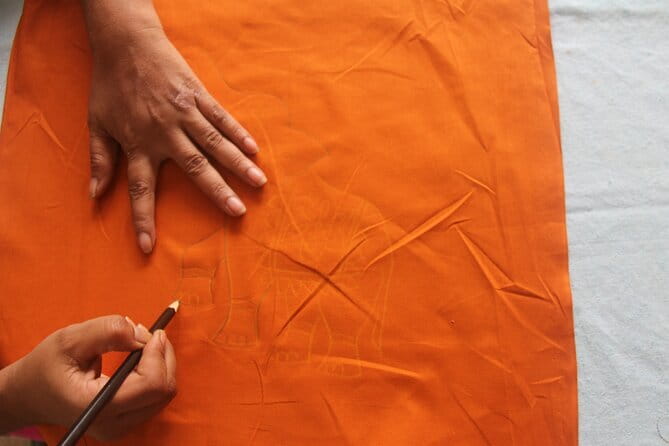
First, you begin with fabric selecting. You are working toward a workable surface for wax and dye, and this early step sets you up for a cleaner result later.
Then the session moves into the waxwork basics, including wax mixtures and waxing techniques, plus hands-on use of traditional tools. You will follow along step by step, but you are the one doing the work at each stage.
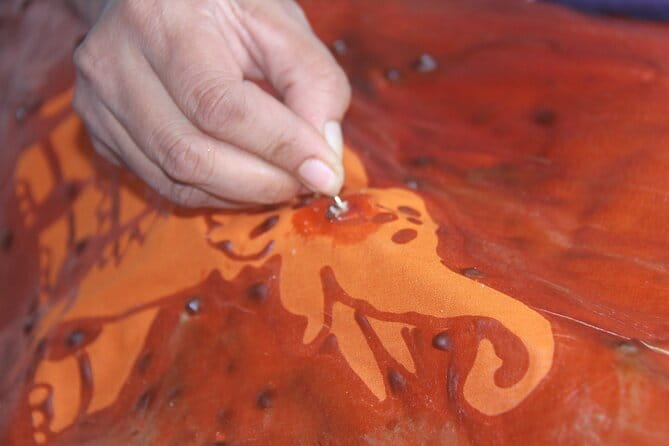
Next comes the creative and pattern-building part, where the class includes things like stamping, wax spraying, and other wax design approaches. After that, you also cover processes like cracking and brush arts, which help shape the final look.
Finally, the class moves into dyeing and finishing, including dyes and dye mixtures. The session also covers wax burning and wax boiling to remove the wax at the end, so you finish with a visible cloth result, not just the early stages.
Practical tip: because this is a full process, the class is not the kind where you can drift in and out. If you stay present and follow the instructor’s guidance, you will get a much better learning payoff and a nicer souvenir.
Tools and Wax Work: What You Actually Practice
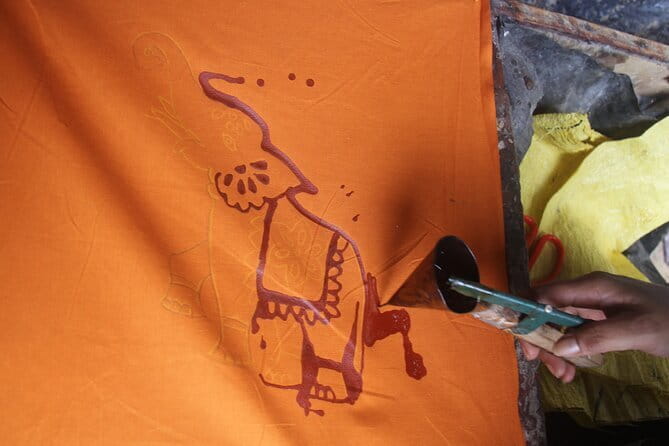
The workshop is built around hands-on practice with the key instruments and techniques used in batik. You will work with traditional tools such as a funnel, tjanting, and the Henry tool. Instead of hearing about them in theory, you get to use the tools during the workshop under close guidance.
You also learn about wax preparation and application through the covered steps. That includes wax mixtures, waxing techniques, and different application approaches like wax spraying and stamping. Each method has a different look, so you start to understand how design choices translate into patterns once dye hits the fabric.
This is one of the most praised parts of the experience, because it turns batik from something mysterious into something you can repeat. When someone is personally guiding you, the technique becomes less abstract. You feel where your hand needs to be, how steady you have to stay, and how to correct issues while you still have time.
If you like crafts where technique matters, you will probably find waxwork satisfying. It is slow, controlled, and very specific.
Other hands-on sessions in Kandy
Design, Cracking, and Brush Arts: The Creative Middle of Batik
Once wax is in place, the workshop shifts from tool handling into design effects. You get elements like wax designing and the process steps tied to adding visual style.
The class also includes cracking and brush arts. Even if you do not think of yourself as a creative person, this part helps you understand how batik can look textured and expressive without being complicated at the beginner level. You are not just applying wax. You are combining steps that create different surface effects.
This is also where the small group format becomes a big advantage. In a group that is capped at 10, the instructor can spend time where you need it. That can make the difference between a cloth you are proud of and one that feels unfinished.
Dye Mixtures and Techniques: What You Learn About Color
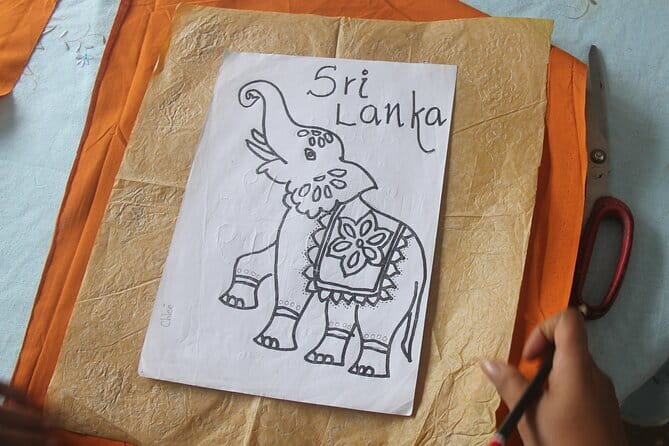
The workshop includes dyes & applications and also dye mixtures & techniques using naphthol dyes, vat dyes, and reactive dyes. The key point for you is not memorizing chemistry. It is seeing how the dyeing stage fits into the earlier wax and pattern work, so you understand what the wax is protecting and where color appears.
During this part of the class, you get to follow the dye process in the right sequence. Because you are learning end to end, dyeing is not random. It is the payoff stage where your earlier design choices become visible.
One helpful mindset: treat dye as the moment your decisions show up. If you followed instructions carefully during wax application, you will likely be more confident during dye steps.
De Waxing and Finishing: The Surprise Moment
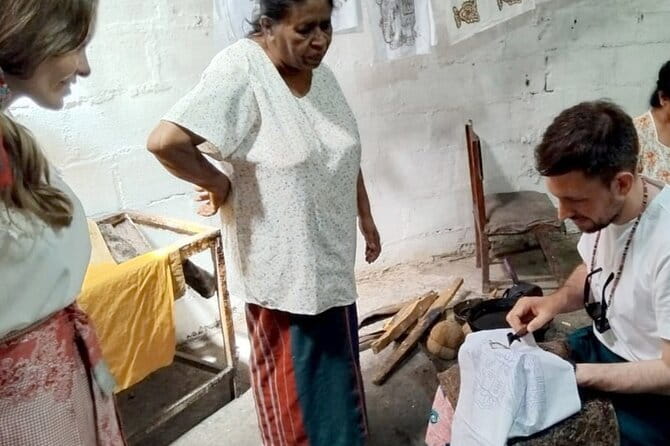
At the end, the class covers wax burning & wax boiling, also called de waxing. This is the stage that most people remember, because it turns covered lines and wax patterns into a finished look.
This step matters for value. Plenty of craft experiences stop early, when the work is still mostly hidden. Here, you see the reveal process and you finish with a cloth souvenir you can take home.
So you leave with both:
- An artifact (your batik cloth)
- A real understanding of how batik transforms through steps
Price and Value: Why $28 Can Make Sense
The price is $28.00 per person for about 3 hours 30 minutes, with a max group size of 10. You also get all tools and equipment, plus cloth and other materials used during the workshop, and it includes all fees and taxes.
You do not need to pay extra for entry, supplies, or equipment. In many places, craft workshops charge you for take-home materials or tools. Here, the class is set up so you can focus on learning and leaving with the finished cloth.
What is not included is lunch, and private transportation. That means you might want to plan where you will eat after the class, especially since the start time is 8:00 am. If you are already in the Kandy area, it is still a straightforward half-morning activity, but it is worth budgeting for food separately.
Also, the booking pace is a clue. It is often booked about 33 days in advance. That suggests it is popular with people who want a small-group craft day in Kandy, not a long museum run. If you are traveling in a busier season, I would not wait until the last few days.
What You Will Probably Enjoy Most

This workshop gets top marks for a few very practical reasons. The experience is structured, but the atmosphere is friendly.
From what you can expect, the most praised elements are:
- The step-by-step guidance that makes each stage easier to follow.
- The fact that the instructors are patient and willing to answer questions.
- The chance to work on your own design, not just copy a sample.
- The feeling of being hosted warmly in a home studio setting.
In particular, you may meet instructors described by name such as Anuja and Manugi, and they are described alongside family members. People also note that the teaching is gentle and that the instructor works with you when help is needed.
If you want a hands-on cultural activity where you can ask real questions and not feel like you are interrupting, this format fits that need.
Who This Workshop Fits Best in Kandy
This is a great fit if you:
- Like hands-on activities more than passively sightseeing
- Want a small-group, direct-instructor experience
- Care about taking home a craft souvenir that you actually made
- Prefer a morning activity that is focused, not spread across a full day
It is also a good choice for travelers who want a break from driving around. The session is contained and uses the same studio space for the full workflow.
If you are traveling with limited time but still want something meaningful, the 3 hours 30 minutes length is manageable. It is also priced in a range that feels accessible for a class with materials included.
Should You Book This Batik Workshop in Kandy?
Yes, you should consider booking if you want a real crafting experience with clear instruction and a finished take-home result. At $28, with tools and materials included and with a small group size, it is strong value for the amount of direct practice you get.
Book it sooner if you can. Since it is commonly reserved well in advance, you are more likely to get your preferred morning slot by planning ahead.
One last decision check: if you are sensitive to messy hands or you want something totally low-effort, this might feel like too much work. But if you enjoy learning a skill through doing, this batik lesson is the kind of Kandy experience you will feel good about long after you leave.
FAQ
What is the duration of the batik workshop?
It runs for about 3 hours 30 minutes.
Where does the activity start and end?
It starts at Thalapiyannawa Road in Kandy, Sri Lanka, and ends back at the meeting point.
What time does the workshop begin?
The start time is 8:00 am.
What is the price per person?
The price is $28.00 per person.
How many travelers is the group limited to?
The maximum group size is 10 travelers.
Is the workshop hands-on or mostly a demonstration?
It is hands-on. You create your own batik cloth with step-by-step guidance.
What is included in the price?
All tools and equipment, the cloth and other materials needed for the program, and all fees and taxes are included.
What is not included?
Lunch and private transportation are not included.
What will I be able to take home?
You take the batik cloth you make as a souvenir.
What is the cancellation policy?
You can cancel for a full refund up to 24 hours before the experience’s start time. Free cancellation is available, and changes within 24 hours are not accepted.
Hands-On in Kandy
More Tour Reviews in Kandy
Make Something to Take Home
Still browsing Kandy? Start here
- Udawalawe National Park Private Full-Day Safari★ 5.0 · 3 reviews
- Wasgamuwa National Park Safari from Kandy★ 5.0 · 3 reviews
- Private Sri Lanka Tour & Hike Experience to Ambuluwawa Tower★ 5.0 · 3 reviews
- Kandy Instagram Tour: Most Famous Spots (Private & All-Inclusive)★ 5.0 · 3 reviews
- Kandy to Ella★ 5.0 · 3 reviews
Gem, Jewellery & Batik Workshops, compared.
 ★ 4.9Galle: Traditional Gems & Jewellery Workshop with TransfersFrom $13539 reviews
 ★ 4.4The True Essence of Colombo:Private Highlights & Hidden GemsFrom $8596 reviews
 ★ 5.0Kandy: Interactive Batik WorkshopFrom $2851 reviews
 ★ 4.9Galle : Traditional Jewellery making workshopFrom $7134 reviews
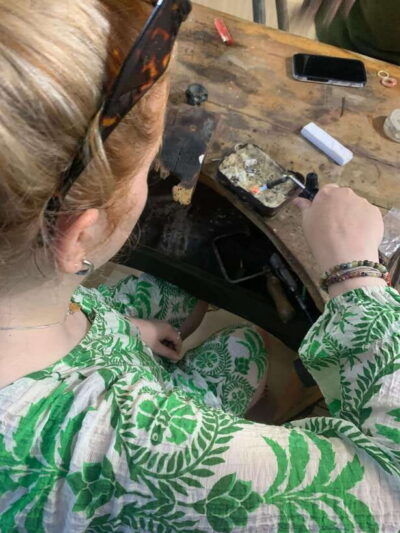 ★ 4.9Ahangama: Traditional Jewellery Making WorkshopFrom $7123 reviews
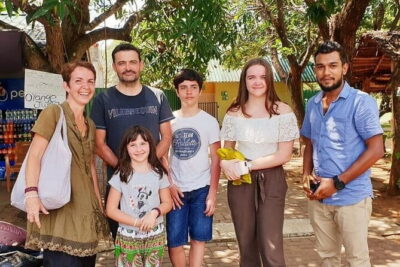 ★ 5.0Polonnaruwa Ancient City Private Day Tour (Hidden Gems)From $3020 reviews
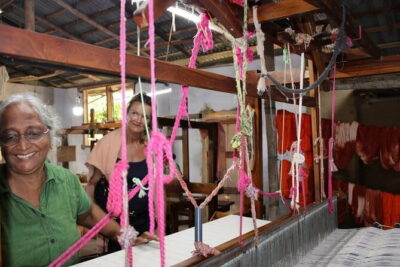 ★ 5.0Explore Galle’s Hidden Gems & Dine With LocalsFrom $6919 reviews
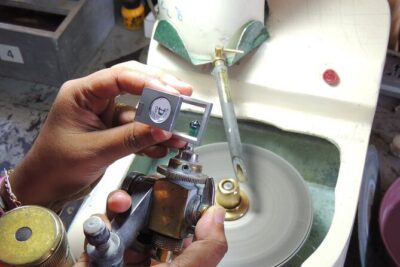 ★ 5.0Sri Lanka – Private Ratnapura Gem Tour with Gem and jewelry ExpertFrom $17518 reviews
Browse the lists this tour appears in